
Spiders are a natural part of the ecosystem, but for many homeowners across the Southeastern United States, they are also a source of concern. From historic neighborhoods in Charleston to rapidly growing communities in Charlotte and major metropolitan areas like Atlanta, encounters with spiders in the Southeast are common year-round. Warm temperatures, high humidity, and abundant insect populations create an ideal habitat for many spider species to thrive both indoors and outdoors.
While most spiders are harmless and even beneficial in controlling other pests, certain species can pose health risks or cause significant anxiety for homeowners. Understanding which spiders are most common in the Southeast, how to identify them, and how to manage infestations effectively is key to maintaining a comfortable living environment. Through professional Spider Control in the Southeast, PestNation helps homeowners in Atlanta, Charlotte, and Charleston address spider activity safely and strategically.
Why Spiders Thrive in the Southeast
The Southeast's climate plays a major role in spider activity. Mild winters allow many species to remain active for extended periods, while humid summers increase insect populations—providing ample food sources for spiders.
Several environmental factors contribute to high spider populations:
-
Long warm seasons
-
Consistent moisture and humidity
-
Dense landscaping and wooded areas
-
High insect activity around outdoor lighting
-
Crawl spaces and attic environments
In cities like Atlanta and Charlotte, suburban development near wooded areas often brings spiders closer to residential properties. In coastal Charleston pest control scenarios, humidity and vegetation further encourage spider nesting around structures.
Because spiders feed on insects, increased pest activity often leads to increased spider presence. This is why Spider Control in the Southeast frequently begins with broader pest management strategies.
Common House Spiders
Common house spiders are among the most frequently encountered spiders in the Southeast. These small brown or tan spiders typically build irregular, tangled webs in corners, basements, garages, and attics.
Characteristics include:
-
Small body size
-
Brown or gray coloration
-
Cobweb-style web patterns
-
Preference for undisturbed indoor spaces
Although they are not considered dangerous, common house spiders can create unsightly webs that accumulate dust and debris. In homes throughout Atlanta and Charlotte, cluttered storage areas often become prime nesting zones.
Charleston interior and exterior pest treatments often address these spiders by reducing insect populations and sealing entry points.
Wolf Spiders
Wolf spiders are large, fast-moving spiders commonly found both indoors and outdoors. Unlike web-building spiders, wolf spiders actively hunt their prey.
Key traits include:
-
Larger body size
-
Brown or gray coloring with markings
-
Excellent speed and mobility
-
No reliance on webs to catch prey
In Atlanta and Charlotte, wolf spiders frequently enter homes during cooler months seeking shelter. In Charleston pest control environments, they are often found in garages and crawl spaces.
While wolf spiders are generally not aggressive, their size can be alarming. Effective Spider Control in the Southeast includes identifying entry points and managing surrounding insect populations.
Black Widow Spiders
Black widow spiders are among the most medically significant spiders in the Southeast. Recognizable by their glossy black bodies and red hourglass markings, these spiders prefer dark, undisturbed areas.
Common nesting sites include:
-
Woodpiles
-
Storage sheds
-
Crawl spaces
-
Outdoor furniture
-
Garage corners
Although bites are rare, black widow venom can cause serious symptoms requiring medical attention. In Charleston pest control cases, high humidity and cluttered outdoor spaces can increase black widow activity.
Professional PestNation pest inspections are essential when black widows are suspected, as improper handling can increase risk.
Brown Recluse Spiders
Brown recluse spiders are less common in some coastal regions but may be present in parts of the Southeast, particularly in interior areas of Georgia and surrounding states.
They are identified by:
-
Light to dark brown coloration
-
Distinct violin-shaped marking on the cephalothorax
-
Preference for dark, undisturbed spaces
Brown recluse bites can cause tissue damage, though actual encounters are relatively uncommon. Homes in Atlanta and Charlotte with cluttered storage or infrequently accessed areas may inadvertently provide suitable habitats.
Charleston interior and exterior pest treatments often include preventative measures in attics and storage spaces to reduce risk.
Garden and Orb-Weaver Spiders
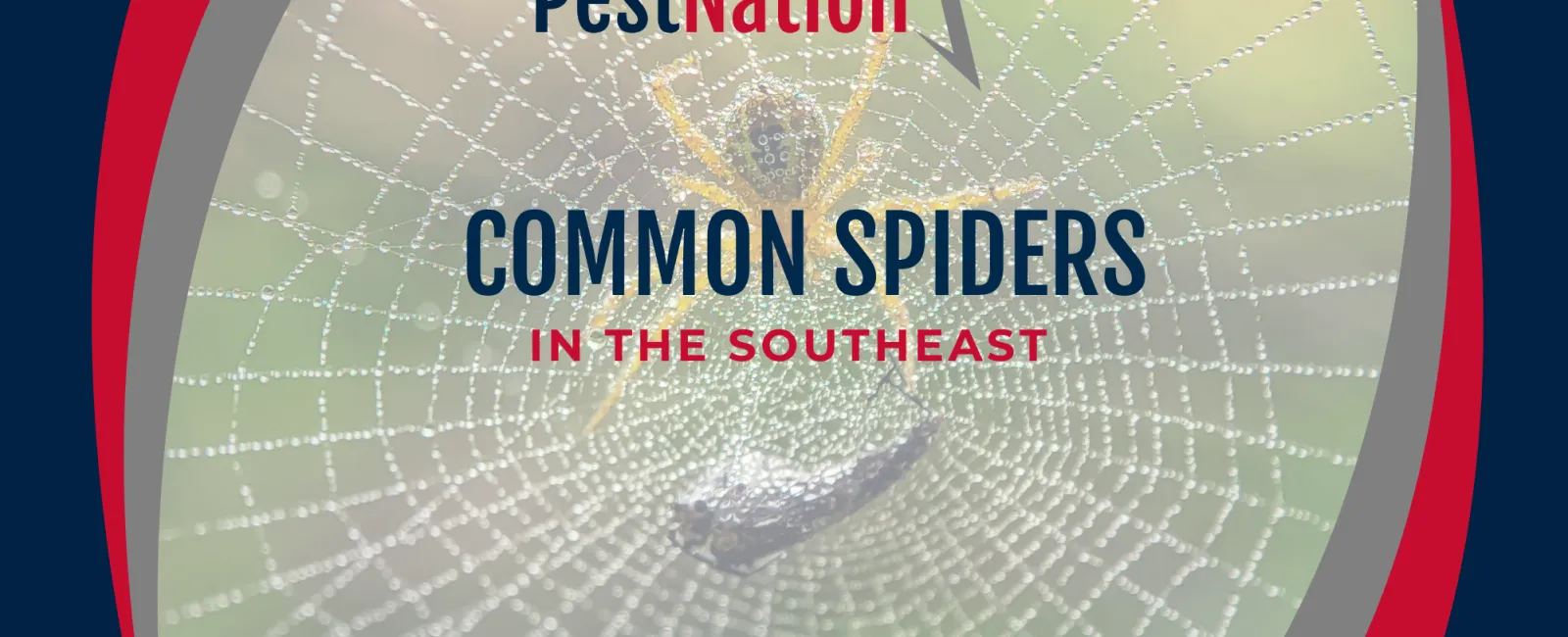
Garden spiders, including orb-weavers, are frequently seen outdoors across the Southeast. These spiders create large, circular webs in yards and landscaped areas.
While their webs may be startling when encountered unexpectedly, they are beneficial predators that help reduce flying insect populations.
In cities like Charlotte and Atlanta, suburban landscaping often supports orb-weaver populations. Charleston pest control strategies typically focus on minimizing web buildup around entryways rather than eliminating these beneficial species entirely.
Why Spider Activity Increases Indoors
Spiders often enter homes for two primary reasons:
-
Searching for food
-
Seeking shelter from weather changes
Rainstorms, temperature shifts, and construction activity can drive spiders indoors. In Atlanta and Charlotte, seasonal transitions frequently increase indoor sightings.
Additionally, high insect populations around exterior lighting attract spiders to doorways and windows. Without comprehensive Spider Control in the Southeast, these areas become consistent entry points.
The Role of Professional Inspections
Effective management begins with PestNation pest inspections. A detailed inspection identifies:
-
Spider species present
-
Web concentrations
-
Entry points
-
Conducive conditions
-
Insect population levels
In Atlanta, Charlotte, and Charleston pest control environments, technicians tailor treatment strategies based on property layout and infestation severity.
Integrated Spider Control Strategies
Comprehensive Spider Control in the Southeast often includes:
-
Exterior perimeter treatments
-
Removal of webs and egg sacs
-
Sealing cracks and gaps
-
Managing outdoor lighting
-
Reducing insect populations
-
Interior targeted applications
Atlanta, Charlotte, Charleston interior and exterior pest treatments coordinate these measures to ensure spiders are not only removed but discouraged from returning.
Preventative maintenance is particularly important in humid climates, where insect populations—and therefore spider populations—can rebound quickly.
Spiders in the Southeast are a natural part of the regional ecosystem, but high humidity, long warm seasons, and abundant insect activity create conditions that support persistent populations. While many species such as common house spiders and garden spiders are harmless, others like black widows and brown recluse spiders warrant greater caution. Understanding species differences and habitat preferences is essential for proper management.
For homeowners in Atlanta, Charlotte, and coastal areas relying on Charleston pest control services, a proactive approach makes all the difference. Through thorough PestNation pest inspections and coordinated Atlanta, Charlotte, Charleston interior and exterior pest treatments, Spider Control in the Southeast becomes both manageable and sustainable. By addressing underlying insect activity and structural vulnerabilities, PestNation helps property owners maintain safe, comfortable spaces while minimizing unnecessary disruption to beneficial outdoor species.