
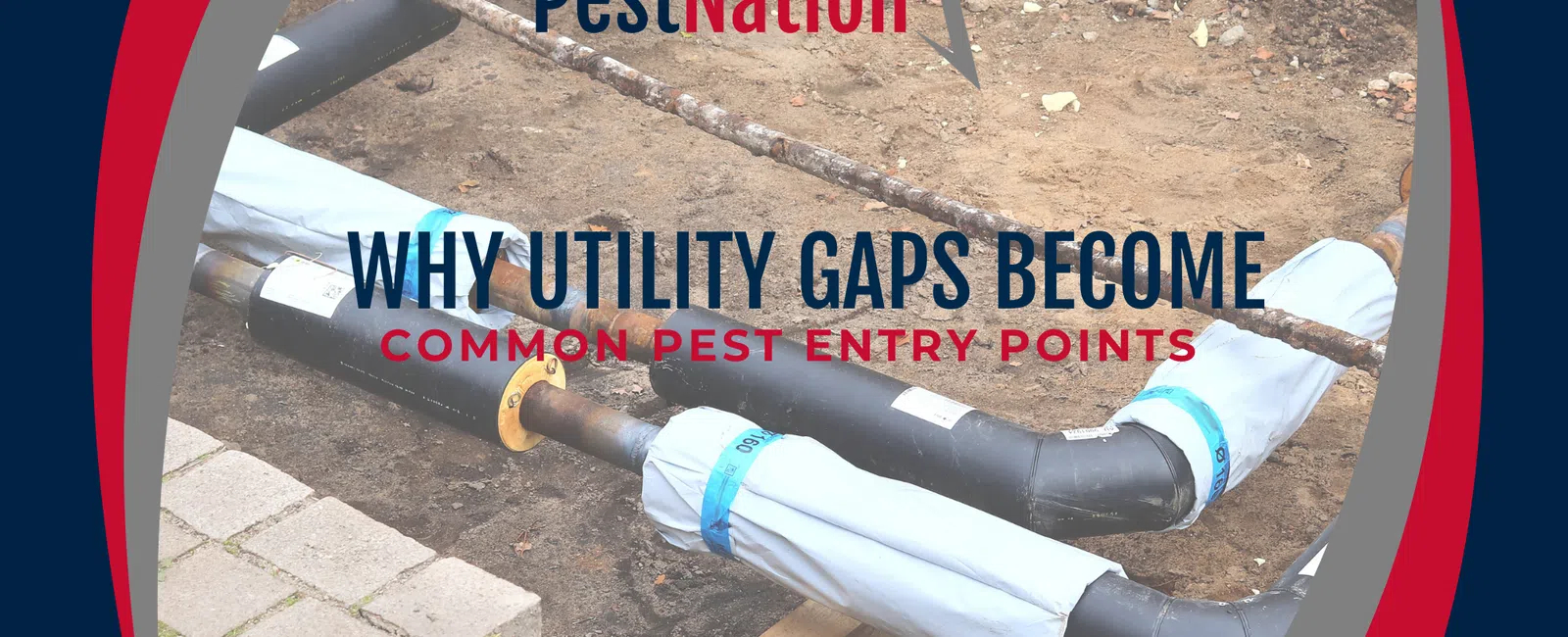
Homes depend on a network of plumbing pipes, electrical conduits, HVAC lines, cable connections, utility boxes, and other penetrations that pass through exterior walls, foundations, roofs, crawlspaces, and garages. These openings are necessary for the home to function, but the spaces around them are not always perfectly sealed. Even small gaps can create pathways that allow insects and other pests to move from the exterior into concealed areas of the structure.
Understanding utility line pest entry points is an important part of Home Pest Prevention because pests often exploit openings that are easy to miss during routine cleaning or maintenance. A gap around a pipe beneath a sink, an opening around an HVAC refrigerant line, or an unsealed cable penetration may connect outdoor areas directly to wall cavities, crawlspaces, attics, or interior rooms. These conditions do not guarantee that an infestation will occur, but they can make pest access easier. Effective pest exclusion focuses on identifying and correcting appropriate openings while also addressing sanitation, moisture, landscaping, and other conditions that influence pest activity.
What Are Utility Line Pest Entry Points?
Utility penetrations are locations where pipes, cables, wires, ducts, conduits, or other building systems pass through a wall, floor, ceiling, foundation, or roof.
Common examples include:
- Plumbing supply lines
- Drain and waste piping
- Electrical conduits
- Cable and internet lines
- HVAC refrigerant lines
- Condensate drain lines
- Gas piping
- Exterior faucets
- Utility boxes
- Dryer vents
- Exhaust penetrations
- Satellite or communication wiring
Installers typically create openings large enough to route these components through the structure. Ideally, the remaining space around the penetration is sealed appropriately. In practice, however, gaps can remain or develop over time.
These openings are among the most easily overlooked utility line pest entry points because the pipe or cable itself may make the area look closed even when small spaces remain around its edges.
Why Gaps Develop Around Pipes and Utility Lines
Not every utility opening is the result of poor workmanship. Gaps can develop for several reasons during the life of a home.
Original Construction
During construction, contractors create openings for plumbing, electrical, HVAC, and communication systems. Some penetrations may be sealed immediately, while others may receive only minimal treatment depending on their location and construction details.
Small voids can remain around irregularly shaped pipes or bundles of wiring.
Remodeling
Kitchen renovations, bathroom upgrades, additions, and other remodeling projects often require new plumbing, electrical, or mechanical penetrations.
Older openings may also be abandoned after equipment or fixtures are moved.
If these areas are not properly closed, they can become new pest access points.
Utility Installation
Internet providers, cable companies, HVAC contractors, electricians, plumbers, and other service professionals may create new penetrations during installation or repair work.
Even when the original opening was properly sealed, later service can disturb existing caulk, foam, flashing, covers, or other materials.
Building Movement
Homes naturally experience minor expansion, contraction, settlement, and movement.
Temperature changes, humidity, soil conditions, and aging materials can cause seals to pull away from pipes or surrounding surfaces.
Material Deterioration
Sealants do not last forever.
Caulk, foam, gaskets, and other materials can:
- Crack
- Shrink
- Separate
- Harden
- Break down
- Become damaged during repairs
Routine inspection is therefore an important part of Pest Exclusion.
Small Gaps Can Matter More Than Homeowners Expect
Many pest entry points are much smaller than homeowners imagine.
Ants and cockroaches can exploit narrow cracks and irregular openings. Spiders may follow insects through the same areas. Rodents require larger openings, but gaps around utility lines, foundation penetrations, or service entrances may still provide access when deterioration is significant.
The key issue is not whether an opening looks large to a person. It is whether it provides a continuous route into a protected space.
A gap around an exterior pipe might lead into:
- A wall cavity
- A crawlspace
- A basement
- An attic
- A garage
- A cabinet void
- A kitchen
- A bathroom
- A utility room
Once pests enter these concealed spaces, they may travel along plumbing, wiring, framing, or ductwork before appearing somewhere completely different inside the home.
Plumbing Penetrations Are Especially Important
Plumbing pipes commonly pass through foundations, exterior walls, floors, cabinets, and crawlspaces.
Potential entry areas include:
- Kitchen sink plumbing
- Bathroom plumbing
- Hose bibs
- Water supply lines
- Drain pipes
- Water heater connections
These locations can be attractive from a pest-management standpoint because plumbing combines possible entry points with potential moisture.
A small leak around the same area can make conditions even more favorable.
Ants and cockroaches are often associated with kitchens and bathrooms partly because those areas provide dependable access to water and food.
For Home Pest Prevention, homeowners should inspect not only the visible interior pipe but also the area where it enters or exits the structure when accessible.
HVAC Lines Can Create Hidden Openings
Air-conditioning systems frequently require refrigerant lines, electrical wiring, and condensate piping to pass through an exterior wall.
The penetration around these components is often grouped together and sealed with caulk, foam, putty, or other materials.
Over time, these seals can deteriorate.
Potential concerns include:
- Cracked sealant
- Missing material
- Gaps behind line covers
- Loose exterior trim
- Openings around condensate piping
These areas are often located low on exterior walls, placing them close to landscaping, mulch, soil, and insect activity.
Including HVAC penetrations in routine pest exclusion inspections can help identify developing openings before they become more significant.
Electrical Conduits and Utility Boxes Can Provide Access
Electrical service components create several penetrations through exterior walls.
Examples include:
- Meter boxes
- Electrical panels
- Conduit
- Exterior outlets
- Junction boxes
- Service cables
The objective is not to seal electrical equipment indiscriminately. Electrical components must remain safe, functional, and compliant with applicable requirements.
However, gaps around the exterior perimeter of appropriate penetrations can sometimes create pest-access opportunities.
Because electrical work involves safety hazards, homeowners should avoid altering electrical enclosures or service equipment themselves. Concerns involving electrical components should be evaluated by an appropriate qualified professional.
Cable and Internet Lines Are Easy to Overlook
Communication cables are usually small, but installers still need to create a penetration through the building.
Homeowners may have multiple generations of cable, telephone, satellite, security, or internet wiring from previous services.
This can result in:
- Multiple small holes
- Abandoned cable penetrations
- Loose exterior plates
- Missing sealant
- Unused openings
Because these penetrations may be hidden behind shrubs, utility boxes, or exterior equipment, they are often forgotten during routine maintenance.
Checking them periodically can support better Pest Exclusion and weatherproofing.
Ants Commonly Exploit Small Structural Openings
Ants are excellent at locating narrow routes through buildings.
Workers searching for food or moisture may enter around:
- Pipes
- Window frames
- Utility lines
- Door frames
- Foundation joints
- Siding transitions
Once ants establish a trail through an opening, additional workers may repeatedly use the same route.
Sealing an access point can support Residential Pest Control, but exclusion should be coordinated with appropriate ant management when a colony is already established.
Closing only the visible route may simply cause workers to locate another opening nearby.
Cockroaches Can Use Utility Pathways
Cockroaches prefer protected, dark environments and frequently forage near moisture.
Utility penetrations can connect outdoor or concealed spaces with:
- Kitchens
- Bathrooms
- Laundry rooms
- Utility rooms
- Mechanical spaces
Gaps around plumbing are particularly relevant because moisture may be available nearby.
Effective cockroach prevention generally includes sanitation, moisture management, monitoring, exclusion, and treatment where necessary rather than relying on sealing alone.
Spiders Often Follow Other Pests
Spiders may use gaps around utility penetrations directly, but they may also appear because other insects are using the same route.
Where insects concentrate, spiders often follow their food source.
This is why recurring webs around utility boxes, outdoor fixtures, garages, or exterior penetrations may indicate broader insect activity rather than a problem caused solely by spiders.
Reducing insect access can therefore contribute to reduced spider activity over time.
Rodents Require Special Attention
Mice and rats need larger openings than most insects, but damaged or poorly sealed utility areas can still become rodent access points.
Potential locations include:
- Larger plumbing penetrations
- Openings around HVAC components
- Foundation penetrations
- Gaps around utility chases
- Garage utility entrances
Rodents may also enlarge existing openings through gnawing.
If rodent activity is suspected, homeowners should avoid simply sealing every opening without understanding whether animals are already inside.
Professional rodent control and Pest Exclusion may need to be coordinated to avoid trapping rodents within the structure.
Occasional Invaders May Also Use These Openings
A variety of pests that normally live outdoors may enter buildings accidentally or seasonally.
These may include:
- Crickets
- Earwigs
- Beetles
- Millipedes
- Centipedes
- Stink bugs
They may not be actively trying to infest the home in the same way as certain cockroaches or ants, but available structural openings still make indoor entry easier.
Reducing unnecessary access can therefore help with both established household pests and occasional invaders.
Inspect Both Sides of a Penetration When Possible
One of the most practical Home Pest Prevention steps is examining both the exterior and interior sides of utility penetrations when they are safely accessible.
An exterior opening may appear properly sealed while the interior side contains a larger hidden gap, or vice versa.
For example, homeowners can check:
- Beneath sinks
- Behind accessible appliances
- Utility rooms
- Garages
- Crawlspaces
- Exterior walls
- Around HVAC lines
- Around hose bibs
- Near cable connections
Look for:
- Visible gaps
- Daylight
- Cracked sealant
- Loose trim
- Pest droppings
- Ant trails
- Spider webs
- Moisture staining
- Gnaw marks
- Insect debris
These observations can provide valuable clues during PestNation pest inspections.
Use the Right Material for the Right Opening
Not every gap should be filled with the same material.
Depending on the location, appropriate options may include:
- Exterior-grade caulk
- Sealant designed for specific building materials
- Backer rod and sealant for larger joints
- Appropriate mesh or screening
- Flashing
- Professional repair of damaged siding or trim
Larger rodent-access points may require more durable materials than ordinary caulk or foam.
Likewise, fire-rated assemblies, electrical penetrations, HVAC components, and plumbing systems may have specific requirements.
The goal of pest exclusion is not simply to fill every visible opening. It is to repair appropriate gaps without interfering with drainage, ventilation, electrical safety, mechanical operation, or building performance.
Exterior Building Components Matter Too
Sealing utility penetrations works best when the rest of the exterior is maintained.
Homeowners should also inspect:
- Siding
- Foundation walls
- Door sweeps
- Weather stripping
- Window screens
- Crawlspace doors
- Exterior vents
- Soffits
- Fascia
- Roofline components
A well-sealed pipe penetration provides limited benefit if pests can enter through a damaged screen or large door gap a few feet away.
Comprehensive Pest Exclusion looks at the building envelope as a complete system.
Moisture Management Should Be Part of Exclusion
Utility penetrations often occur near plumbing, HVAC equipment, and other systems capable of producing moisture.
Homeowners should check for:
- Plumbing leaks
- Condensation
- Leaking exterior faucets
- HVAC condensate problems
- Standing water
- Poor drainage
Moisture can attract or support ants, cockroaches, and other pests even when structural openings are limited.
Correcting entry points while ignoring a persistent leak may leave an important pest-conducive condition unresolved.
Landscaping Can Increase Pest Pressure Around Penetrations
The exterior environment matters because most utility lines enter the home near ground level or landscaping.
Potential concerns include:
- Mulch piled against the wall
- Dense shrubs
- Leaf litter
- Groundcover
- Excessive irrigation
- Debris
- Firewood
These materials can provide shade, moisture, and shelter close to structural openings.
Keeping vegetation trimmed and foundation areas visible makes it easier to identify both pest activity and deterioration around utility penetrations.
Sanitation Supports Pest Exclusion
Even a well-sealed home may experience pest problems if food and water are readily available.
Good sanitation practices include:
- Cleaning food spills
- Storing pantry items securely
- Securing garbage
- Cleaning beneath appliances
- Managing pet food
- Reducing clutter
- Repairing leaks
Pest Control works best when access, food, moisture, and shelter are all considered together.
This is particularly important for ants and cockroaches, which may continue searching for alternative routes if attractive resources remain indoors.
Utility Openings Should Be Rechecked Over Time
A penetration that is properly sealed today may not remain that way indefinitely.
Homeowners should periodically inspect seals because:
- Caulk can crack.
- Foam can deteriorate.
- Pipes can move slightly.
- Repairs can disturb older sealants.
- Siding can shift.
- Utility technicians may create new penetrations.
- Weather exposure can damage exterior materials.
It is especially useful to inspect these areas after remodeling, plumbing service, HVAC replacement, cable installation, storm damage, or other work involving the exterior.
A Practical Exterior Inspection Routine
Homeowners can perform a simple walk-around several times each year.
Look closely at areas where anything enters or exits the structure.
Check:
- Plumbing lines
- HVAC lines
- Electrical conduit
- Cable lines
- Utility boxes
- Exterior faucets
- Dryer vents
- Foundation penetrations
- Garage walls
Then inspect nearby building components for cracks, damaged seals, moisture, and pest activity.
Inside, look at corresponding areas when accessible, particularly beneath sinks, inside utility closets, around mechanical equipment, and in garages or crawlspaces.
Photographing questionable areas can make it easier to monitor whether gaps are getting larger over time.
When Professional Pest Inspection Helps
Some entry points are obvious, but others may be hidden inside crawlspaces, wall systems, attics, or landscaping.
PestNation pest inspections can help evaluate:
- Active pest evidence
- Potential pest entry routes
- Utility penetrations
- Rodent access
- Moisture conditions
- Exterior harborage
- Structural gaps
A professional inspection can also help distinguish between an opening that is merely a maintenance concern and one associated with actual pest activity.
Not every visible gap causes an infestation, and treatment should be based on evidence and conditions rather than assumption alone.
Pest Exclusion Is Not the Same as Pest Treatment
This distinction is important.
Pest Exclusion is primarily about reducing access.
Professional treatment addresses an active pest population.
If ants, cockroaches, or rodents are already established inside a home, sealing one or more utility openings may help prevent future access but may not eliminate the existing infestation.
Depending on the pest, an effective management plan can include:
- Identification
- Inspection
- Exclusion
- Sanitation
- Moisture management
- Monitoring
- General pest treatment
- Rodent control
- Interior and exterior treatments
This combined approach offers more complete Residential Pest Control than relying on a single repair or product.
Utility Entry Points in Southeastern Homes
Homes across the Southeast experience year-round exposure to heat, humidity, rain, vegetation, and substantial insect activity.
These environmental conditions can accelerate deterioration of exterior caulk, sealants, siding, and other materials around utility penetrations.
Homeowners seeking Atlanta pest control, Charlotte pest control, Orlando pest control, or Charleston pest control may encounter different species and seasonal patterns, but maintaining exterior openings remains relevant in every market.
Properties receiving Atlanta interior and exterior pest treatments, Charlotte interior and exterior pest treatments, Orlando interior and exterior pest treatments, or Charleston interior and exterior pest treatments may also benefit from determining whether repeated indoor activity is associated with structural entry points.
Treating pests without addressing accessible routes into the home can leave part of the problem unresolved.
How PestNation Supports Home Pest Prevention
At PestNation, effective Pest Control involves identifying both active pests and the conditions that may allow them to enter or remain around a property.
Depending on the situation, PestNation pest inspections can help identify structural openings, pest evidence, moisture concerns, and other contributing conditions. Appropriate Pest Exclusion may be recommended for accessible entry points, while general pest control, rodent control, or relevant interior and exterior treatments can address active pest problems when needed.
A comprehensive Residential Pest Control strategy considers the building exterior, interior environment, landscaping, sanitation, moisture, and pest behavior together. That approach is especially useful when dealing with recurring activity near plumbing, HVAC equipment, garages, crawlspaces, and other utility-heavy areas.
Gaps around pipes, HVAC lines, electrical conduits, cables, and other utilities are common because nearly every home requires numerous penetrations through its exterior surfaces. Some openings are left during construction or installation, while others develop later as materials age, repairs are performed, or the building moves. These utility line pest entry points do not guarantee that a pest infestation will occur, but they can create accessible pathways from the outdoors into concealed parts of a home.
Routine inspection and appropriate pest exclusion can reduce those pathways, especially when homeowners check both exterior and accessible interior sides of utility penetrations and repair deteriorated seals over time. The strongest Home Pest Prevention strategy also includes moisture management, sanitation, landscaping maintenance, monitoring, professional inspections, and targeted Pest Control when necessary. By addressing both structural access and the environmental conditions that attract pests, homeowners can reduce the likelihood that small utility gaps become recurring pest problems.