
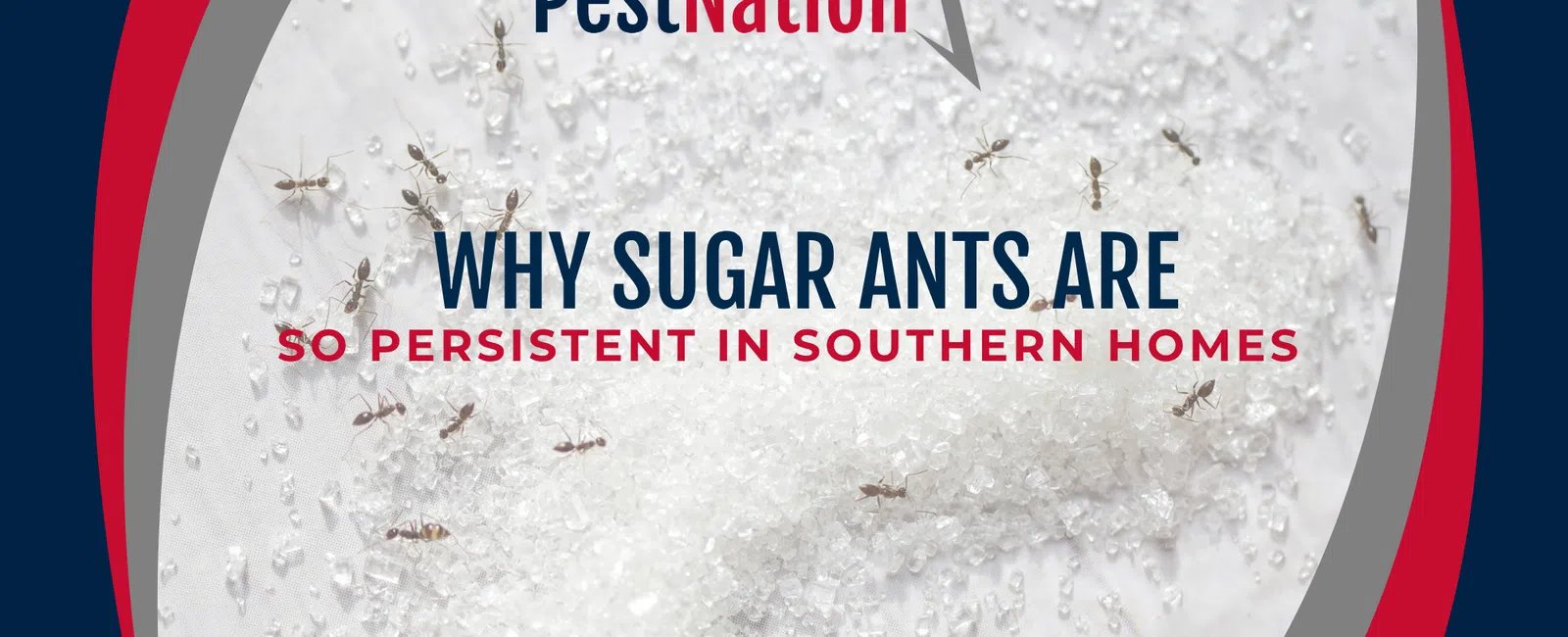
Small ants appearing around kitchen counters, sinks, windows, pet bowls, or pantry shelves are often described by homeowners as "sugar ants." The term is convenient because many of these ants are noticed while feeding on sweet foods, syrups, crumbs, fruit residue, or other sugary materials. However, sugar ant is an informal household description rather than one universally defined Southern pest species. Different small ants may be grouped under the name even though their biology, nesting habits, colony structure, and appropriate control methods can differ considerably.
That distinction is important for effective sugar ant control. Argentine ants, odorous house ants, ghost ants, rover ants, and other small household ants may all be encountered in parts of the South, depending on the location and surrounding environment. An ant infestation that appears identical to a homeowner may actually require a different management approach once the species, nesting location, and colony behavior are identified. Understanding why these ants persist requires looking beyond the workers walking across a countertop and considering the much larger colony supporting that visible activity.
What Do Homeowners Mean by "Sugar Ants"?
When homeowners use the phrase "sugar ants," they are usually describing small ants that repeatedly show up around food or moisture indoors.
The name generally reflects observed feeding behavior rather than formal identification.
Common attractants can include:
- Sugar
- Syrup
- Honey
- Fruit
- Soft drinks
- Juice
- Baked goods
- Food crumbs
- Pet food
- Grease and other food residues
Not every ant that visits these materials is the same species, and ants may change their dietary preferences depending on colony needs.
Guidance from UGA Extension - Managing Nuisance Ants discusses nuisance ants such as Argentine ants and odorous house ants, providing useful context for understanding why the informal term "sugar ants" can refer to different small household ants and why proper identification matters for effective ant control.
For homeowners, the practical lesson is simple: appearance around sugar does not provide enough information by itself to determine how an infestation should be managed.
Why Proper Ant Identification Matters
Ant species differ in important ways.
They may vary in:
- Colony size
- Number of queens
- Nesting location
- Seasonal activity
- Food preferences
- Foraging behavior
- Response to environmental changes
- Response to different control methods
A treatment strategy that works well for one species may perform poorly against another.
For example, a species with extensive outdoor colonies and multiple queens presents a different management challenge from an ant nesting in a relatively localized structural void.
Educational resources from UF/IFAS - Ant Resources provide information about multiple pest ant species found in Florida, reinforcing why homeowners should avoid assuming that every small ant found around food or moisture is the same species or requires the same management approach. UF/IFAS maintains identification and biological information for numerous ants, including Argentine ants, ghost ants, carpenter ants, bigheaded ants, and other species encountered in the state.
Correct identification allows Ant Control decisions to be based on actual biology rather than appearance alone.
Why Argentine Ants Can Be Especially Persistent
Argentine ants are one example of a small nuisance ant that may be described informally as a sugar ant.
They can develop extensive colonies and establish trails between nesting areas and dependable food or moisture resources.
Information from UGA Extension - Controlling Pesky Ants in Your Home discusses Argentine ant behavior, large colonies, indoor activity, and attraction to food sources, helping explain why some ant infestations can persist even when homeowners repeatedly eliminate the workers they see. The guidance also notes their association with outdoor conditions such as water, mulch, pine straw, potted plants, and landscaping.
This behavior is one reason homeowners may clean a trail of ants from a counter only to find another trail several hours later.
The visible workers represent only a portion of the colony.
Odorous House Ants Can Also Become Indoor Nuisances
Odorous house ants are another small species homeowners may encounter around food or moisture.
Like many nuisance ants, they can exploit protected nesting locations and travel along established foraging trails.
Their behavior can overlap with that of other small ants from the homeowner's perspective, which reinforces why visual impressions such as "tiny brown ants in the kitchen" do not necessarily provide a reliable species identification.
Professional identification becomes particularly useful when activity:
- Continues despite repeated cleaning
- Appears in several rooms
- Changes location frequently
- Returns after treatment
- Occurs throughout much of the year
Recurring activity usually indicates that a larger colony or multiple nesting areas remain active beyond the visible workers.
The Ants You See Are Usually Workers
One of the most important concepts in sugar ant control is colony structure.
Most ants homeowners see walking through kitchens or bathrooms are workers. Their job is to leave the nest, locate resources, and return to the colony.
Behind those workers may be:
- Queens
- Developing larvae
- Pupae
- Additional workers
- Reproductive ants
Killing workers traveling across a countertop can temporarily reduce visible activity without eliminating the colony responsible for producing additional workers.
That is why repeated wiping, crushing, or indiscriminate spraying may appear successful for a short time before ants return.
An established ant infestation generally has to be evaluated at the colony level rather than only at the point where ants become visible.
Ant Trails Help Colonies Exploit Food Sources
Foraging workers often communicate information about food resources through chemical trails.
Once workers locate a dependable resource, additional ants can follow the route.
This can produce the familiar line of ants stretching between:
- A crack in the wall and a countertop
- A window frame and a sink
- A baseboard and pet bowl
- A cabinet and pantry shelf
Even after the food is removed, residual foraging behavior can continue temporarily.
Cleaning surfaces helps remove food residue and may disrupt trails, but sanitation alone may not eliminate a well-established colony.
Sugary Foods Are Only Part of the Attraction
The informal name "sugar ants" can create the impression that these ants only want sweets.
In reality, ant colonies need different nutrients at different times.
Depending on the species and colony needs, workers may seek:
- Sugars
- Proteins
- Oils
- Grease
- Insects
- Pet food
- Plant-derived materials
This is another reason that identifying ants solely by the food they are eating can be misleading.
A colony attracted to sweet liquid today may forage for a different resource later.
Crumbs and Residue Can Sustain Indoor Foraging
Tiny amounts of food can support repeated ant activity.
Common sources include:
- Crumbs beneath appliances
- Sticky residue around beverage containers
- Syrup on pantry shelves
- Food debris beneath cabinets
- Unwashed dishes
- Pet food
- Grease around cooking areas
- Recycling containers
Ants can locate food resources that homeowners may barely notice.
Practical sanitation therefore forms an important part of sugar ant control, particularly in kitchens and break areas.
Helpful practices include cleaning food residue promptly, storing pantry goods in secure containers, rinsing recyclable beverage containers, and avoiding leaving pet food accessible for long periods.
Water Can Be Just as Important as Food
Ants also need moisture.
Indoor foraging may increase around:
- Sinks
- Dishwashers
- Plumbing lines
- Bathrooms
- Laundry rooms
- HVAC equipment
- Water heaters
- Damp window frames
Small plumbing leaks can provide a dependable resource even when food sanitation is excellent.
Homeowners should investigate unexplained dampness, dripping pipes, condensation, and leaks beneath sinks.
Moisture management can reduce one reason ants continue returning indoors.
Small Entry Points Make Homes Easy to Access
Many nuisance ants require very little space to enter a structure.
Potential access points include:
- Cracks around window frames
- Door gaps
- Failed caulk
- Foundation openings
- Siding gaps
- Utility penetrations
- Plumbing penetrations
- Cable openings
- HVAC line penetrations
- Damaged screens
Workers may also travel through extremely narrow structural joints that are difficult for homeowners to identify.
Pest exclusion can reduce these opportunities, but it works best when combined with colony management.
Simply sealing the opening where ants are currently visible may cause workers to find another route if the colony remains active nearby.
Landscaping Can Support Outdoor Colonies
Ant problems inside a home often begin outside.
Landscaping can provide food, moisture, and sheltered nesting areas close to the structure.
Contributing conditions may include:
- Thick mulch
- Pine straw
- Leaf litter
- Dense vegetation
- Potted plants
- Groundcover
- Landscape timbers
- Irrigated beds
- Debris
UGA's information about Argentine ants specifically describes associations with mulch, pine straw, potted plants, water, and landscaped areas, illustrating why exterior conditions should be considered when ants repeatedly enter a home.
Reducing unnecessary harborage does not mean removing all landscaping. The goal is to manage vegetation and moisture so colonies have fewer protected conditions immediately beside the structure.
Vegetation Can Provide a Route to the House
Tree limbs, shrubs, vines, and other plants touching the building can act as pathways.
Ants may travel along vegetation to reach:
- Windows
- Rooflines
- Siding
- Utility lines
- Eaves
Keeping vegetation appropriately trimmed away from exterior surfaces can make monitoring easier while reducing direct pathways.
Homeowners should also inspect areas beneath dense shrubs for nests, moisture, and accumulated organic debris.
Southern Weather Can Influence Ant Activity
Warm Southern climates allow many insects to remain active for substantial portions of the year.
Temperature, rainfall, drought, humidity, and storms can all influence where ants forage or establish temporary nesting locations.
Warm weather commonly increases foraging activity because colony metabolism and food demands rise.
Rain can also change behavior.
UF/IFAS notes that some pest ants may relocate or move toward structures when outdoor conditions change, including after heavy rainfall for certain species.
Likewise, very dry conditions can encourage ants to search for dependable indoor moisture.
As a result, homeowners may notice sudden changes in ant activity following periods of heavy rain, drought, unusual heat, or other seasonal shifts.
Why Indoor Sprays May Not Solve the Colony
A common response to seeing ants is to spray the visible trail.
That may kill exposed workers but does not necessarily reach the nest.
Depending on the species and colony structure, repeatedly treating visible workers without addressing the colony may provide only temporary relief.
Effective management may require determining:
- Which species is present
- Where workers are entering
- Where nests are likely located
- Whether colonies are indoors or outdoors
- What food resources are available
- Whether moisture is contributing
- Which treatment method matches the ant's behavior
Some management programs use baits because foraging workers can carry material back toward the colony. However, bait selection and placement should still account for species behavior and current feeding preferences.
There is no single product or method that should automatically be used for every small-ant infestation.
Why Random Treatment Can Complicate Ant Control
More treatment is not necessarily better treatment.
Applying products without understanding the species, colony behavior, or product directions may produce poor results and unnecessary pesticide exposure.
The U.S. EPA - Integrated Pest Management Principles emphasizes monitoring and accurate pest identification before selecting controls, followed by prevention and appropriately targeted management. This is directly relevant to nuisance-ant problems because identification helps avoid applying unsuitable control methods to the wrong species or situation.
For homeowners, this means an effective response should begin with understanding the infestation rather than simply applying whatever product happens to be available.
Pest Exclusion Supports Ant Prevention
Although colony management is often necessary for established infestations, exclusion can help reduce future entry.
Homeowners can inspect:
- Window frames
- Door frames
- Utility lines
- Exterior pipes
- Cable penetrations
- Foundation transitions
- Siding joints
Appropriate gaps may be sealed or repaired as part of routine exterior maintenance.
Weather stripping and door sweeps should also be maintained.
Because ants can use extremely small openings, exclusion should be viewed as one part of the strategy rather than a guarantee that ants will never enter.
Moisture Management Is Especially Important
Recurring ant activity around kitchens, bathrooms, crawlspaces, or utility areas should prompt a moisture inspection.
Check for:
- Plumbing leaks
- Condensation
- Poor exterior drainage
- Irrigation overspray
- Clogged gutters
- Damp crawlspaces
- Leaking exterior faucets
Reducing moisture can make both indoor and outdoor environments less favorable for nuisance ants.
It also addresses broader pest-conducive conditions that may support cockroaches, mosquitoes, and other moisture-associated pests.
Practical Ways to Reduce Sugar Ant Activity
An effective prevention plan addresses food, water, access, and outdoor habitat together.
Homeowners can:
- Clean counters and food-preparation areas regularly.
- Store sugar, syrups, snacks, and pantry products securely.
- Clean beneath appliances and cabinets.
- Rinse sticky beverage containers before recycling them.
- Avoid leaving pet food out unnecessarily.
- Repair plumbing leaks.
- Reduce standing water.
- Maintain door sweeps and weather stripping.
- Seal appropriate exterior gaps.
- Trim vegetation away from the home.
- Avoid excessive mulch against the foundation.
- Remove unnecessary debris.
- Monitor ant trails rather than immediately destroying them if identification or professional evaluation is needed.
These steps can reduce resources available to colonies while making it easier to detect changes in activity.
Monitoring Can Reveal Where Ants Are Coming From
Before cleaning away every visible trail, observe where ants are traveling when practical.
Important questions include:
- Where do they disappear into the structure?
- Are they entering near a window or door?
- Are they coming from beneath a sink?
- Are they traveling toward an exterior wall?
- Is activity concentrated after rain?
- Do they appear primarily at night?
- Is the trail associated with food or water?
These observations can provide useful information during PestNation Pest Inspections and help determine whether the source is likely indoors, outdoors, or both.
When an Ant Infestation Needs Professional Attention
Professional evaluation may be appropriate when:
- Ants repeatedly return after cleaning.
- Multiple rooms are affected.
- Activity continues for weeks.
- Large trails develop indoors.
- The species cannot be identified.
- Nesting appears to involve walls or other concealed areas.
- DIY control has repeatedly failed.
- The infestation is widespread around the exterior.
Professional Ant Control can focus on identification, nesting behavior, entry points, colony extent, and appropriate treatment selection.
UF/IFAS provides extensive information on the variety of pest ants encountered in Florida, while its broader consumer pest-management guidance notes that professional services may be appropriate for household pests such as ants when prevention alone does not resolve the problem.
Sugar Ant Control in Southeastern Homes
The Southeastern United States provides favorable conditions for numerous ant species because of extended periods of warmth, substantial rainfall, humidity, abundant vegetation, and relatively long insect-active seasons.
Homeowners seeking Atlanta Pest Control, Charlotte Pest Control, Orlando Pest Control, or Charleston Pest Control may all describe persistent small ants as "sugar ants," but the actual species and contributing conditions can differ from one property to another.
That is why sugar ant control should begin with identification rather than assumptions.
A recurring ant infestation in Atlanta may involve different environmental pressures than one in Orlando, while differences in landscaping, construction, drainage, and food availability can matter even between neighboring homes.
How PestNation Approaches Persistent Ant Problems
At PestNation, effective Residential Pest Control begins with understanding the pest and the conditions supporting its activity.
PestNation Pest Inspections can help evaluate ant trails, potential nesting locations, structural entry points, food and moisture sources, and outdoor pest-conducive conditions. When treatment is appropriate, Ant Control can be selected according to the species, colony behavior, infestation extent, and property conditions rather than treating every small ant as though it were the same pest.
Relevant pest exclusion and general Pest Control measures may also help reduce recurring access. Depending on the property, Atlanta Interior and Exterior Pest Treatments, Charlotte Interior and Exterior Pest Treatments, Orlando Interior and Exterior Pest Treatments, and Charleston Interior and Exterior Pest Treatments can be incorporated where professional management of indoor and outdoor ant activity is warranted.
The ants commonly called "sugar ants" can be frustrating precisely because the workers visible in the kitchen are often only a small part of a much larger system. Colonies may be located outdoors, within structural voids, beneath landscaping materials, or in other protected locations, while workers repeatedly follow established routes toward dependable food and moisture. Eliminating a few workers therefore does not necessarily eliminate the source of the ant infestation.
Effective sugar ant control starts by recognizing that "sugar ant" is an informal description rather than a single Southern species. Proper identification, sanitation, moisture management, exterior maintenance, exclusion, monitoring, and species-appropriate treatment all play important roles. When persistent activity continues despite preventive efforts, professional inspection and targeted Ant Control can help address the colony and contributing property conditions rather than repeatedly treating only the ants that happen to be visible.