
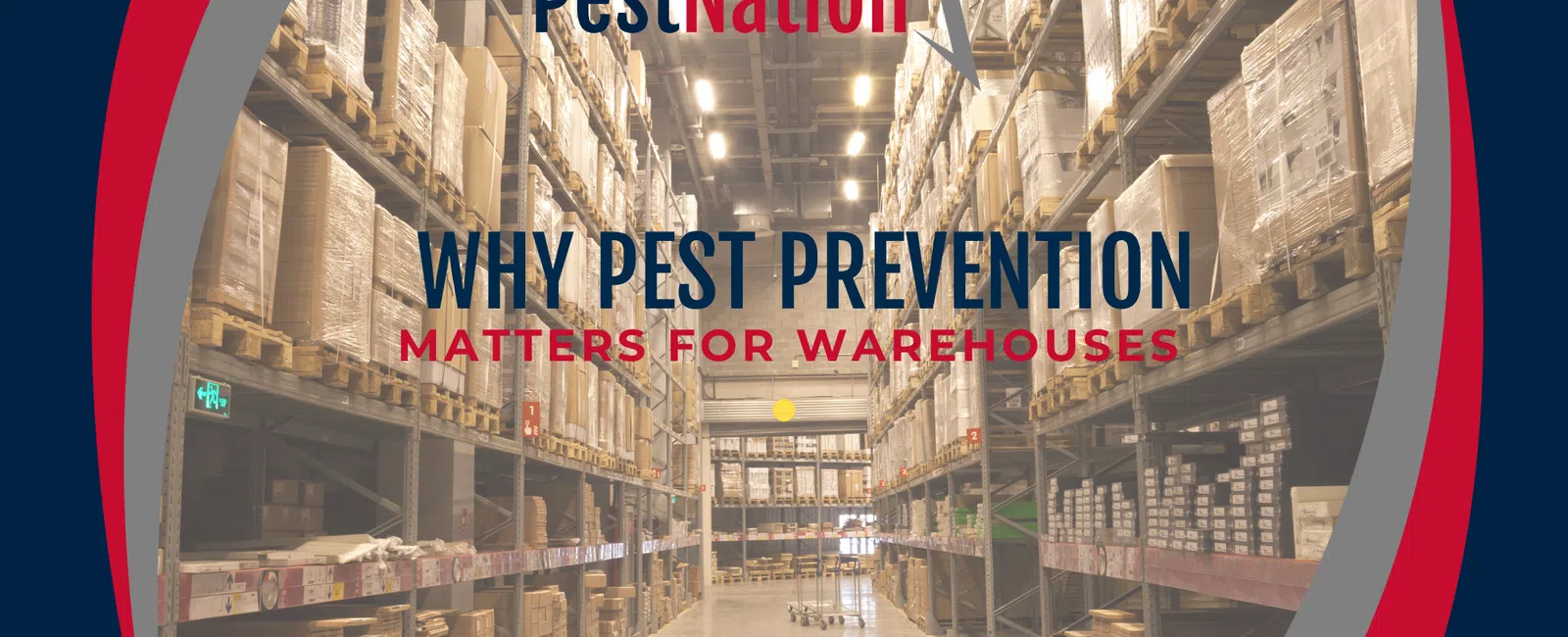
Warehouses and storage facilities present a different pest-management challenge from homes, offices, or smaller commercial spaces. Their large footprints, high ceilings, frequent shipments, loading docks, long rows of stored inventory, and constantly changing flow of goods can create numerous opportunities for pests to enter or remain unnoticed. Rodents, cockroaches, ants, flies, and certain stored-product insects may all become concerns depending on what a facility stores, how it operates, and the environmental conditions around the property.
Effective warehouse pest control therefore depends on prevention as much as treatment. Cardboard, pallets, stored products, loading docks, employee break areas, dumpsters, roof leaks, and gaps around exterior doors do not automatically create an infestation, but they can contribute to pest pressure when combined with food, moisture, shelter, or access. A strong commercial pest prevention program uses inspection, monitoring, sanitation, exclusion, inventory management, maintenance, and professional treatment where appropriate to reduce the conditions that allow pests to become established.
Why Warehouses Face Unique Pest Pressures
Warehouses are designed to move and store large quantities of products efficiently. That operational model creates several pest-management considerations at the same time.
A typical facility may have:
- Multiple loading docks
- Large overhead doors
- Frequent truck traffic
- Palletized inventory
- Cardboard packaging
- Exterior storage
- Break rooms
- Utility penetrations
- Dumpsters and recycling areas
- Areas that receive limited daily attention
The larger the facility, the easier it can be for isolated pest activity to remain unnoticed.
A cockroach behind stored packaging, a rodent entering through a loading dock, or stored-product insects developing in susceptible inventory may not immediately be obvious to employees working elsewhere in the building.
Routine monitoring helps identify those problems before they spread.
Incoming Shipments Can Introduce Pests
One of the defining characteristics of warehouses is the continuous movement of goods.
Incoming shipments may contain:
- Cardboard boxes
- Wooden pallets
- Plastic wrapping
- Bulk ingredients
- Packaged products
- Machinery
- Imported goods
Any of these materials can potentially conceal pests if they originated from or passed through an environment where pest activity was present.
That does not mean incoming shipments should be considered infested by default. Most arrive without pest problems.
However, receiving areas are logical monitoring points because they represent one of the major ways outside materials enter the facility.
Pallets and Packaging Can Conceal Pest Activity
Wooden pallets contain joints, cracks, and protected spaces that may temporarily shelter insects.
Cardboard packaging also contains:
- Folds
- Seams
- Corrugations
- Overlapping edges
Cockroaches and other small pests may use those protected areas.
Rodents may also gnaw packaging if food or nesting materials are available.
For warehouse pest control, receiving procedures should include awareness of damaged packaging, insects, droppings, webbing, or other unusual evidence before products are moved deeper into storage.
Stored-Product Insects Require Special Attention
Facilities that store food, grains, spices, pet products, seeds, dried ingredients, or similar commodities may face additional risks from stored-product insects.
Information from University of Minnesota Extension - Pantry Pests: Insects Found in Stored Food provides useful context about insects associated with stored food products and explains why inspection and monitoring are important wherever susceptible materials are stored.
Stored-product pests may be associated with:
- Flour
- Grain
- Cereals
- Nuts
- Dried fruit
- Pet food
- Seeds
- Spices
Activity may begin inside a product rather than somewhere obvious on the warehouse floor.
This makes inventory monitoring especially important.
UGA Guidance Highlights Stored-Product Pest Risks
The UGA Extension - Household and Stored Product Pests discusses pests associated with stored products as well as broader pest-management considerations. This resource helps explain why accurate identification matters in warehouse environments where insects may originate from inventory itself rather than entering exclusively through exterior openings.
Finding webbing, damaged packages, insect larvae, beetles, moths, or other evidence around stored goods should prompt further investigation.
The specific pest species can affect both the source of the problem and the appropriate response.
Loading Docks Are Major Entry Points
Loading docks are designed for constant movement between interior and exterior environments.
That makes them one of the most important areas for commercial pest prevention.
Potential issues include:
- Gaps around dock doors
- Damaged seals
- Poorly fitted dock plates
- Open doors
- Cracks around the loading area
Rodents and crawling insects may use small openings around these areas.
Flying insects may enter while dock doors remain open.
Routine inspection of seals and door assemblies can help reduce unnecessary access.
Open Overhead Doors Increase Pest Entry Opportunities
A warehouse may need to keep overhead doors open during active loading and unloading.
Operationally, that may be unavoidable.
From a pest-management standpoint, however, every prolonged opening creates greater opportunity for insects or rodents to enter.
Exterior lighting, nearby dumpsters, vegetation, standing water, or food operations can increase pest pressure near these openings.
The goal is not necessarily to eliminate door use but to reduce unnecessary open time and maintain effective seals when the door is closed.
Personnel Doors Need Attention Too
Smaller exterior doors can become overlooked entry points.
Potential problems include:
- Missing door sweeps
- Worn weather stripping
- Damaged thresholds
- Doors that do not close completely
Cockroaches, ants, beetles, and rodents may exploit openings around door assemblies.
A good warehouse pest control inspection should therefore evaluate both large loading areas and ordinary employee entrances.
Utility Penetrations Can Create Hidden Pathways
Warehouses contain numerous utility connections.
Examples include:
- Electrical conduit
- Plumbing
- Communication lines
- HVAC penetrations
- Refrigeration lines
Gaps around these components can allow pests to move between exterior and interior spaces.
In multi-tenant industrial buildings, utility pathways may also connect neighboring areas indirectly.
Appropriate exclusion should address unnecessary gaps while preserving building safety, ventilation, drainage, and equipment requirements.
Wall Gaps and Damaged Seals Can Be Easy to Miss
Large commercial buildings frequently experience wear from forklifts, pallets, carts, weather, and routine operations.
Damage may create gaps along:
- Exterior walls
- Expansion joints
- Foundations
- Dock surrounds
- Service penetrations
Small openings can become important over time.
Routine facility inspections help identify these conditions before they become established pest pathways.
Clutter Creates Pest Harborage
Warehouses may accumulate unused materials over time.
Common examples include:
- Empty cartons
- Old pallets
- Damaged products
- Discarded equipment
- Plastic wrapping
- Unused shelving
These materials can create hidden spaces where pests remain undisturbed.
Reducing unnecessary clutter improves inspection access and makes signs of activity easier to identify.
For commercial pest prevention, organization is therefore more than an efficiency issue. It also improves pest visibility.
Long-Term Storage Can Hide Problems
Inventory that remains untouched for months may receive less frequent inspection.
Areas behind slow-moving products can become:
- Dark
- Undisturbed
- Difficult to clean
- Difficult to monitor
These conditions may allow pest evidence to accumulate before anyone notices.
Regular inventory rotation can reduce long-undisturbed spaces and improve visibility.
Inventory Rotation Supports Pest Detection
First-in, first-out or other appropriate inventory-management systems can improve both operational control and pest awareness.
Rotating inventory allows employees to inspect:
- Shelving
- Pallets
- Floor areas
- Packaging
- Wall junctions
If products remain permanently in the same location, those surfaces may be difficult to evaluate.
Inventory organization should also maintain sufficient access for inspection and cleaning wherever operationally practical.
Moisture Can Create Significant Pest Pressure
Warehouses are sometimes considered relatively dry spaces, but moisture problems can still develop.
Potential sources include:
- Roof leaks
- Plumbing leaks
- HVAC condensation
- Refrigeration systems
- Poor drainage
- Standing water
Cockroaches, flies, ants, and other pests may benefit from persistent moisture.
Rodents also require water and may remain near dependable sources.
Correcting leaks and drainage issues can therefore remove important pest-supporting conditions.
Roof Leaks Can Create Hidden Damp Areas
Warehouse roofs cover large areas, and leaks may not always occur directly above visible workspaces.
Water may move along structural components before reaching the floor.
Moisture can accumulate around:
- Insulation
- Wall cavities
- Stored materials
- Ceiling areas
These damp locations can support pest activity and may also damage inventory.
Recurring moisture should be investigated as both a maintenance and pest-prevention concern.
Condensation Can Be an Overlooked Water Source
Facilities with refrigeration, HVAC equipment, cold storage, or significant temperature differences may experience condensation.
Persistent condensation around pipes or equipment can provide water for insects.
Employees may overlook the problem if it occurs behind machinery or above stored products.
Routine facility inspections should therefore include areas where moisture may form even in the absence of an active plumbing leak.
Break Rooms Can Become Pest Hotspots
Most warehouses contain employee eating or break areas.
These spaces can introduce:
- Food crumbs
- Beverage spills
- Garbage
- Food containers
Cockroaches, ants, flies, and rodents may concentrate around these resources.
Routine cleaning and secure food storage help prevent break-room activity from spreading into nearby warehouse areas.
Break rooms should be included in the same pest-management program as storage spaces.
Waste Management Matters
Dumpsters, compactors, trash cans, and recycling areas can increase exterior pest pressure when not properly maintained.
Potential attractants include:
- Food waste
- Beverage residue
- Damaged packaging
- Organic debris
- Standing liquids
Overflowing dumpsters or loose garbage can attract rodents, flies, cockroaches, and ants.
Waste areas located close to loading docks deserve particular attention because pests attracted to garbage may then encounter easy access into the facility.
Exterior Conditions Influence Interior Pest Pressure
The area immediately surrounding a warehouse can affect pest activity inside.
Potential concerns include:
- Tall vegetation
- Dense landscaping
- Standing water
- Drainage problems
- Stored pallets
- Debris
- Exterior lighting
Vegetation and debris may provide shelter.
Standing water can support insects such as mosquitoes.
Exterior lights can attract flying insects toward doors.
Maintaining the building perimeter improves visibility and supports commercial pest prevention.
Recognizing Signs of Pest Activity
Employees and facility managers should know what pest evidence looks like.
Potential signs include:
- Droppings
- Gnaw marks
- Damaged packaging
- Live insects
- Dead insects
- Shed skins
- Egg cases
- Webbing
- Contaminated products
The presence of one insect does not automatically indicate a widespread warehouse infestation.
A pest may have entered through an open dock door or arrived with a shipment.
Repeated evidence or activity across multiple areas is more concerning.
Rodents Can Damage Products and Packaging
Rodents may gnaw materials for access or because their continuously growing teeth require regular wear.
Damage may appear on:
- Cardboard
- Plastic packaging
- Food containers
- Structural materials
Droppings, tracks, nesting materials, and rub marks may provide additional evidence.
Early detection is especially important because warehouse layouts can allow rodents to move through long rows of storage without immediately being seen.
Cockroaches Can Hide Near Warm and Damp Areas
Cockroaches may be associated with:
- Break rooms
- Restrooms
- Drains
- Utility spaces
- Equipment
- Cardboard
Their preferred environments vary by species.
Some are strongly associated with indoor warmth and food, while others may enter from exterior areas.
Accurate identification helps determine whether the source is likely indoors, outdoors, or associated with incoming materials.
Flies May Indicate Organic Material or Entry Issues
Flying insects can enter through loading docks or personnel doors.
Some may also reproduce around:
- Garbage
- Drains
- Organic spills
- Moist debris
Repeated fly activity should be investigated rather than treated as one uniform problem.
The species and location of activity can provide clues about whether the source is indoors or outdoors.
Routine Monitoring Is Essential in Large Facilities
Large warehouses can contain thousands of square feet that employees do not inspect closely every day.
Monitoring helps compensate for this scale.
A professional program can track:
- Activity locations
- Trends
- Pest species
- Structural concerns
- Environmental conditions
Recurring activity in one zone can then be investigated before it expands across the facility.
This makes monitoring a central part of effective warehouse pest control.
Integrated Pest Management Provides a Comprehensive Strategy
Guidance from the U.S. EPA - Introduction to Integrated Pest Management provides a useful framework for combining prevention, monitoring, sanitation, and targeted control, which is particularly relevant for large warehouse and storage environments.
Integrated Pest Management, or IPM, typically incorporates:
- Inspection
- Monitoring
- Sanitation
- Exclusion
- Moisture management
- Facility maintenance
- Appropriate professional treatment
Rather than responding only to visible pests, IPM looks for the conditions allowing activity to continue.
EPA Principles Reinforce Prevention First
The U.S. EPA - Integrated Pest Management Principles emphasizes prevention, monitoring, accurate identification, and appropriate control strategies. These concepts align closely with commercial pest prevention because warehouse infestations often involve multiple contributing factors rather than one isolated cause.
For example, repeatedly treating insects near a loading dock may provide limited long-term value if damaged seals and standing water remain unchanged.
Likewise, rodent control is less effective if food waste and structural openings continue to support activity.
Pest Problems Can Affect Inventory
Depending on the facility and pest, infestations can affect:
- Packaging
- Stored products
- Raw materials
- Finished goods
Contamination, physical damage, or evidence of pest contact may require products to be evaluated or removed.
This can create direct financial losses.
Prevention helps protect inventory before damage occurs.
Operations Can Also Be Disrupted
Pest problems may require:
- Additional cleaning
- Product inspections
- Maintenance
- Temporary relocation of inventory
- Investigations
- Emergency treatment
These disruptions can interfere with normal workflow.
For logistics-focused facilities where efficiency is essential, preventive pest management can support more predictable operations.
Customer Expectations Matter
Warehouse customers often expect products to be stored in clean, professionally maintained facilities.
Evidence of pests can affect confidence even when product damage is limited.
Distribution centers and third-party logistics providers may also have contractual cleanliness or quality requirements.
A documented pest-management program can therefore support broader facility-management objectives.
Food and Agricultural Storage May Have Additional Requirements
Warehouses handling food, dietary supplements, agricultural commodities, or regulated products may operate under additional sanitation or regulatory requirements.
The FDA - Current Good Manufacturing Practices for Food and Dietary Supplements provides regulatory context for facilities involved in food production and storage, including expectations surrounding sanitary operations and protection against contamination.
These facilities may require pest-management practices that go beyond what is needed in a warehouse storing non-food items.
Operators should understand the specific regulations, customer standards, and industry requirements applicable to their products.
Different Warehouses Have Different Pest Risks
A food distribution warehouse does not face exactly the same pest pressures as a furniture warehouse.
Likewise, climate-controlled storage differs from an open industrial building.
Risk depends on factors such as:
- Stored products
- Building design
- Temperature
- Moisture
- Surrounding environment
- Shipping volume
This is why warehouse pest control programs should be tailored to the actual facility.
Atlanta Pest Control for Warehouses
Facilities seeking Atlanta Pest Control operate in a climate with warm temperatures, humidity, and substantial seasonal insect pressure.
Warehouse managers may need to monitor:
- Loading docks
- Moisture
- Exterior vegetation
- Dumpsters
- Door seals
PestNation Pest Inspections can help identify where environmental conditions or structural openings may be contributing to activity.
Charlotte Pest Control for Storage Facilities
For businesses requiring Charlotte Pest Control, seasonal warmth and rainfall can influence insect activity around industrial properties.
Large warehouse developments may also share loading areas, dumpsters, drainage systems, or adjacent tenants.
Routine exterior monitoring and facility maintenance can help reduce pest movement between these areas.
Orlando Pest Control and Year-Round Pest Activity
Orlando's long warm season can support persistent pest pressure.
For Orlando Pest Control, warehouses may need year-round attention to moisture, loading docks, exterior doors, waste areas, and landscaping.
Facilities handling food or agricultural products may also require particularly consistent inspection and monitoring.
Charleston Pest Control and Humid Storage Environments
For Charleston Pest Control, coastal humidity and rainfall can contribute to moisture around commercial buildings.
Warehouses should monitor:
- Drainage
- Roof leaks
- Condensation
- Dock areas
- Exterior pest activity
Good moisture management can complement professional Commercial Pest Control.
When Professional Commercial Pest Control Is Appropriate
Recurring or widespread pest activity usually warrants professional evaluation.
Reasons to request an inspection may include:
- Repeated droppings
- Multiple rodent sightings
- Persistent cockroach activity
- Stored-product insects
- Damaged packaging
- Pest evidence across multiple zones
- Activity continuing despite sanitation improvements
PestNation Pest Inspections can help determine the pest species, likely source, extent of activity, and environmental conditions involved.
Professional Interior and Exterior Pest Treatments may then be combined with exclusion, sanitation, moisture management, and facility maintenance.
How PestNation Supports Warehouse Pest Prevention
At PestNation, Commercial Pest Control for warehouses and storage facilities begins with understanding how pests interact with the building and its operations.
An inspection may evaluate:
- Loading docks
- Exterior doors
- Storage racks
- Receiving areas
- Break rooms
- Waste zones
- Moisture sources
- Utility penetrations
- Exterior conditions
The objective is to determine not only where pests are visible but how they entered, what is supporting them, and what conditions could allow the problem to recur.
Effective warehouse pest control requires a coordinated approach because warehouse environments contain many potential pest pathways and hiding locations. Frequent deliveries, open loading docks, pallets, packaging, long-term storage, moisture, employee areas, dumpsters, and structural openings can all influence pest pressure. None of these factors guarantees an infestation, but together they can create opportunities for pests when inspection, sanitation, maintenance, or exclusion is inconsistent.
A comprehensive commercial pest prevention strategy combines monitoring, inventory organization, sanitation, exclusion, moisture management, maintenance, and professional treatment when necessary. For facilities experiencing recurring or widespread activity, PestNation Pest Inspections, professional Commercial Pest Control, and appropriate Interior and Exterior Pest Treatments can help identify the source of the problem and build a management strategy suited to the facility, its inventory, and its operating environment.