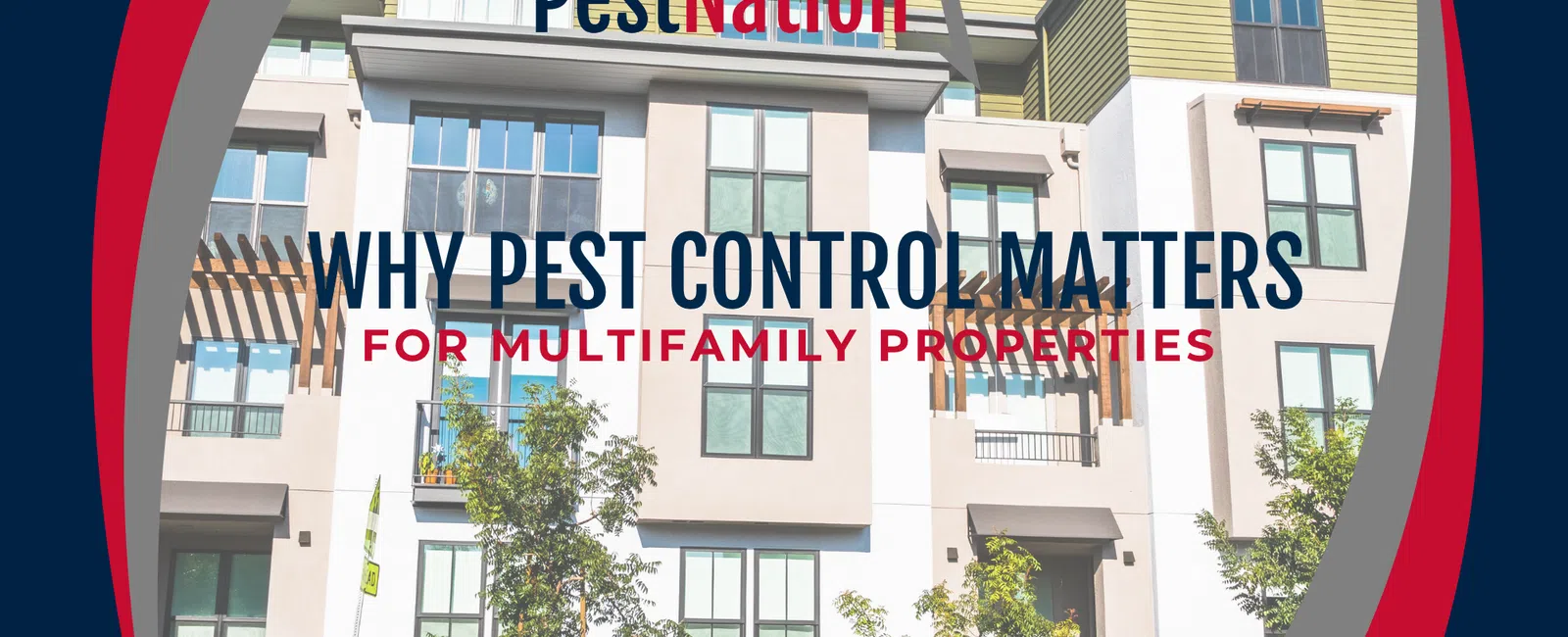
Multifamily properties create pest-management challenges that are fundamentally different from those found in detached single-family homes. Apartments, condominiums, and other multifamily buildings often contain interconnected walls, ceilings, floors, plumbing systems, utility lines, hallways, laundry rooms, storage spaces, trash areas, and shared mechanical spaces. These features make daily operations more efficient, but they can also create pathways that allow pests to move from one area of a building to another. A problem that appears limited to one apartment may sometimes be connected to conditions in an adjacent unit, a shared wall void, a plumbing chase, or another common area.
Effective multifamily pest control therefore requires a broader perspective than simply treating the unit where pests were reported. Successful apartment pest management may involve inspections, monitoring, maintenance, sanitation, moisture management, exclusion, communication with residents, and professional treatment across multiple areas when necessary. Pest activity does not automatically mean residents are maintaining their homes poorly. Plumbing leaks, structural gaps, utility penetrations, common trash areas, neighboring units, exterior conditions, and building design can all contribute to pest pressure. Understanding those factors is essential for property managers and multifamily operators trying to prevent recurring problems.
Why Multifamily Pest Management Is More Complex
A single-family home is generally separated from neighboring structures. Multifamily housing is different because numerous occupied spaces often share parts of the same building envelope and utility systems.
Pests may potentially move through:
- Wall voids
- Ceiling spaces
- Floor penetrations
- Plumbing chases
- Electrical openings
- Utility corridors
- Shared hallways
This interconnected construction can make it difficult to determine where pest activity originated.
For example, cockroaches observed in one kitchen may be associated with that unit, but they may also be moving through a shared plumbing penetration from an adjacent apartment. Rodents found near one storage room may be entering elsewhere and traveling through hidden building spaces.
That is why effective multifamily pest control often looks beyond the location of the first complaint.
Shared Walls Can Become Pest Pathways
Walls between apartments may contain plumbing, electrical lines, insulation, and structural cavities.
Openings around these systems can allow pests to move between units without traveling through visible hallways.
Possible pathways include:
- Pipe penetrations
- Electrical boxes
- Cable openings
- Gaps around cabinets
- Cracks around wall junctions
Cockroaches and ants can use very small openings.
Rodents may exploit larger gaps around utility lines or structural components.
Sealing appropriate openings can help reduce pest movement, but exclusion should be performed in ways that preserve ventilation, drainage, fire protection, and other building functions.
Plumbing Systems Can Connect Multiple Units
Plumbing is one of the most important systems to evaluate in apartment pest management.
Multifamily buildings often have kitchens and bathrooms positioned vertically or horizontally around shared plumbing infrastructure.
Potential pest pathways may occur around:
- Sink pipes
- Toilet plumbing
- Dishwasher lines
- Water supply lines
- Drain pipes
The openings where pipes pass through walls, floors, or cabinetry may provide access between concealed spaces.
Moisture from plumbing leaks can make those areas even more attractive.
Moisture Can Influence Pest Activity Across a Building
Water is a critical resource for many pests.
Potential moisture sources in multifamily properties include:
- Leaking faucets
- Damaged pipes
- Dishwasher leaks
- HVAC condensation
- Water heater leaks
- Roof leaks
- Laundry equipment
- Drainage problems
A leak inside one apartment may affect neighboring spaces if water moves through walls, floors, or ceilings.
Persistent dampness can support cockroaches, ants, flies, and other moisture-associated pests.
This is why maintenance teams play an important role in multifamily pest control. Repairing leaks can remove conditions that professional treatment alone cannot correct.
Cockroaches Are an Important Multifamily Concern
Cockroaches are commonly associated with multifamily pest-management programs because certain species can live indoors and move through connected building spaces.
They may seek:
- Food
- Moisture
- Warmth
- Cracks
- Protected harborages
Kitchens and bathrooms often provide many of these resources.
However, seeing cockroaches in one apartment does not automatically mean the resident caused the problem.
Pests may move from neighboring units, shared utility areas, trash rooms, or structural voids.
This is why inspections sometimes need to include adjacent units or common spaces rather than focusing only on the apartment where activity was reported.
Ants Can Move Through Interior and Exterior Routes
Ants may enter apartment buildings from outside or establish nests within structural areas.
Workers may travel through:
- Wall gaps
- Window frames
- Door openings
- Plumbing penetrations
Food or moisture in one unit can attract foraging ants, but the colony may be located somewhere else entirely.
Different ant species behave differently, making accurate identification important before determining the appropriate response.
Rodents Can Travel Through Shared Building Spaces
Rodents may enter through exterior openings and then move through:
- Utility rooms
- Ceiling spaces
- Storage areas
- Wall cavities
- Plumbing chases
The CDC - Rodent Control emphasizes reducing access to food, water, and shelter while preventing rodents from entering buildings. This guidance is especially relevant to multifamily properties because rodent activity may involve both individual units and shared areas.
Droppings, gnaw marks, damaged packaging, rub marks, or repeated sightings should be investigated promptly.
Conditions in One Unit Can Affect Neighboring Units
One of the defining challenges of apartment buildings is that individual living spaces are not completely independent.
Conditions in one unit can sometimes influence adjacent apartments.
Examples may include:
- A plumbing leak
- Accumulated food debris
- Heavy clutter
- Structural damage
- Unsealed utility penetrations
If pest activity develops in that environment, insects or rodents may move through shared building pathways.
At the same time, property managers should avoid assuming sanitation is always the cause.
A clean apartment can still experience pests originating from elsewhere in the building.
Sanitation Is Important, but It Is Only One Factor
Food residue, garbage, pet food, and spills can support pest activity.
Sanitation practices can therefore play an important role in prevention.
However, apartment pest management should not be reduced to telling residents to clean more.
Pests may persist because of:
- Building leaks
- Common trash areas
- Exterior entry
- Neighboring units
- Damaged doors
- Shared utility pathways
A comprehensive approach evaluates all relevant factors.
Trash Rooms Can Become Pest-Conducive
Trash rooms often contain strong odors, food residue, moisture, and frequent traffic.
Potential pest concerns include:
- Cockroaches
- Flies
- Ants
- Rodents
Problems become more likely when trash accumulates outside containers, bags leak, or floors remain dirty.
Routine cleaning and inspection can help reduce pest pressure.
Trash rooms should also be evaluated for gaps around doors, walls, and utility penetrations.
Dumpsters Affect Exterior Pest Pressure
Exterior dumpsters can influence pest activity around an entire property.
If containers are:
- Overflowing
- Damaged
- Left open
- Surrounded by loose debris
they may attract rodents, flies, cockroaches, and ants.
Pests attracted to the waste area may then move toward nearby buildings.
For this reason, dumpster maintenance is an important component of multifamily pest control.
Recycling Areas Can Create Similar Conditions
Recycling spaces may retain:
- Beverage residue
- Food packaging
- Sugary liquids
- Cardboard
These materials can attract pests if they accumulate.
Cleaning spills and removing loose debris can reduce the amount of food and shelter available.
Laundry Rooms Require Monitoring
Laundry areas contain heat, moisture, floor drains, plumbing, and frequent resident traffic.
Possible pest-conducive conditions include:
- Leaking washers
- Standing water
- Lint accumulation
- Drain moisture
- Utility openings
Cockroaches and other moisture-associated pests may use these areas.
Routine facility inspections should include laundry rooms, especially when they share walls or plumbing systems with residential units.
Utility and Mechanical Spaces Can Hide Activity
Utility rooms may receive less daily attention than occupied areas.
They may contain:
- Pipes
- Electrical systems
- HVAC equipment
- Drains
- Structural penetrations
Dark, undisturbed spaces can allow pest activity to remain unnoticed.
Monitoring these areas can help property managers identify movement before pests reach individual apartments.
Hallways and Common Areas Can Provide Clues
Common corridors may not contain much food, but they can still reveal signs of pest movement.
Property staff may notice:
- Cockroaches near utility closets
- Ant trails
- Rodent droppings
- Insects near exterior doors
These observations can provide useful information about where pests are moving through the building.
Storage Areas Can Become Harborages
Resident or maintenance storage areas may contain:
- Cardboard boxes
- Furniture
- Seasonal decorations
- Equipment
Long-undisturbed materials can create hiding spaces.
Reducing unnecessary clutter and maintaining access for inspection can improve pest detection.
Structural Openings Should Be Part of Inspection
Gaps around building components can contribute to both pest entry and movement.
Potential concerns include:
- Door sweeps
- Window gaps
- Foundation cracks
- Utility penetrations
- Plumbing openings
- Siding gaps
Exterior exclusion helps reduce pests entering the structure.
Interior exclusion may help limit movement between units or common areas.
A professional inspection can help identify which openings are likely to be significant.
Treating Only One Unit May Not Solve the Problem
One of the biggest limitations of reactive apartment pest management is treating only the unit where pests are visible.
If pests are moving through shared walls or utilities, treating one apartment may reduce activity temporarily while leaving the source untouched.
Depending on the situation, inspection may need to include:
- Adjacent units
- Units above or below
- Utility rooms
- Common spaces
This does not mean every complaint requires building-wide treatment.
The scope should be based on evidence, pest species, and inspection findings.
Communication Is Essential
Effective pest management depends on communication between several groups.
These may include:
- Property managers
- Residents
- Maintenance staff
- Pest professionals
Residents are often the first people to notice pest activity.
Maintenance personnel may be aware of leaks or structural problems.
Pest professionals can interpret activity patterns and identify likely sources.
Combining that information creates a clearer picture than any one group can provide alone.
Residents Should Know How to Report Activity
A clear reporting process can improve early detection.
Residents should know how to report:
- Pest sightings
- Droppings
- Leaks
- Structural gaps
- Damaged screens
Prompt reporting gives management an opportunity to investigate before activity becomes widespread.
Residents should also understand that early reporting is preferable to waiting until the problem becomes severe.
Maintenance Teams Are Part of Pest Prevention
Maintenance work and pest prevention often overlap.
Repairs that can reduce pest-conducive conditions include:
- Fixing leaks
- Replacing door sweeps
- Repairing screens
- Sealing appropriate gaps
- Correcting drainage
Professional pest treatment cannot compensate indefinitely for unresolved building defects.
Close coordination between maintenance teams and pest professionals can improve long-term outcomes.
Routine Inspections Help Identify Problems Earlier
Guidance from the U.S. EPA - Pest Control Resources for Housing Managers provides useful context for managing pests in multifamily housing, where coordinated prevention and management can be particularly important because residents share structures and common areas.
Routine inspection can help identify:
- Pest evidence
- Moisture
- Food sources
- Entry points
- Structural deficiencies
Early identification allows smaller problems to be addressed before they affect more units.
Monitoring Helps Reveal Patterns
Pest activity should be evaluated over time.
Monitoring can help determine:
- Which units are affected
- Whether activity is spreading
- Where pests are concentrated
- Whether treatment is reducing activity
Repeated cockroach sightings near stacked kitchen walls, for example, may suggest a shared structural or plumbing pathway.
Patterns are often more informative than isolated complaints.
Integrated Pest Management Works Well in Multifamily Settings
The U.S. EPA - Integrated Pest Management Principles emphasizes prevention, monitoring, and addressing conditions that support pests, providing a useful framework for property-wide apartment pest management.
Integrated Pest Management, or IPM, may combine:
- Inspection
- Monitoring
- Sanitation
- Moisture management
- Exclusion
- Maintenance
- Resident education
- Professional treatment
This approach is especially appropriate for interconnected buildings because it addresses both pest populations and the conditions allowing them to move or survive.
EPA Guidance Emphasizes Prevention and Identification
The U.S. EPA - Introduction to Integrated Pest Management further explains how identification, monitoring, prevention, and appropriate management methods work together.
This is particularly relevant when the same pest repeatedly appears across several apartments.
Instead of simply repeating treatment, managers can investigate:
- Shared pathways
- Moisture sources
- Entry points
- Sanitation conditions
Correcting those issues may reduce recurring pest pressure across the property.
Healthy Housing Includes Building Conditions
The HUD - Healthy Homes Program provides broader context for maintaining housing environments that address moisture, structural conditions, and other factors affecting occupants. These same building-management concerns often overlap with pest prevention because leaks, deterioration, and uncontrolled entry points can create conditions favorable to pests.
For multifamily property managers, this reinforces the value of treating pest prevention as part of broader facility maintenance rather than an isolated service.
Property-Wide Management Can Reduce Recurrence
Multifamily buildings function as connected systems.
Property-wide pest management can include:
- Common-area inspections
- Unit monitoring
- Maintenance coordination
- Waste management
- Exterior exclusion
- Resident communication
This does not mean every unit receives identical treatment.
Instead, management decisions are based on evidence while recognizing that pest movement can cross apartment boundaries.
Documentation Helps Property Managers Track Trends
Properties with dozens or hundreds of units can generate significant amounts of pest-related information.
Documentation can help track:
- Service dates
- Pest species
- Units affected
- Maintenance issues
- Treatment results
- Recurring locations
These records help property managers distinguish isolated incidents from broader patterns.
Consistent documentation is especially valuable when overseeing multiple buildings.
Records Improve Coordination
If several units report cockroaches over several months, service records may reveal that the complaints follow the same plumbing line or building section.
If rodent activity repeatedly occurs near one dumpster enclosure, that pattern may point toward exterior sanitation or structural access.
Documentation helps convert individual complaints into actionable facility information.
Consistency Matters Across Multiple Buildings
Large multifamily portfolios may include buildings of different ages, layouts, and conditions.
A standardized pest-management process can help ensure that:
- Complaints are documented
- Inspections occur consistently
- Maintenance issues are tracked
- Follow-up is completed
Each property may require a different treatment strategy, but consistent procedures improve overall management.
Atlanta Pest Control for Multifamily Communities
Properties seeking Atlanta Pest Control may experience long periods of cockroach, ant, and rodent activity due to warm weather and seasonal humidity.
Multifamily operators should pay close attention to:
- Crawlspaces
- Utility rooms
- Trash areas
- Plumbing
- Exterior entry points
PestNation Pest Inspections can help identify building-wide patterns when recurring activity affects multiple units.
Charlotte Pest Control for Apartment Properties
For Charlotte Pest Control, seasonal rainfall, humidity, and temperature changes can influence pest pressure.
Apartment communities may experience changing activity around:
- Foundations
- Landscaping
- Dumpsters
- Utility spaces
Routine inspection and coordinated Commercial Pest Control can help property managers respond before problems expand.
Orlando Pest Control and Year-Round Pest Pressure
Orlando's warm climate can support insect activity through much of the year.
For Orlando Pest Control, multifamily properties may benefit from continuous attention to:
- Moisture
- Trash management
- Exterior exclusion
- Common areas
Year-round monitoring can be particularly valuable where warm conditions allow pests to remain active across seasons.
Charleston Pest Control and Humid Multifamily Buildings
For properties requiring Charleston Pest Control, coastal humidity, rainfall, and mild winters can create extended pest pressure.
Moisture around:
- Crawlspaces
- Plumbing
- Laundry rooms
- Exterior walls
may contribute to pest-conducive conditions.
Routine inspections can help separate normal seasonal activity from developing infestations.
When Professional Multifamily Pest Control Is Needed
Professional evaluation may be appropriate when managers observe:
- Repeated cockroach activity
- Rodent evidence
- Multiple affected units
- Persistent ant trails
- Activity continuing after treatment
- Pest evidence in common areas
These patterns may indicate that the problem extends beyond one apartment.
PestNation Pest Inspections can help identify pest species, movement pathways, moisture conditions, structural openings, and other contributing factors.
Depending on the findings, appropriate Interior and Exterior Pest Treatments may be combined with maintenance and exclusion.
How PestNation Supports Multifamily Properties
At PestNation, Commercial Pest Control for apartment communities and other multifamily properties focuses on understanding how pests move through the building and what conditions are allowing activity to continue.
An inspection may evaluate:
- Individual units
- Adjacent apartments
- Trash rooms
- Utility spaces
- Laundry rooms
- Storage areas
- Exterior entry points
- Dumpsters
This property-wide perspective can help distinguish a localized problem from activity involving multiple connected areas.
Effective multifamily pest control requires coordination because apartment buildings contain shared structures, utilities, common areas, and environmental conditions that can influence more than one unit. Cockroaches, ants, rodents, and other pests may move through wall voids, plumbing penetrations, utility spaces, door gaps, and common areas, while moisture, waste, food, or structural deficiencies can support activity. Pest sightings should be evaluated carefully rather than automatically blamed on resident sanitation or treated as proof of a building-wide infestation.
A strong apartment pest management program combines monitoring, sanitation, moisture management, exclusion, maintenance, resident communication, documentation, and appropriate professional treatment. For recurring or widespread activity, PestNation Pest Inspections, professional Commercial Pest Control, and suitable Interior and Exterior Pest Treatments can help identify the underlying source and support a coordinated strategy across units, buildings, and common areas.