
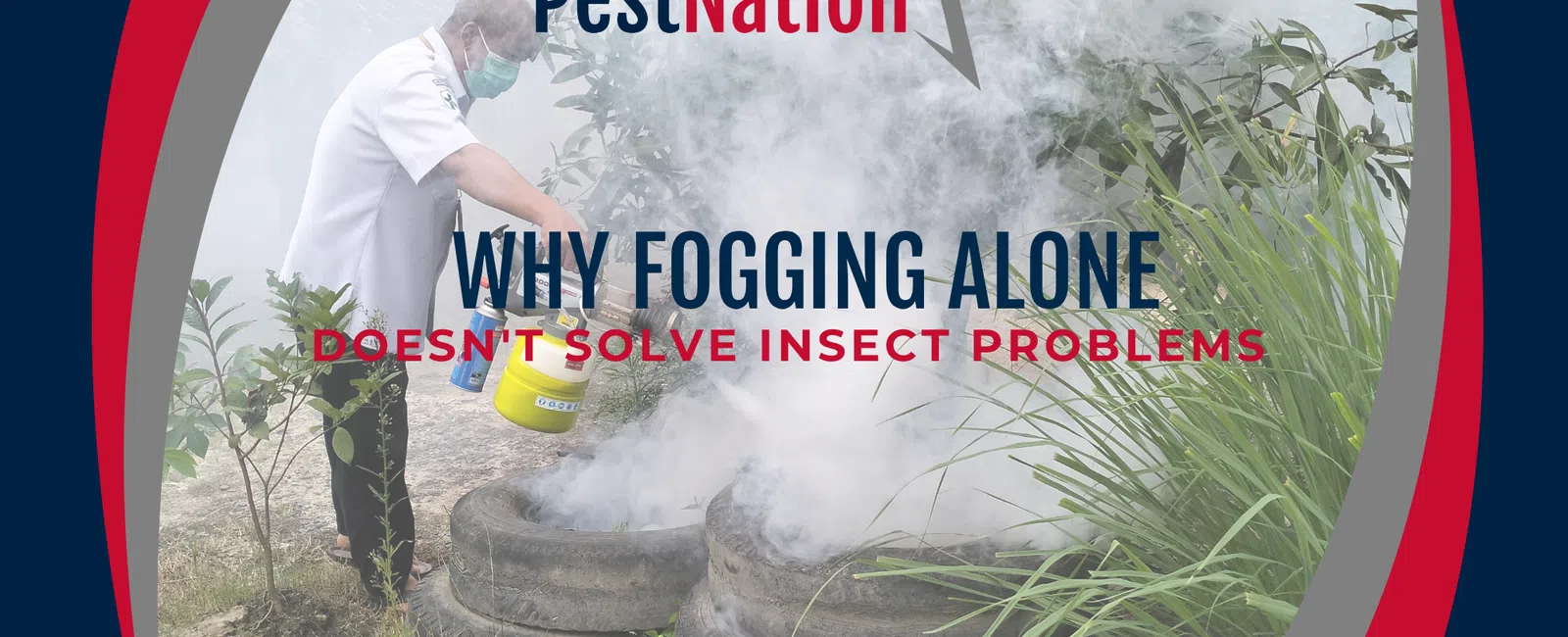
Fogging is often appealing because it seems fast, comprehensive, and easy to understand. A room fills with pesticide aerosol, visible insects may disappear, and homeowners can feel as though the entire pest problem has been addressed at once. In some situations, fogging can reduce exposed insects or play a role within a larger treatment plan. However, fogging pest control should not be confused with complete infestation management. Many household pests spend much of their time hidden inside cracks, wall voids, cabinets, appliances, flooring gaps, and other protected harborages where a fog may not provide meaningful contact.
Long-term pest control depends on identifying the pest, locating the conditions supporting it, and choosing methods that match the species' biology and life cycle. Eggs, immature insects, concealed colonies, and pests entering from untreated exterior areas may remain after fogging. Food, moisture, clutter, structural gaps, and other pest-conducive conditions may also remain unchanged. For this reason, recurring infestations often require a broader strategy that combines inspection, sanitation, exclusion, moisture management, monitoring, and appropriate professional exterminator services rather than relying on fogging alone.
What Is Pest-Control Fogging?
Pest-control fogging generally refers to releasing pesticide particles or droplets into an enclosed or targeted area so the material disperses through the air.
One familiar consumer version is the total-release fogger, sometimes called a "bug bomb." Once activated, the container releases its contents into the surrounding room.
Other fogging methods may be used professionally in specific circumstances, but the underlying concept is similar: pesticide is dispersed through the air rather than applied only to one individual insect or a narrow surface.
Fogging can seem attractive because it appears to reach an entire space at once.
However, the space homeowners see is not necessarily the space where pests are living.
Why Homeowners See Fogging as a Quick Solution
When cockroaches, flies, fleas, or other insects become noticeable, homeowners often want immediate relief.
Fogging appears to offer several advantages:
- Broad coverage
- Fast treatment
- Minimal visible effort
- Rapid reduction of exposed insects
If insects are moving openly through a room, a fog can appear more comprehensive than trying to treat individual pests.
The problem is that visible insects may represent only a small portion of the total population.
A successful pest-management program needs to consider what is happening inside hidden harborages as well.
Hidden Pests May Escape Direct Exposure
Many household pests spend most of their time in protected areas.
Potential harborages include:
- Wall voids
- Cabinet seams
- Baseboard gaps
- Behind appliances
- Beneath flooring
- Plumbing penetrations
- Electrical openings
- Furniture crevices
Fogging products primarily disperse through open air.
That does not guarantee the material will penetrate deeply enough into every crack, void, appliance cavity, or concealed nesting area to reach the insects living there.
This is one of the main reasons fogging pest control alone may provide incomplete results.
Killing Visible Insects Does Not Always Reach the Source
If cockroaches are seen running across a kitchen floor and a fogging treatment kills some of them, the immediate problem may seem improved.
However, the underlying infestation may still include:
- Egg cases
- Nymphs
- Hidden adults
- Breeding harborages
- Moisture sources
- Food debris
Likewise, ants seen on a countertop may represent workers traveling from a concealed colony.
Killing the visible workers does not necessarily eliminate the queens or nesting sites responsible for continued activity.
The same principle applies to many other pests: visible insects are often only the most noticeable part of the problem.
Eggs Can Survive When Adults Are Reduced
Insect eggs are frequently deposited in protected locations.
Depending on the pest, eggs may be found:
- Inside egg cases
- Beneath furniture
- In cracks
- Within food materials
- In fabric
- In concealed structural areas
If treatment primarily affects exposed adults, eggs may remain.
New insects can then emerge later.
This can make homeowners believe that pests "came back" when in reality part of the original population simply continued developing.
Life Cycles Influence Treatment Results
Different insects develop in different ways.
Some undergo complete metamorphosis:
- Egg
- Larva
- Pupa
- Adult
Others undergo incomplete metamorphosis:
- Egg
- Nymph
- Adult
These differences affect where pests live and how they respond to control.
For example, flea pupae may remain protected in environmental areas while adults are more visible. Cockroach egg cases can remain concealed while nymphs and adults occupy cracks and warm harborages.
A single fogging event may not coincide with every vulnerable life stage.
Pest Species Matter
No single treatment should be assumed appropriate for every insect.
Cockroaches, fleas, ants, flies, beetles, and other household pests have different:
- Life cycles
- Nesting behavior
- Harborages
- Food sources
- Moisture needs
- Movement patterns
Accurate identification should therefore come before treatment selection.
Guidance from the U.S. EPA - Integrated Pest Management Principles emphasizes identification, monitoring, prevention, and appropriate control methods, reinforcing why long-term pest management typically involves more than treating the insects that are immediately visible.
This is especially important when recurring activity follows an apparently successful fogging treatment.
Cockroaches Show Why Harborage Matters
Cockroaches provide a clear example of the limitations of fogging alone.
Many cockroaches spend daylight hours in:
- Cabinet voids
- Appliance areas
- Wall cracks
- Plumbing spaces
- Tight crevices
They often emerge after dark to forage.
Information from the University of Florida IFAS - Cockroaches and Their Management discusses the importance of sanitation, moisture management, harborage reduction, and species identification in cockroach control, reinforcing why treating open room air does not automatically address the protected locations where cockroaches live.
For persistent cockroach infestations, inspection and targeted management of harborages are often more important than simply reducing insects exposed in the room.
Behind Appliances Can Remain Untreated
Refrigerators, dishwashers, stoves, and other appliances create protected spaces.
Pests may hide:
- Behind motors
- Beneath cabinets
- Near plumbing lines
- Along wall voids
- Around utility penetrations
These areas may also contain food, warmth, moisture, or grease.
Fogging the surrounding room does not automatically remove those resources or ensure adequate treatment reaches every hidden space.
This is why a professional exterminator may inspect appliance areas rather than treating the room as one open environment.
Wall Voids Can Shelter Hidden Populations
Wall cavities can provide pests with protected travel routes and nesting areas.
Ants, cockroaches, and other insects may use:
- Plumbing openings
- Electrical penetrations
- Framing voids
- Gaps around cabinets
A fogging product released into the room may have limited access to these concealed areas.
If the population is centered inside the wall, recurring activity may continue even if visible insects decline temporarily.
Pest Colonies Require Colony-Focused Management
Certain pests live in organized colonies.
Ants are the clearest example.
The workers seen indoors may represent only a small portion of the colony.
The queens, developing brood, and additional workers remain protected elsewhere.
Some ant species also respond poorly to indiscriminate treatment methods.
This is another reason accurate species identification is essential before choosing a control strategy.
A broad fogging treatment should not be assumed to reach or eliminate the underlying colony.
Fogging Does Not Correct Food Sources
Pests remain where resources are available.
Common food sources include:
- Crumbs
- Grease
- Pet food
- Garbage
- Stored food
- Organic debris
Fogging does not remove any of these.
If food remains accessible, surviving insects can continue feeding and reproducing.
Sanitation therefore remains a key part of long-term pest management.
Moisture Problems Also Remain
Water can be just as important as food.
Potential moisture sources include:
- Plumbing leaks
- Condensation
- Standing water
- Damp crawlspaces
- Leaking appliances
Fogging does not repair any of these conditions.
A cockroach population supported by a leaking dishwasher may continue to thrive if the leak remains active.
This is why treatment and property maintenance need to work together.
Clutter Can Protect Pests From Treatment
Clutter provides both shelter and physical barriers.
Common examples include:
- Cardboard
- Paper bags
- Stored boxes
- Crowded cabinets
- Piles of clothing
Pests can hide between or beneath these materials.
Heavy clutter may also prevent pesticide from reaching the surfaces where insects are harboring.
Reducing unnecessary stored materials improves both sanitation and inspection access.
Exclusion Helps Prevent Continued Entry
Fogging may affect insects already inside a room, but it does not prevent new pests from entering.
Potential entry points include:
- Door gaps
- Window gaps
- Utility penetrations
- Damaged screens
- Foundation cracks
- Roofline openings
Exclusion helps reduce ongoing entry.
For pests originating outdoors, this may be essential to long-term control.
Recurring Activity After Fogging Can Reveal a Larger Problem
If insects return after fogging, several possibilities should be considered.
The activity may indicate:
- Hidden populations
- Eggs or immature stages
- Untreated harborages
- Continued exterior entry
- Food sources
- Moisture
- Structural gaps
This does not necessarily mean fogging had no effect.
It may simply mean the treatment addressed only part of the infestation.
A professional inspection can help determine which conditions remain.
Integrated Pest Management Focuses on the Cause
Integrated Pest Management, or IPM, is especially relevant to this issue.
Rather than relying on one pesticide method, IPM combines multiple strategies.
These can include:
- Pest identification
- Monitoring
- Sanitation
- Moisture correction
- Exclusion
- Harborage reduction
- Targeted treatment
Guidance from the U.S. EPA - Integrated Pest Management Principles emphasizes this coordinated approach and helps explain why fogging should be viewed as one possible tool rather than a substitute for understanding the source of pest activity.
Smart Pest Control Includes Prevention
Recommendations from the U.S. EPA - Smart Pest Control to Protect Your Health emphasize reducing pests' access to food, water, shelter, and entry points. This provides useful context for why recurring insect problems usually require environmental correction alongside treatment.
For homeowners, this means asking not only "How do I kill these insects?" but also:
- Where are they living?
- What are they eating?
- Where are they getting water?
- How are they entering?
- What conditions allow them to remain?
These questions often lead to more durable pest management.
Total-Release Foggers Have Important Safety Requirements
Total-release foggers require careful handling because they release pesticide into enclosed spaces.
Safety guidance from the U.S. EPA - Safety Precautions for Total Release Foggers explains important precautions associated with total-release foggers, providing useful context for why these pesticide products must be used carefully and according to their labels.
EPA guidance emphasizes following all label instructions and understanding that misuse can create safety risks.
Homeowners should never treat pesticide labels as optional.
Foggers Can Present Fire and Explosion Hazards
Some total-release fogger products contain flammable propellants.
This means improper use near ignition sources can create serious hazards.
Potential concerns may involve:
- Open flames
- Pilot lights
- Electrical ignition sources
- Other heat sources
The specific product label provides required safety directions.
Because of these risks, homeowners should not improvise placement or use more product than directed.
More Product Does Not Mean Better Control
A common pesticide misconception is that increasing the amount used will increase effectiveness.
That is not necessarily true and can create unnecessary exposure or safety risks.
The correct approach is to follow the product label exactly.
Professional pest management relies on selecting the appropriate product and treatment method rather than simply increasing pesticide volume.
NPIC Provides Additional Fogger Safety Context
Information from the National Pesticide Information Center - Foggers discusses how total-release foggers disperse pesticides and highlights safety considerations associated with their use, providing useful context for understanding both their limitations and the importance of label compliance.
This is especially relevant because homeowners may view foggers as simple consumer products even though they remain regulated pesticides requiring careful use.
Fogging Is Not Always Ineffective
It is important to avoid the opposite extreme.
Fogging is not useless in every circumstance.
Depending on the target pest, product label, environment, and professional treatment plan, fogging may have a role.
The problem arises when fogging is treated as the entire strategy for a persistent infestation.
In those cases, hidden harborages, life stages, and environmental conditions may remain.
Professional Treatment Can Select the Right Method
A professional exterminator can assess factors such as:
- Pest species
- Infestation severity
- Harborage locations
- Food and moisture sources
- Structural entry points
- Previous treatments
That information helps determine whether fogging, baiting, targeted applications, growth regulators, exclusion, or another method is appropriate.
The goal is not to use the most dramatic treatment.
It is to use the most appropriate combination of methods for the actual pest problem.
Monitoring Is Necessary After Treatment
Pest management should include follow-up.
Monitoring helps determine whether:
- Activity is declining
- New insects are emerging
- Additional rooms are involved
- Harborages remain active
- Entry continues
Recurring sightings can then be evaluated based on trends rather than guesswork.
This is particularly important after fogging because some hidden pests may become visible later.
PestNation Pest Inspections Help Identify the Source
At PestNation, PestNation Pest Inspections can help identify the pest species, likely harborages, moisture conditions, food sources, and structural openings associated with recurring insect activity.
This information provides a foundation for Residential Pest Control.
Rather than assuming fogging is automatically appropriate, inspection helps determine what the infestation actually requires.
Atlanta Pest Control and Recurring Indoor Pests
Homes seeking Atlanta Pest Control may experience cockroaches, ants, fleas, and other insects influenced by warm weather, humidity, and seasonal pest pressure.
When indoor activity persists after a quick treatment, a broader evaluation can help identify whether the source involves moisture, structural entry, or hidden harborages.
This makes inspection especially valuable before repeated fogging.
Charlotte Pest Control and Long-Term Prevention
For Charlotte Pest Control, seasonal weather changes can move pests between outdoor and indoor environments.
If treatment addresses only visible insects, continued entry may create the appearance of treatment failure.
Exclusion and monitoring can therefore be important components of longer-term control.
Orlando Pest Control and Extended Pest Seasons
Orlando's warm climate can support insect activity through much of the year.
For Orlando Pest Control, recurring pest populations may reproduce continuously when food, moisture, and shelter remain available.
This makes environmental correction particularly important.
A one-time fogging treatment may provide temporary reduction while leaving the underlying conditions unchanged.
Charleston Pest Control and Humid Conditions
Charleston's humidity, rainfall, and mild winters can also extend pest-active periods.
For Charleston Pest Control, moisture management, exclusion, and sanitation may be especially relevant when insects repeatedly return after treatment.
Again, the correct strategy depends on the pest species and property conditions.
Interior and Exterior Pest Treatments May Need to Work Together
Some infestations develop indoors.
Others originate outside and repeatedly enter.
Depending on the species and inspection findings, Interior and Exterior Pest Treatments may both be appropriate.
Exterior management can reduce incoming pest pressure, while interior treatment addresses established activity.
Fogging only the interior may not address an exterior population continuing to enter.
How PestNation Approaches Persistent Insect Problems
At PestNation, effective Residential Pest Control begins with identification and inspection rather than assuming one treatment method fits every infestation.
PestNation Pest Inspections can help evaluate:
- Pest species
- Harborages
- Food sources
- Moisture
- Entry points
- Life-cycle stages
- Previous treatment results
From there, treatment can be matched to the actual conditions.
Depending on the situation, professional management may include targeted interior treatment, exterior treatment, monitoring, sanitation recommendations, exclusion, or other methods. Fogging may have a role in selected circumstances, but it should not automatically be considered a replacement for a comprehensive pest-management strategy.
Fogging can reduce visible insect activity in some situations, but long-term control requires understanding where the pests are living and how the population is being sustained. Eggs, immature stages, hidden adults, nests, wall voids, appliance areas, and other protected harborages may remain after treatment, while food, moisture, and structural entry points continue supporting activity. This is why fogging pest control alone is often insufficient for persistent infestations.
A more effective approach combines accurate identification, sanitation, moisture management, exclusion, monitoring, and treatment selected for the specific pest. When recurring or widespread activity continues, working with a professional exterminator can help determine whether fogging has an appropriate role or whether another combination of methods is better suited to the infestation. By focusing on the source of pest activity rather than only the insects visible at the moment, homeowners can achieve more durable results through PestNation Pest Inspections, Residential Pest Control, and appropriate Interior and Exterior Pest Treatments.