
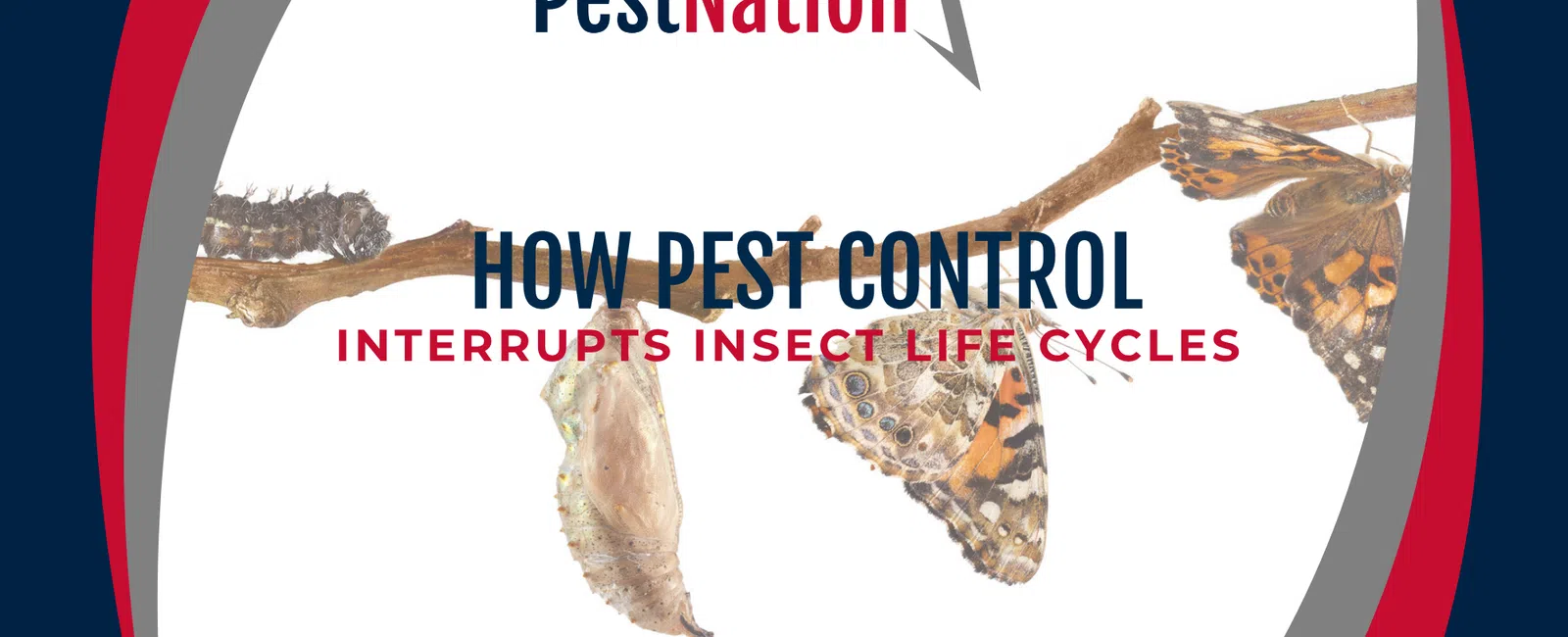
Seeing adult insects inside a home often feels like the clearest sign of a pest problem, but the insects that are visible may represent only one stage of a much larger population. Eggs, larvae, nymphs, pupae, and adults can occupy different locations, rely on different resources, and respond differently to treatment. This is why effective pest management often requires more than eliminating the insects currently crawling across a floor, flying near a window, or hiding beneath an appliance.
Understanding how pest populations develop is central to insect life cycle control. When homeowners and pest professionals know how a particular insect reproduces and matures, they can better determine which conditions are supporting the infestation and which combination of prevention, monitoring, and treatment may be appropriate. This life-cycle approach is an important part of integrated pest management, particularly when infestations involve multiple generations or hidden immature stages that may continue developing after visible adults are removed.
Why Insect Life Cycles Matter in Pest Control
Every insect develops through a series of biological stages, but those stages are not identical across all species.
Some insects develop through:
- Egg
- Larva
- Pupa
- Adult
Others develop through:
- Egg
- Nymph
- Adult
These differences matter because an egg hidden in a protected crack does not behave like an adult insect foraging across a kitchen floor. Likewise, a larva feeding in stored food or carpet fibers may occupy a completely different environment from the adult stage of the same species.
Effective insect life cycle control begins with identifying which pest is present and understanding where each life stage is likely to occur.
Guidance from the U.S. EPA - Integrated Pest Management Principles emphasizes pest identification, monitoring, prevention, and appropriate control methods, providing useful context for understanding why effective pest management often involves addressing more than the insects currently visible.
What Is Complete Metamorphosis?
Some insects undergo what entomologists call complete metamorphosis.
Their development includes four distinct stages:
- Egg
- Larva
- Pupa
- Adult
The immature insect may look completely different from the adult.
Common household pests with complete metamorphosis can include:
- Fleas
- Flies
- Beetles
- Moths
- Mosquitoes
A flea larva, for example, does not look or behave like an adult flea. Mosquito larvae develop in water before transforming through the pupal stage into flying adults.
This separation between life stages creates important pest-management considerations because different stages may be found in different places.
What Is Incomplete Metamorphosis?
Other insects develop through incomplete metamorphosis.
Their stages generally include:
- Egg
- Nymph
- Adult
Nymphs resemble smaller versions of adults but are not yet fully mature.
Common household pests with incomplete metamorphosis include:
- Cockroaches
- Bed bugs
- Crickets
- Some other true bugs
Cockroach nymphs, for example, usually occupy many of the same harborages as adults but may respond differently depending on their size, development stage, and exposure.
Understanding these differences can help pest professionals determine how long-term monitoring and treatment should be structured.
Why Killing Adult Insects May Not Solve the Infestation
A common mistake in pest management is focusing exclusively on adults.
Adults are often the easiest stage to notice because they may:
- Fly
- Crawl across open surfaces
- Search for food
- Reproduce
- Wander into occupied rooms
However, an infestation may also contain eggs, immature stages, or hidden populations.
If the adult insects are removed but developing stages remain, new adults may appear later.
Homeowners may understandably assume the treatment failed when they see insects again, but the new activity may represent individuals that were already developing when the original treatment occurred.
This is one reason professional pest management may require follow-up rather than a single one-time response.
Eggs Can Be Protected From Some Control Methods
Insect eggs are often deposited in protected locations.
Depending on the pest, they may be found:
- Inside cracks
- Beneath furniture
- Within food products
- In soil
- In water
- Inside egg cases
- On concealed surfaces
The egg stage can sometimes be less exposed to treatments that affect active insects.
Cockroach egg cases are one example. Depending on the species, developing offspring may remain protected until the egg case hatches.
This means successful control may require continued monitoring after visible adults decline.
Larvae May Live Somewhere Completely Different
Insects with complete metamorphosis can have immature stages occupying very different environments from adults.
For example:
- Mosquito larvae live in water.
- Flea larvae develop in environmental areas rather than on the host.
- Stored-product beetle larvae may live inside food materials.
- Fly larvae may develop in decaying organic matter.
Treating adult insects without addressing these developmental sites can allow the population to continue.
This demonstrates why integrated pest management often focuses on environmental conditions in addition to direct treatment.
Pupae Can Create a Delay in Visible Results
The pupal stage is a transitional period between larva and adult.
Some pupae remain protected in cocoons or other sheltered environments.
Because they may not feed or move significantly, control methods aimed at active foraging stages may have limited effect on them.
Adults may then emerge later.
This delayed emergence is another reason that homeowners should not always expect every pest population to disappear immediately after treatment.
Monitoring over time provides a more accurate picture of whether population pressure is decreasing.
Cockroach Life Cycles Demonstrate the Need for Follow-Up
Cockroaches develop through incomplete metamorphosis.
Their populations may include:
- Egg cases
- Young nymphs
- Older nymphs
- Adults
A kitchen infestation can therefore contain several generations at the same time.
Removing visible adults does not necessarily remove egg cases or hidden nymphs.
Follow-up monitoring can help determine whether immature cockroaches continue emerging or whether population levels are declining.
This is one reason PestNation Pest Inspections can be valuable when recurring cockroach activity persists despite initial control efforts.
Fleas Require Multi-Stage Management
Flea infestations provide a clear example of why life-cycle knowledge matters.
The flea life cycle includes:
- Eggs
- Larvae
- Pupae
- Adults
Adult fleas feed on animals, but eggs and immature stages can develop in the surrounding environment.
That means treating only adult fleas on a pet may not address the immature population in carpets, bedding, flooring, or other locations.
Likewise, environmental pest control alone does not replace appropriate veterinary care for animals.
A successful strategy may require coordinated attention to both the pet and the environment.
Mosquito Control Depends Heavily on Life-Cycle Knowledge
Mosquitoes also undergo complete metamorphosis.
Their eggs, larvae, and pupae are associated with water, while adults are flying insects.
This is why eliminating standing water can be so important.
A treatment aimed only at adult mosquitoes may reduce immediate activity, but water-filled containers can continue producing new mosquitoes.
Removing breeding sites interrupts the life cycle before adults emerge.
This is one of the clearest examples of how environmental management can be just as important as pesticide treatment.
Accurate Identification Determines Which Life Cycle Matters
Different insects require completely different management strategies.
A small flying insect near a sink might be:
- A drain fly
- A fruit fly
- A fungus gnat
- Another fly species
Each can have a different breeding site.
Likewise, a small beetle in a pantry may require investigation of stored food rather than treatment of the general room.
Proper identification allows pest professionals to answer critical questions:
- Where are eggs being laid?
- Where do immature stages develop?
- What do adults feed on?
- Which conditions support reproduction?
- What stage is most practical to target?
This is the foundation of effective insect life cycle control.
Integrated Pest Management Uses Biology to Guide Decisions
Resources from the National Pesticide Information Center - Integrated Pest Management explain how multiple pest-management strategies can work together, reinforcing why understanding pest biology and life cycles can help guide longer-term prevention and control.
Rather than relying solely on pesticide applications, integrated pest management may combine:
- Identification
- Inspection
- Monitoring
- Sanitation
- Moisture management
- Exclusion
- Habitat modification
- Targeted treatment
- Follow-up
This approach considers not only which pests are present, but why they are able to survive and reproduce on the property.
Sanitation Can Interrupt Reproduction
Many insects need reliable food to complete their life cycle.
Removing food sources may reduce survival and reproduction.
Examples include:
- Cleaning crumbs
- Removing grease
- Securing garbage
- Storing food properly
- Managing pet food
- Cleaning spills
For cockroaches, ants, flies, and stored-product pests, sanitation can reduce the resources available to adults and immature stages.
Sanitation alone may not eliminate an established infestation, but it can make the environment less supportive.
Moisture Management Disrupts Pest Development
Water is equally important for many pest species.
Moisture problems may include:
- Plumbing leaks
- Condensation
- Standing water
- Damp crawlspaces
- Poor drainage
- Leaking appliances
Correcting these conditions can interrupt breeding and survival.
Mosquitoes cannot develop without suitable water.
Cockroaches may become less successful when dependable moisture is removed.
Drain-associated flies may decline when organic buildup and moisture are corrected.
Moisture control therefore plays a direct role in integrated pest management.
Exclusion Helps Prevent New Populations From Entering
Life-cycle management should also consider how pests reach the structure.
Entry points may include:
- Door gaps
- Window openings
- Damaged screens
- Utility penetrations
- Foundation cracks
- Roofline gaps
Exclusion can reduce the number of new insects entering from outdoors.
This is particularly important for pests whose indoor sightings may originate from exterior populations rather than breeding colonies inside the home.
Removing Shelter Can Disrupt Population Growth
Insects also need protected places to rest, molt, reproduce, or avoid disturbance.
Common harborages include:
- Cardboard
- Clutter
- Wall voids
- Cabinet gaps
- Mulch
- Leaf litter
- Debris
Reducing unnecessary shelter can expose pests to monitoring and treatment while making the environment less favorable for reproduction.
For example, removing clutter around a cockroach infestation can reduce available cracks and protected hiding places.
Insect Growth Regulators Can Target Development
Some pest-management programs include insect growth regulators, or IGRs.
These products interfere with processes such as:
- Molting
- Maturation
- Normal development
- Reproduction
Rather than functioning solely as direct-kill treatments, IGRs can help reduce the ability of certain insect populations to develop normally or produce future generations.
They may be useful for some pests such as cockroaches or fleas, depending on the product and situation.
However, IGRs are not appropriate for every pest and should not be considered a universal life-cycle solution.
Different Life Stages Can Respond Differently to Treatment
An adult insect may be actively foraging and exposed to treatment.
An egg may remain protected.
A larva may be developing inside food or organic material.
A pupa may be largely inactive.
These differences explain why pest professionals sometimes combine several methods.
One component may reduce active adults, another may target developing stages, and environmental corrections may reduce breeding opportunities.
This layered approach can provide more durable results.
Monitoring Shows Which Stages Are Still Active
Monitoring is essential for understanding whether treatment is interrupting the life cycle.
Depending on the pest, monitoring may help reveal:
- Adult activity
- Nymphs
- Larvae
- New emergence
- Population trends
A reduction in adults accompanied by continued immature activity may indicate that the life cycle is still progressing.
Continued observation allows treatment decisions to be based on evidence instead of assumptions.
Follow-Up Treatments May Address Later Emergence
One treatment does not always coincide with every vulnerable life stage.
Eggs may hatch later.
Pupae may produce adults after treatment.
Hidden nymphs may emerge from harborages.
Follow-up treatment or inspection can help address these later stages.
This is why a longer-term Residential Pest Control strategy can be more appropriate than assuming every infestation should disappear after one visit.
IPM Helps Avoid Unnecessary Treatment
The University of California Integrated Pest Management - What Is IPM? explains that IPM combines monitoring, prevention, pest identification, and management methods selected according to the specific situation. This is relevant to life-cycle control because it encourages treatment decisions based on pest biology and actual population levels rather than automatically applying the same method to every insect problem.
For homeowners, this means the most effective plan may sometimes involve:
- Removing a breeding site
- Repairing a leak
- Cleaning a food source
- Sealing an opening
- Monitoring activity
before or alongside pesticide treatment.
UF/IFAS Reinforces the Importance of Integrated Strategies
Resources from the University of Florida IFAS - Integrated Pest Management emphasize using biological knowledge, monitoring, prevention, and appropriate management techniques together. This is especially relevant in warm Southern climates, where long pest-active seasons may allow multiple insect generations to develop over the course of a year.
That longer activity period can make insect life cycle control particularly important for homeowners in PestNation's service markets.
Southern Climate Conditions Can Accelerate Pest Development
Temperature affects insect biology.
In many species, warm conditions can speed development and increase the number of generations produced during favorable seasons.
Southern homes can experience:
- Long warm periods
- High humidity
- Frequent rainfall
- Extended growing seasons
These conditions can influence pest activity in Atlanta, Charlotte, Orlando, and Charleston.
Different pests respond differently, but extended warmth can increase the importance of monitoring and long-term prevention.
Atlanta Pest Control and Seasonal Life Cycles
Homeowners seeking Atlanta Pest Control may experience multiple insect generations during warm spring and summer conditions.
Cockroaches, mosquitoes, fleas, and other pests can remain active for extended periods when environmental conditions are favorable.
Long-term management may therefore require attention to both adult populations and developing stages.
Charlotte Pest Control and Changing Seasons
For Charlotte Pest Control, seasonal transitions can influence insect life cycles.
Warm months may accelerate development, while cooler periods can change where insects shelter.
Monitoring allows treatment programs to adapt to these changes instead of assuming pest activity remains constant throughout the year.
Orlando Pest Control and Year-Round Pest Pressure
Orlando's warm climate can support insect activity for much of the year.
That makes life-cycle management especially important.
For Orlando Pest Control, ongoing monitoring and environmental management may be necessary because some pests have less seasonal interruption than they would in colder regions.
Charleston Pest Control and Humid Conditions
Charleston's warmth, humidity, rainfall, and mild winters can also support extended pest development.
For Charleston Pest Control, moisture management and outdoor habitat reduction can complement targeted treatments by limiting conditions pests need to reproduce.
PestNation Pest Inspections Help Identify the Life Cycle
At PestNation, effective pest management starts with identifying which pest is present and where different life stages may be developing.
PestNation Pest Inspections can help identify:
- Adult insects
- Immature stages
- Egg cases
- Breeding sites
- Moisture
- Food sources
- Harborages
- Entry points
This information helps determine whether the problem is primarily an indoor infestation, an exterior population, or a combination of both.
Interior and Exterior Pest Treatments May Work Together
Some pests develop inside the home.
Others originate outside and repeatedly enter.
Depending on the species, Interior and Exterior Pest Treatments may both play a role.
Exterior management may reduce pest pressure around the building, while interior strategies address established populations or harborages.
The correct combination depends on pest identification and inspection findings.
Professional Pest Management Is Often a Process
Successful pest control is not always an immediate event.
A long-term strategy may involve:
- Initial inspection
- Pest identification
- Treatment
- Environmental corrections
- Monitoring
- Follow-up
- Prevention
This is especially important when eggs or immature stages remain after adults have been reduced.
A professional approach focuses on population trends and life-cycle interruption rather than simply counting how many insects are visible on one particular day.
Eliminating the adult insects homeowners can see is only one part of pest control. Eggs, larvae, nymphs, pupae, and hidden adults can continue developing in protected locations, which is why recurring activity may appear even after an initial reduction in visible pests. Understanding complete and incomplete metamorphosis helps explain why different species require different strategies and why insect life cycle control often depends on monitoring and follow-up.
Effective integrated pest management combines that biological understanding with practical prevention. Sanitation removes food, moisture management reduces water, exclusion limits access, harborage reduction removes shelter, and targeted treatments can address vulnerable life stages when appropriate. By approaching pests as developing populations rather than isolated insects, PestNation can provide Residential Pest Control, PestNation Pest Inspections, and appropriate Interior and Exterior Pest Treatments that focus on longer-term management instead of relying solely on one-time treatment of the insects currently visible.