
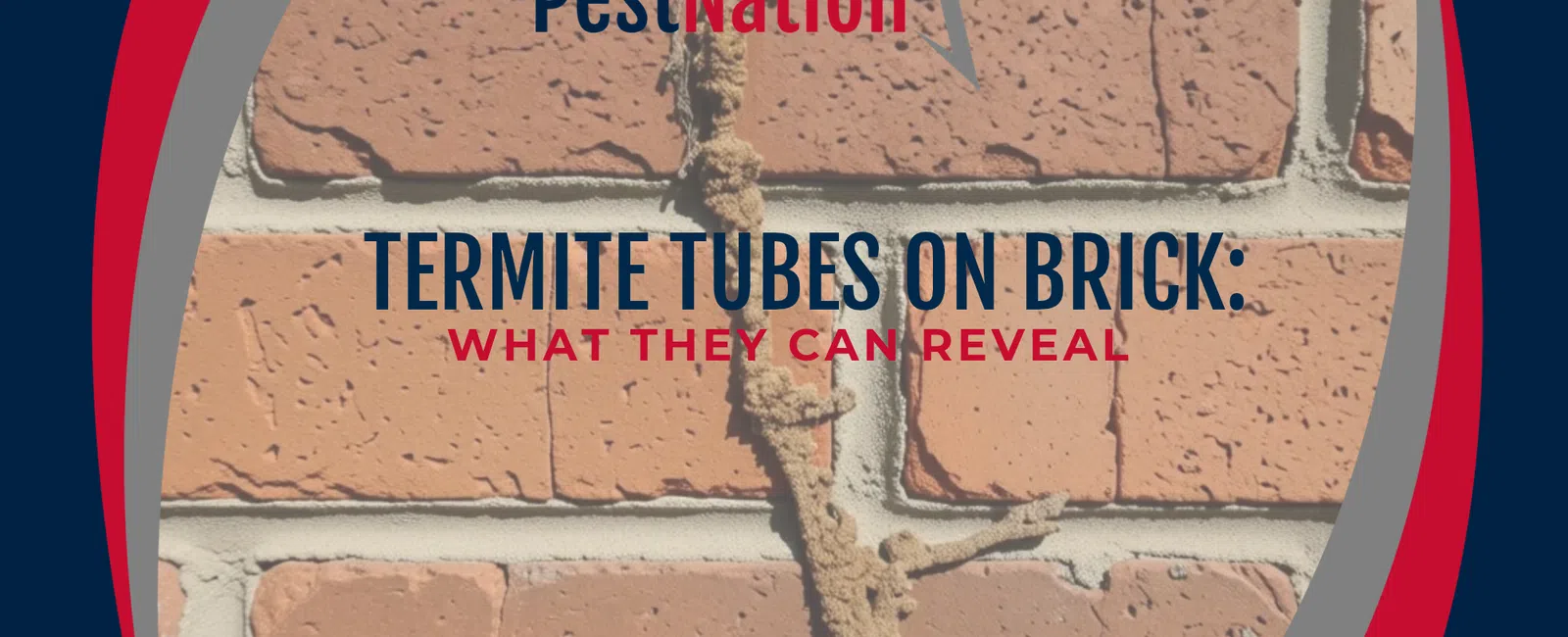
Brick is not a food source for termites, but seeing termite activity on a brick surface can still be an important warning sign. Subterranean termites live primarily in soil and need protected routes when traveling between their colony and sources of cellulose, such as wood. To accomplish this, they can construct narrow shelter tubes across materials they cannot eat—including brick, masonry, concrete, and foundation surfaces.
During an inspection, PestNation licensed and certified technician Andy E. observed a termite tube extending across brick, with termites visibly emerging from the tube. The observation illustrates an important point for homeowners: a brick exterior does not prevent termites from reaching vulnerable materials elsewhere in a structure. The masonry itself may remain untouched while termites use its surface as a protected route toward wood or other cellulose-containing materials.
For Southeastern homeowners, recognizing termite tubes and understanding what they mean can be an important part of property maintenance. Warm temperatures, moisture, soil conditions, and the abundance of wood in residential construction make termite awareness particularly important throughout the region. Knowing what to look for—and when to arrange professional Southeastern Pest Inspections—can help homeowners respond appropriately when visible evidence of termite activity appears.
What Is a Termite Tube?
A termite tube, often called a mud tube or shelter tube, is a narrow passage constructed by subterranean termites. The material generally consists of soil particles and other materials held together to create an enclosed pathway.
These tubes serve an important purpose for the colony. Subterranean termites live in environments where maintaining suitable moisture conditions is essential. Traveling openly across an exposed brick wall or foundation would leave them vulnerable to environmental conditions and predators.
A shelter tube creates a protected route.
Depending on where termites are traveling, these tubes may be found on foundations, masonry, piers, crawl space components, or other surfaces between the soil and a potential food source.
The presence of a tube therefore deserves attention even when the surface beneath it cannot be consumed by termites.
Do Termites Eat Brick?
No. Termites do not consume brick.
Termites feed on cellulose, an organic material found in wood and numerous plant-derived materials. Brick, concrete, mortar, and similar masonry products do not provide that food source.
This distinction is important because homeowners sometimes assume that a brick home is naturally protected from termite activity. A brick exterior may contain large areas that termites cannot consume, but termites do not necessarily have to damage the exterior surface to reach wood elsewhere in the building.
Instead, subterranean termites can travel across masonry surfaces or exploit available gaps and construction details as they move toward cellulose-containing materials.
The termite tube shown by Andy E. demonstrates this distinction clearly: the brick acts as a surface for travel rather than food.
Why Would Termites Build a Tube Across Brick?
For subterranean termites, the objective is not the brick itself. The tube provides a protected route across an otherwise exposed area.
A home can contain many cellulose sources beyond its visible exterior finish. Depending on its construction, these can include framing, sheathing, trim, subflooring, structural components, and other wood-based materials.
When termites establish a route from the soil toward these resources, masonry may simply be something they must cross.
That is why PestNation technicians evaluating a visible termite tube do not need to assume that the material directly beneath the tube is being consumed. The more important questions involve where the tube begins, where it leads, whether termites are active, and whether additional evidence exists elsewhere.
What Does It Mean When Termites Are Visible in a Tube?
Seeing termites actively moving within or emerging from a shelter tube provides direct evidence of termite activity at that particular location.
That information is valuable, but it does not by itself reveal the full extent of activity throughout a property. An inspection is needed to put the observation into context.
A professional may need to evaluate surrounding areas for additional tubes, conducive conditions, potential access routes, and signs involving nearby wood.
Homeowners should avoid assuming that one visible tube represents the entire area affected. Subterranean termite colonies operate largely out of sight, and the portion visible on the surface may represent only one travel route.
This is one reason professional Southeastern Pest Inspections are valuable when termite evidence is discovered.
Where Should Homeowners Look for Termite Tubes?
Termite tubes can appear in areas that connect soil or other termite habitat with structural components.
Potential locations include:
- Foundation walls
- Brick and masonry surfaces
- Crawl space piers
- Areas near plumbing penetrations
- Expansion joints and construction gaps
- Wood-to-soil contact points
- Protected areas around porches or additions
Homeowners do not need to dismantle building components to look for these signs. Routine visual observation of accessible foundation and exterior areas can sometimes reveal obvious changes.
The key is knowing that an irregular, soil-like line traveling vertically or horizontally across a foundation or masonry surface deserves closer attention.
Why Brick Homes Still Need Termite Inspections
The phrase "brick home" can create a misleading impression when it comes to termites.
Many brick homes are not constructed entirely from masonry. Brick frequently functions as an exterior veneer while wood framing and other termite-susceptible components remain behind or adjacent to it.
Even buildings containing substantial masonry can still contain wooden structural or finish materials.
Termites also require remarkably little exposed space to travel. Construction joints, cracks, utility penetrations, and concealed transitions between building materials can provide potential pathways.
For that reason, the visible exterior material alone should not be used to determine a home's termite risk.
Professional pest control begins with understanding the entire structure and surrounding environment rather than focusing only on whether the exterior happens to be brick, siding, stucco, or another finish.
Moisture and Subterranean Termite Activity
Moisture is another important consideration around termite-prone properties.
Subterranean termites depend on moisture, and conditions that keep areas around a structure persistently damp can contribute to an environment favorable to termite activity.
Homeowners can therefore pay attention to conditions such as leaking exterior fixtures, drainage problems, water collecting near the foundation, malfunctioning gutters, or consistently damp crawl space areas.
Managing these issues does not guarantee that termites will never occur. Termites are naturally present throughout many Southeastern environments.
However, good moisture management is a sensible component of property maintenance and integrated pest control.
Wood-to-Soil Contact Deserves Attention
Wood that directly contacts soil can create particularly favorable access conditions for subterranean termites because it can provide a concealed transition between the colony's environment and a food source.
Homeowners should be aware of unnecessary wood-to-soil contact involving structural or landscaping materials around the property.
Examples may include wood trim extending too close to grade, discarded lumber near the structure, or other cellulose materials resting against the foundation.
The appropriate clearance and corrective action can vary based on construction, so questionable conditions are better evaluated rather than addressed through guesswork.
Should You Break Open a Termite Tube?
Homeowners may be tempted to scrape away a termite tube as soon as they discover it. Doing so, however, does not eliminate the underlying termite colony.
Removing the visible material may simply remove evidence that could help a professional understand where termites have been traveling.
Similarly, spraying an unknown household product onto visible termites does not provide information about where the colony is located or whether additional activity exists elsewhere.
A better response is to document what was observed and arrange for a qualified professional to evaluate the area.
If termites are visibly moving within the tube, that is particularly useful information to communicate when scheduling the inspection.
What Happens During a Professional Termite Inspection?
A professional inspection goes beyond confirming that a brown line on a brick wall resembles a termite tube.
The technician evaluates the surrounding property for additional evidence and conditions relevant to termite activity. Depending on the accessible portions of the home, this can involve examining foundation areas, crawl spaces, structural wood, moisture-prone locations, and other areas where evidence could occur.
The technician may also look for other recognizable termite indicators, including damaged wood, additional shelter tubes, or swarm-related evidence.
The purpose of Southeastern Pest Inspections is to build a more complete picture from the available evidence.
That information can then guide appropriate recommendations instead of basing decisions on a single visible feature.
Termite Prevention for Southeastern Homeowners
No practical maintenance strategy can make a home completely immune to termite activity, but homeowners can reduce conducive conditions and make their properties easier to monitor.
Good practices include keeping accessible foundation areas visible rather than obscuring them unnecessarily, correcting persistent drainage or moisture problems, reducing unnecessary wood-to-soil contact, and avoiding the accumulation of cellulose debris immediately against the structure.
Homeowners should also periodically look at areas they may normally ignore. Foundations, crawl spaces, exterior masonry transitions, and areas around utilities can reveal evidence that is easy to miss during everyday activities.
Routine professional inspections add another layer of evaluation, particularly in regions where subterranean termites are a persistent concern.
Why Early Recognition Matters
Termites are different from pests that remain readily visible while they are active. Much of a subterranean termite colony's activity occurs underground, within shelter tubes, or inside materials.
That makes visible evidence especially valuable.
A termite tube across brick can tell a homeowner that termites have established a protected travel route at that location. When termites themselves can be seen emerging from the tube, the evidence is even more direct.
What the observation cannot determine by itself is how extensive the activity is.
That is where professional inspection becomes important.
Pest Control Should Address More Than the Visible Tube
Effective termite management requires more than removing the structure that homeowners can see.
A professional pest control strategy considers the type of termite activity present, building conditions, access routes, environmental factors, and other inspection findings before determining an appropriate response.
This distinction matters because the visible tube is evidence of termite behavior—not necessarily the complete problem.
At PestNation, professional inspections help homeowners understand what has actually been observed and what additional conditions should be evaluated. That evidence-based approach is particularly important with termites because so much of their activity can remain concealed.
A termite tube running across brick is easy to misunderstand. The termites are not consuming the brick; they are using the masonry surface as part of a protected route. For Southeastern homeowners, that is an important distinction because brick construction should never be assumed to make a property immune to termites. Wood and other cellulose-containing materials may still be present throughout the structure and accessible through concealed pathways.
Visible termites emerging from a shelter tube, like those observed by PestNation licensed and certified technician Andy E., are a clear reason to have the surrounding property evaluated. Homeowners can also support prevention by paying attention to moisture, drainage, wood-to-soil contact, foundation conditions, and other factors that can influence termite activity.
Professional Southeastern Pest Inspections help turn a visible warning sign into useful information about the property. By combining routine homeowner awareness with qualified inspection and appropriate pest control, Southeastern homeowners can identify termite concerns sooner and make informed decisions about protecting their homes.