
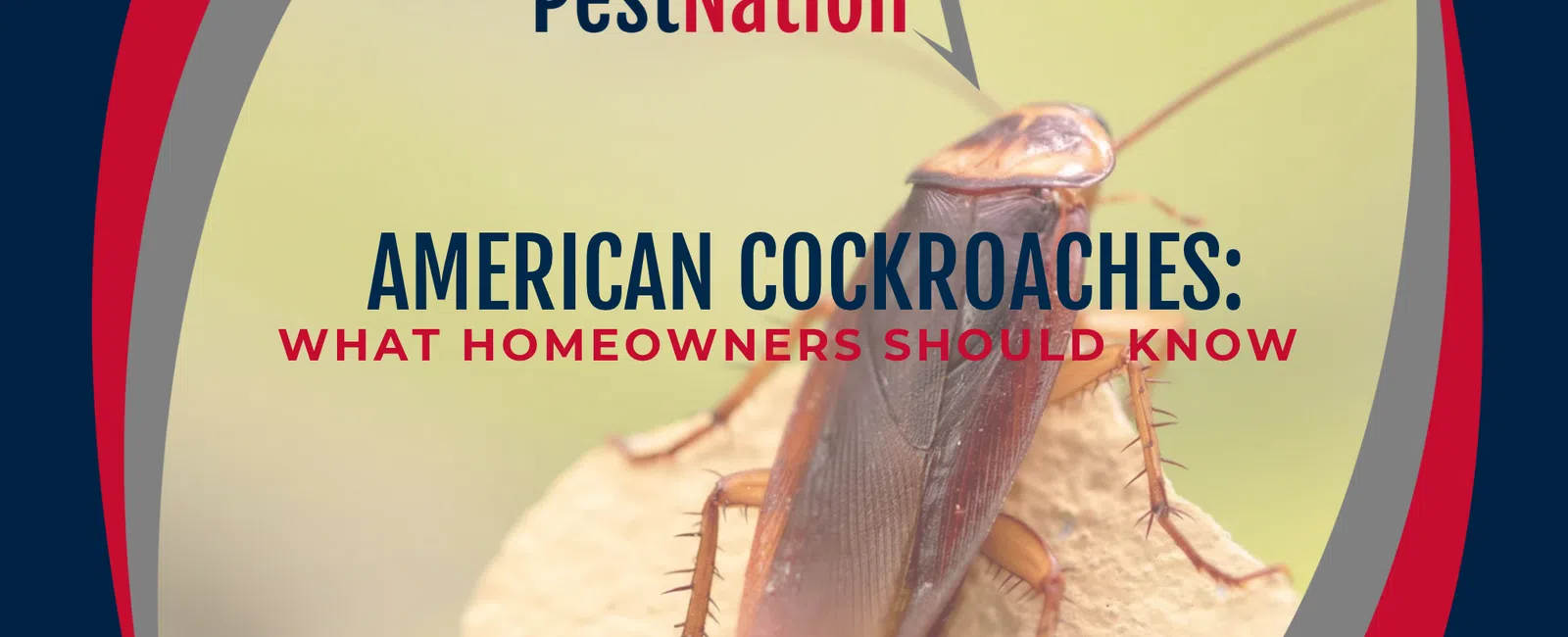
Finding a large cockroach in or around a home can be an unpleasant surprise. One species Southeastern homeowners may encounter is the American cockroach, a large cockroach that can live in warm, damp, and protected environments. Although seeing one individual does not by itself establish the size or location of a pest problem, it is a reason to pay closer attention to the conditions around the property and look for additional signs of activity.
PestNation's licensed and certified technicians recently encountered an American cockroach during an inspection. Discoveries like this illustrate the value of knowing what pests are present and understanding the environmental conditions that may support them. American cockroaches can occur both outdoors and around structures, making moisture management, sanitation, exclusion, and professional Southeastern Pest Inspections important components of a comprehensive pest control strategy.
For homeowners throughout the Southeast, learning how American cockroaches behave can make it easier to recognize potential problems and take practical preventive action. Rather than focusing only on the individual cockroach that is visible, homeowners should consider the broader environment that may be providing food, water, shelter, or access to the structure.
What Is an American Cockroach?
The American cockroach is one of the larger cockroach species commonly associated with structures. Adults are generally reddish-brown and have a flattened, oval-shaped body with long antennae. Their size can make them particularly noticeable compared with some smaller household cockroach species.
Despite its common name, the American cockroach is not limited to any particular type of American property. It can inhabit a range of environments where appropriate conditions are available.
Like other cockroaches, American cockroaches go through several developmental stages. Their life cycle includes the egg, nymph, and adult stages. Young cockroaches, called nymphs, resemble smaller versions of adults but develop their adult characteristics as they mature.
Understanding which cockroach species is present can be useful because different species may favor different environments and require different management approaches.
Why American Cockroaches Are Relevant in the Southeast
The Southeast's generally warm and humid conditions can support many types of insects. American cockroaches are particularly associated with environments that provide warmth and moisture, making property conditions an important consideration for homeowners in the region.
Rainfall, high humidity, landscaping, drainage conditions, plumbing systems, and other property features can influence where cockroaches find suitable shelter.
This does not mean that every Southeastern home will experience an American cockroach problem. It does mean that homeowners should understand the environmental factors that can make certain areas attractive.
Regular Southeastern Pest Inspections can provide another opportunity to identify pest activity and conditions that may warrant attention.
Where American Cockroaches May Be Found
American cockroaches tend to favor dark and protected areas, particularly those associated with moisture. Around residential properties, potential environments can include exterior areas as well as protected spaces associated with the structure.
Homeowners may encounter cockroach activity around:
- Damp or sheltered exterior locations
- Utility and plumbing areas
- Garages
- Crawl spaces
- Areas around drains
- Landscaping close to the structure
- Spaces where organic debris accumulates
The specific location of a cockroach can provide useful information, but one sighting should not automatically be interpreted as proof of a widespread infestation.
Instead, it should prompt a closer evaluation of the surrounding environment.
Why Moisture Matters
Water is an important resource for cockroaches, which makes moisture management an essential component of prevention.
Around a home, moisture can originate from many sources. Plumbing leaks, condensation, drainage problems, irrigation, clogged gutters, and persistent dampness around foundations can all create favorable conditions for pests.
Homeowners can reduce these conditions by periodically checking for:
- Plumbing leaks
- Standing water
- Poor exterior drainage
- Excessively damp landscaping
- Gutter and downspout problems
- Persistent moisture in crawl spaces or other protected areas
Correcting a moisture problem can benefit the property beyond pest management. It can also eliminate one of the resources that may help cockroaches remain in a particular location.
Food and Organic Material Can Support Activity
Cockroaches are opportunistic feeders. Accessible food residue and organic material can make an environment more favorable to them.
Inside a home, attention should be given to kitchens, food storage areas, pet feeding locations, and waste containers. Crumbs beneath appliances or food residue in hard-to-clean spaces may be easy for homeowners to overlook.
Exterior sanitation matters as well. Garbage areas, accumulated organic debris, pet food, and other accessible materials can potentially support pest activity.
Good sanitation is therefore an important part of pest control, but sanitation alone should not be treated as proof that a cockroach issue will disappear. The surrounding environment, access points, moisture, and the location of pest activity all need to be considered.
How Cockroaches Can Get Into Homes
American cockroaches may occur outdoors and can sometimes enter structures when access is available. Homes contain numerous small openings that homeowners may rarely notice.
Potential access areas can include gaps around:
- Exterior doors
- Windows
- Utility penetrations
- Plumbing lines
- Vents
- Foundation openings
- Other exterior joints and gaps
Weatherstripping can deteriorate, sealant can fail, and gaps can develop as buildings age. Periodically evaluating these areas can help homeowners identify openings that may allow pests to enter.
Exclusion is an important preventive tool because it focuses on limiting access rather than simply responding after pests are already indoors.
What Does Seeing One American Cockroach Mean?
Finding one American cockroach deserves attention, but the sighting should be interpreted carefully.
A single cockroach does not provide enough information to determine whether a larger population is established inside the home. The insect could have entered from an exterior environment or could be associated with conditions elsewhere on the property.
At the same time, dismissing repeated sightings is not advisable.
Homeowners should pay attention to factors such as where the cockroach was found, whether additional cockroaches appear, whether moisture is present, and whether other signs of activity can be identified.
Professional inspection can help put an isolated observation into context.
Other Signs Homeowners Can Watch For
The insect itself is the most obvious sign of cockroach activity, but homeowners can remain alert for other potential indicators.
These can include:
- Repeated cockroach sightings
- Cockroach droppings
- Egg cases
- Shed material
- Activity concentrated around damp areas
- Cockroaches appearing repeatedly in the same location
Not every dark speck or piece of debris is necessarily related to cockroaches. Proper identification matters before conclusions are drawn.
This is one reason PestNation emphasizes inspection as part of understanding a pest concern.
Why Professional Pest Inspections Matter
Cockroaches frequently occupy protected areas that homeowners do not routinely inspect. Simply finding and removing a visible cockroach does not necessarily explain why it was present.
A professional inspection allows the property to be evaluated more broadly.
During Southeastern Pest Inspections, technicians can look for visible pest activity and environmental conditions that may contribute to that activity. This can include evaluating moisture-prone areas, potential access points, sheltered locations, and other relevant portions of the property.
The objective is to gather information before determining what response is appropriate.
That distinction matters. Effective pest control should be based on the pest present and the conditions observed rather than assumptions based on a single sighting.
Practical Prevention for Southeastern Homeowners
Homeowners can take several practical steps to make their properties less favorable to cockroaches.
Control Moisture
Repair plumbing leaks promptly and investigate persistent dampness. Outside, make sure water is directed away from the structure and avoid unnecessary standing water.
Maintain Food Areas
Clean spills and crumbs, including areas beneath or behind appliances when accessible. Store food appropriately and keep waste containers maintained.
Examine Exterior Openings
Check weatherstripping, door sweeps, utility penetrations, and other exterior gaps. Appropriate sealing can reduce opportunities for pests to enter.
Manage Outdoor Debris
Avoid allowing excessive organic debris or clutter to accumulate immediately against the home. Maintaining exterior spaces can reduce potential shelter.
Pay Attention to Repeat Activity
One observation provides limited information. Repeated cockroach sightings, particularly in the same area, provide a stronger reason to investigate the conditions involved.
Why Identification Comes Before Treatment
Not every cockroach encountered around a home behaves exactly the same way. Correct identification can influence where technicians inspect and which environmental conditions receive the most attention.
Treating a pest without understanding its identity or likely source may focus too heavily on the visible symptom rather than the underlying issue.
Professional pest control therefore benefits from a systematic approach: identify the pest, inspect the environment, determine contributing conditions, and select an appropriate management strategy.
For homeowners, this approach also helps avoid unnecessary assumptions about what a single pest sighting means.
Pest Control Is More Than Treating Visible Roaches
Homeowners understandably want a visible cockroach gone immediately. However, long-term pest management involves looking beyond the individual insect.
A more comprehensive strategy considers:
- Identification
- Inspection
- Sanitation
- Moisture management
- Exclusion
- Monitoring
- Appropriate treatment when needed
These elements work together to address both pest activity and the conditions that may support it.
PestNation uses professional inspections to help identify what is happening around a property before determining appropriate next steps. That is particularly valuable for Southeastern homeowners because climate and property conditions can change throughout the year.
Making Pest Inspections Part of Home Maintenance
Pest prevention is easier when homeowners think of their property as a changing environment. Rain, humidity, landscaping growth, plumbing problems, deteriorating seals, and seasonal weather can alter conditions around a home over time.
An area that was previously dry may develop a leak. A door sweep may become damaged. Landscaping may begin touching the structure. Any of these changes can influence pest activity.
Routine observation by the homeowner, combined with professional Southeastern Pest Inspections when appropriate, can help identify those changes.
American cockroaches are noticeable pests, particularly because of their relatively large size, but a sighting should be treated as useful information rather than a reason to make immediate assumptions. Homeowners should consider where the cockroach was found, what environmental conditions are present, and whether there are additional signs of activity. Moisture, food availability, shelter, and structural access can all influence whether an area is attractive to cockroaches.
For Southeastern homeowners, practical prevention begins with maintaining the property. Controlling moisture, improving sanitation, managing exterior debris, checking potential entry points, and paying attention to recurring activity can all support a broader pest control strategy. When cockroach activity persists or its source is unclear, a professional inspection can provide valuable context.
PestNation and its licensed and certified technicians help homeowners better understand the pest activity observed around their properties. Through careful Southeastern Pest Inspections, homeowners can identify concerns, learn about contributing conditions, and make informed decisions about the appropriate next steps for their homes.