
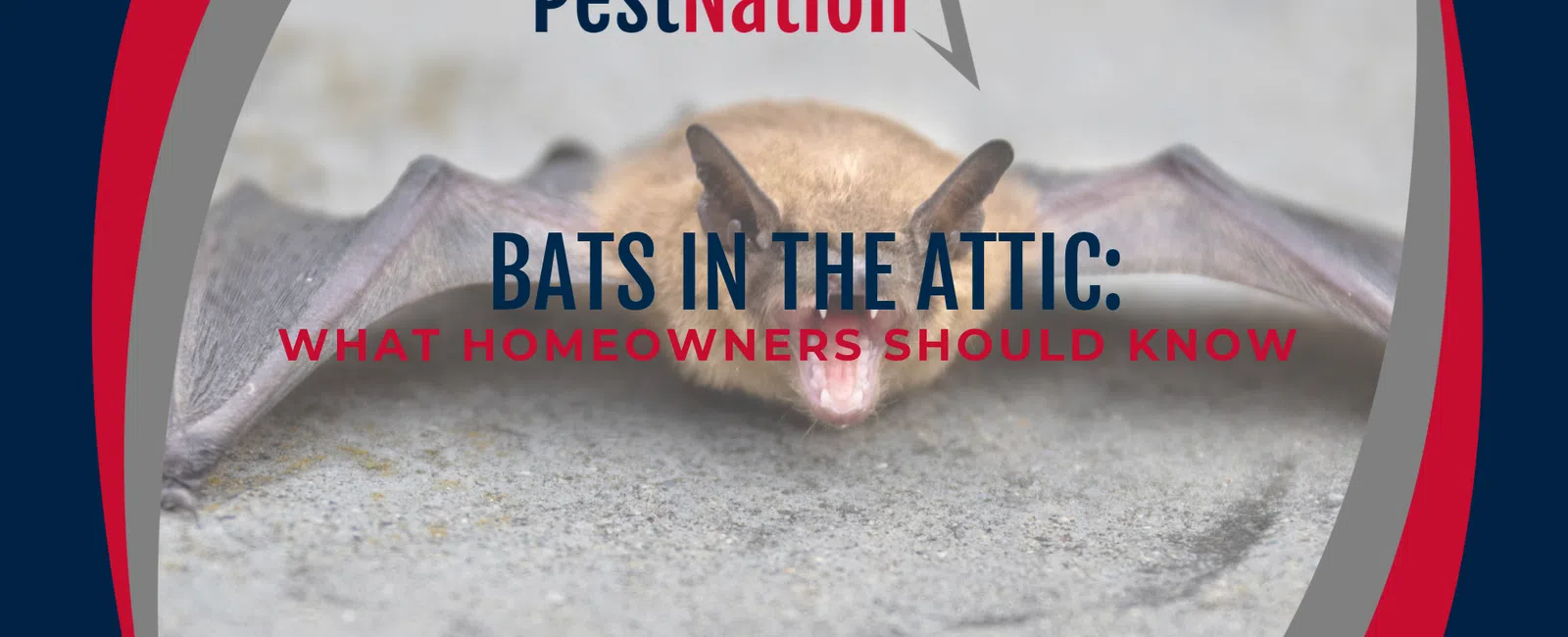
An attic is one of those areas of a home that can remain undisturbed for long periods, making it an appealing shelter for certain wildlife. Occasionally, an inspection reveals more activity than anyone expected. In one PestNation attic inspection, a licensed and certified technician initially spotted one bat—before discovering five bats, some bees, and a noticeable accumulation of guano. The technician even jokingly apologized for waking the bats.
The encounter may make for a memorable video, but bats and guano in an attic raise practical questions that homeowners should understand. How do bats get into attics? Why do they choose these spaces? What does accumulated guano indicate? And what should a homeowner do after discovering bats overhead? For Southeastern homeowners in particular, knowing how to recognize potential wildlife activity and understanding the importance of professional evaluation can help protect both the occupants of a home and the animals involved.
Bats are an important part of the natural environment and consume large numbers of flying insects. When they begin using a residential structure for shelter, however, the situation needs to be managed carefully. Professional Southeastern Pest Inspections can help identify evidence of activity and potential access points while allowing homeowners to make informed decisions about the next steps.
Why Would Bats Choose an Attic?
From a bat's perspective, an attic can offer many of the characteristics of a natural roosting location. It is elevated, sheltered from weather, relatively dark, and usually undisturbed for much of the day.
Depending on the home and surrounding environment, bats may discover small exterior openings that provide access to these protected spaces.
Potential areas associated with entry can include gaps around:
- Rooflines
- Eaves
- Soffits
- Fascia
- Vents
- Flashing
- Other exterior construction joints
A homeowner may never notice the opening from ground level.
Once an attic provides suitable shelter, bats may continue using it unless the access conditions change.
Why Bats Can Be Difficult to Notice
Bats can occupy parts of a structure that homeowners rarely visit. Unlike pests moving through kitchens or living spaces, attic wildlife may remain completely separated from everyday household activity.
Bats are also primarily active after dark. They may leave their roost around dusk and return later, meaning homeowners can live beneath an active roost without seeing the animals themselves.
Potential clues can include unusual activity around the roofline at dusk, sounds originating from attic areas, or droppings accumulating beneath a roosting location.
However, these signs should be interpreted carefully. Sounds and droppings can have multiple sources, so accurate identification matters.
This is one reason Southeastern Pest Inspections can be useful when unexplained attic activity is suspected.
What Is Bat Guano?
Bat droppings are commonly called guano.
When bats repeatedly use the same roosting area, guano can accumulate below the location. The amount visible during an inspection can provide evidence that the area has been used by bats, although an inspection is needed to understand the current situation.
Homeowners should avoid unnecessarily disturbing accumulated guano.
Large or established accumulations can create sanitation concerns, and disturbing dried droppings may release particles into the air. Rather than sweeping, vacuuming, or handling significant accumulations without knowing the appropriate precautions, homeowners should seek qualified guidance.
Finding guano is also a reason to look beyond cleanup alone. Removing droppings without addressing how bats are accessing the attic does not address the underlying entry condition.
Bats Are Not Typical Household Pests
Bats deserve a different approach from insects such as ants or cockroaches.
They are wildlife, and they play a beneficial ecological role. Many bats feed on insects, including moths, beetles, and other flying insects active at night.
For this reason, responsible management focuses on keeping bats out of human living structures rather than treating them like ordinary household insects.
The objective is generally to understand where the animals are roosting, determine how they are entering, and use appropriate exclusion practices when legally and seasonally appropriate.
Wildlife laws and restrictions can vary by location and species, so homeowners should not assume that a bat colony can simply be removed at any time of year.
What Should You Do If You Find Bats in Your Attic?
The first rule is simple: avoid handling them.
A bat found in an attic should not be picked up with bare hands, even if it appears inactive. Homeowners should also avoid cornering or intentionally disturbing a group of bats.
Instead, maintain distance and contact an appropriate professional who can evaluate the situation.
If a bat has entered an occupied room—particularly one where a person was sleeping, a child was unattended, or direct contact may have occurred—the situation requires additional caution because bats can carry rabies. Public-health or medical guidance may be appropriate when potential human or pet exposure cannot be ruled out.
The attic scenario is different from simply seeing a bat flying outside at night. A bat using outdoor habitat normally does not represent the same property concern as multiple bats roosting inside a structure.
Why Finding Several Bats Matters
Seeing one bat in an attic establishes that a bat has gained access. Finding several demonstrates that the space is being used by multiple animals.
That does not automatically reveal how long they have been present or how frequently the attic is being used. Those questions require additional observation and evaluation.
Evidence such as accumulated guano can provide additional context.
A professional inspection may focus on determining where activity is concentrated and identifying exterior openings associated with access.
The goal is not to make assumptions from the number of animals visible during a single visit. It is to gather enough information to understand the conditions of the property.
Why Entry-Point Identification Is So Important
Wildlife management is unlikely to provide a lasting solution if the route into the structure remains available.
That makes exterior inspection particularly important.
A technician may examine roof transitions, soffits, fascia, vents, and other construction details for openings or evidence of repeated wildlife movement.
This is where wildlife concerns overlap with broader pest control principles. Successful prevention often involves identifying why an organism is present instead of focusing only on what is visible at that moment.
The same principle applies whether an inspection reveals bats, insects, or another type of unwanted activity.
Why Timing Can Matter With Bat Exclusion
Homeowners who discover bats may understandably want every exterior opening sealed immediately. With bats, however, indiscriminate sealing can create additional problems.
If openings are sealed while bats remain inside, the animals may become trapped within the structure or search for another route into occupied portions of the home.
Seasonal considerations can also matter because young bats may not yet be capable of leaving a roost independently during maternity periods.
Appropriate exclusion therefore requires understanding the situation before closing access points.
This is another reason professional assessment matters. Wildlife management should account for the animals present, the structure, timing, and applicable local requirements.
Bees and Bats in the Same Attic
The technician in the PestNation video also noted bees in the attic.
An attic can sometimes support more than one type of pest or wildlife activity because the same structural characteristics that create shelter for one organism may create opportunities for another.
That does not necessarily mean the two are directly related.
Instead, their simultaneous presence reinforces the value of inspecting the entire area rather than stopping after the first finding.
An attic evaluation may reveal several separate conditions requiring different responses. Bat activity, bee activity, moisture, structural openings, or other pest evidence should each be properly identified before recommendations are made.
How Southeastern Homeowners Can Reduce Wildlife Access
Homeowners can periodically examine their properties for visible changes that could create access to protected spaces.
From a safe location, look for damaged or deteriorated components around:
- Soffits and fascia
- Roof edges
- Exterior vents
- Gable areas
- Flashing
- Other exterior transitions
Maintenance issues should be corrected appropriately, but homeowners should be cautious about sealing suspected bat entry points when animals may already be inside.
Trees and vegetation around a home can also make roof areas harder to observe. Periodic exterior evaluation helps homeowners recognize changes before they become easy-to-miss access opportunities.
Attic Inspections Offer More Than Pest Detection
Attics can reveal a surprising amount about conditions affecting a home.
In addition to wildlife, an attic inspection may expose evidence of insect activity or other environmental concerns that are not visible from occupied rooms.
For PestNation, professional inspection is an important part of understanding why pest or wildlife activity is occurring.
Southeastern Pest Inspections can help homeowners identify visible evidence, evaluate accessible areas, and determine whether additional professional attention is warranted.
The important distinction is that an inspection provides information. The appropriate response should then be based on what was actually found.
Prevention Starts With Awareness
Many homeowners rarely enter their attics, and for good reason. Attic spaces can be difficult to navigate and may contain electrical components, insulation, limited flooring, and other hazards.
Homeowners do not need to routinely crawl through these areas themselves to practice good prevention.
Instead, pay attention to changes around the home. Unusual sounds overhead, repeated bat activity around the roofline, visible exterior openings, or unexplained droppings can all provide reasons for further investigation.
Professional pest control and wildlife evaluation can then focus on the areas that require closer examination.
Why Professional Evaluation Matters
Discovering bats is different from seeing a common insect crawling across the floor. Wildlife introduces additional safety, legal, structural, and biological considerations.
Qualified professionals can evaluate accessible areas while minimizing unnecessary disturbance. They can also identify whether the evidence actually corresponds with bats rather than another animal.
For Southeastern homeowners, this approach is especially useful because warm weather and diverse wildlife can create frequent interactions between homes and the surrounding environment.
A professional evaluation provides a clearer basis for deciding what should happen next.
Finding one bat in an attic can be surprising. Finding five bats, bees, and a significant amount of guano—as PestNation's licensed and certified technician encountered—certainly makes the inspection more memorable. Behind the lighthearted moment, however, is an important reminder: attics can provide protected spaces where wildlife activity remains unnoticed because homeowners rarely see what is happening above their ceilings.
Bats are valuable members of the Southeastern ecosystem, but an attic is not an ideal place for people and wildlife to share. Homeowners who discover bats should avoid direct handling, avoid disturbing accumulated guano, and resist the temptation to immediately seal openings without understanding whether animals remain inside. Identifying access points and choosing appropriate exclusion practices are central to responsible management.
Regular property awareness combined with professional Southeastern Pest Inspections can help reveal wildlife and pest activity that might otherwise remain hidden. PestNation helps homeowners understand what is occurring around their properties so decisions about exclusion, maintenance, and pest control can be based on actual inspection findings rather than assumptions.
The technician's playful "sorry if I woke you guys" may make the video entertaining, but the takeaway for homeowners is practical: when something unexpected is living in the attic, finding out how it got there is just as important as finding it in the first place.