
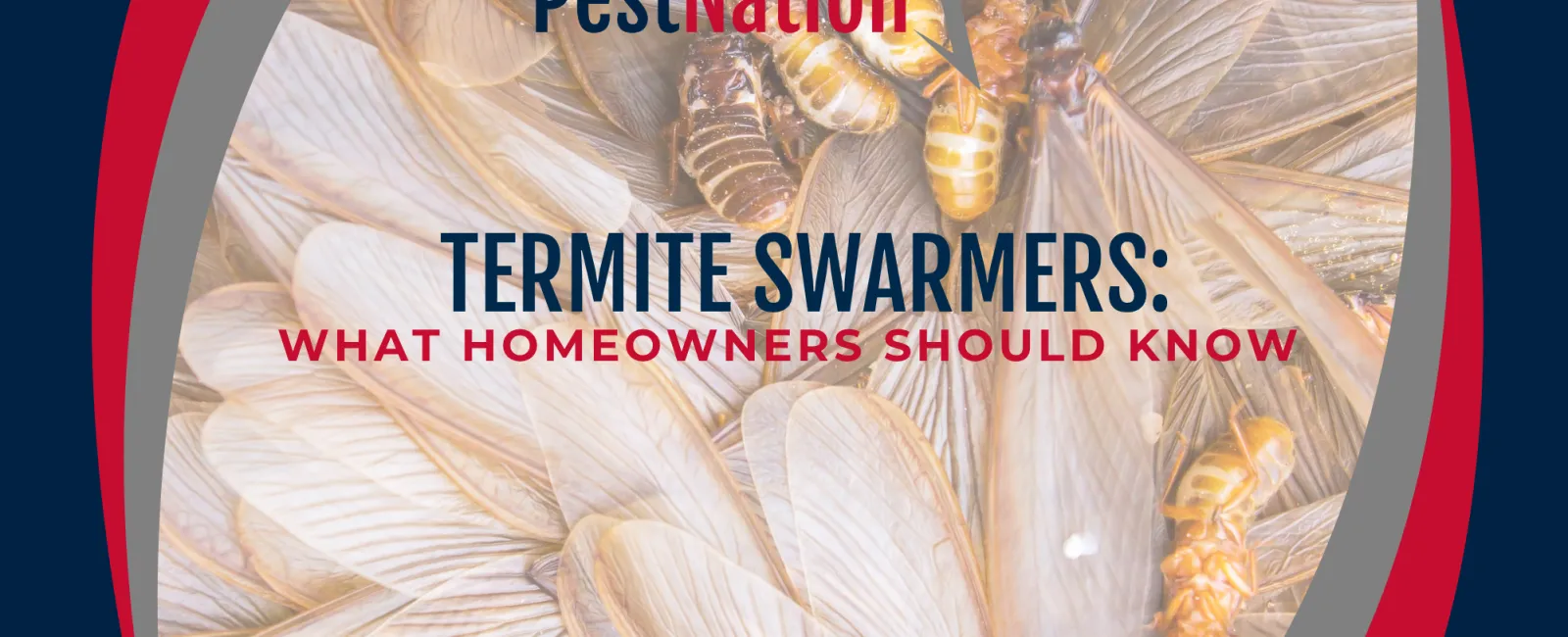
Termites are one of the most structurally impactful pests a homeowner can encounter, yet they often go unnoticed until visible signs begin to appear. One of the most recognizable indicators of termite activity is the presence of swarmers—winged termites that emerge from a colony to reproduce and establish new colonies. While they may resemble flying ants at first glance, termite swarmers serve a very specific purpose and often signal underlying activity that homeowners should not ignore.
In a recent inspection, Licensed Technician Shelby M. identified a termite swarmer during a service visit. While the sighting itself may seem minor, it represents an important moment in the termite life cycle. Swarmer termites are typically seen during certain times of the year, often when environmental conditions are favorable for colony expansion. Their presence can indicate that a colony is mature and actively reproducing, which makes early awareness especially important for homeowners.
For homeowners across the Southeast, termite activity is a common concern due to the region's warm climate and moisture-rich environment. Understanding what termite swarmers are, why they appear, and what steps to take when they are observed can help homeowners better protect their property and make informed decisions about pest control and inspections.
What Are Termite Swarmers?
Termite swarmers, also known as alates, are reproductive members of a termite colony. Their primary role is to leave an established colony, mate, and begin forming new colonies.
Unlike worker termites, which remain hidden inside wood or soil, swarmers are the most visible form of termite activity. They are typically characterized by:
- Wings of equal length
- Straight antennae
- A uniform body shape without a narrow waist
Because of their appearance, swarmers are often mistaken for flying ants. However, their behavior and physical characteristics are distinct.
After a short flight, swarmers will shed their wings and attempt to establish a new colony in a suitable environment.
Why Swarmers Appear
Swarming is a natural part of the termite life cycle. It occurs when a colony reaches a level of maturity and begins to reproduce.
Several environmental factors can trigger swarming behavior:
- Warm temperatures
- Increased humidity
- Rainfall followed by sunlight
- Seasonal changes, particularly in spring and early summer
In the Southeast, these conditions are common, which is why termite swarms are frequently observed by homeowners in the region.
The appearance of swarmers does not always mean that termites are actively damaging a structure, but it does indicate that a colony is nearby.
Where Swarmers Are Commonly Seen
Termite swarmers are often found in areas where they can easily exit a colony and disperse.
Common locations include:
- Near windows and doors
- Around light fixtures
- Along baseboards
- On exterior walls
- Near foundation areas
Because swarmers are attracted to light, they are often seen indoors near windows or light sources after entering through small openings.
Discarded wings are another common sign. After swarming, termites shed their wings, which may accumulate on floors, windowsills, or other surfaces.
Why Swarmers Matter to Homeowners
While swarmers themselves do not cause structural damage, they serve as an important indicator of termite activity.
Their presence suggests that:
- A colony has reached maturity
- Reproductive termites are active
- Conditions may be suitable for new colonies to form
This makes swarmers one of the earliest visible signs that termites may be present in or around a home.
For homeowners, recognizing this sign early provides an opportunity to take preventative action before potential damage occurs.
Termites in the Southeast
The Southeastern United States provides an ideal environment for termites due to its warm temperatures and high humidity levels. These conditions support termite activity year-round in many areas.
Subterranean termites, one of the most common species in the region, build colonies in the soil and travel through mud tubes to access wood structures.
Because they often remain hidden, termite activity can go undetected without professional inspections.
This is why Southeastern Pest Inspections are an important part of home maintenance for homeowners in the region.
How Termites Enter Homes
Termites typically enter homes from the ground, seeking out wood and cellulose materials.
Common entry points include:
- Cracks in the foundation
- Gaps around plumbing or utility lines
- Wood-to-soil contact areas
- Moist or damaged wood
Once inside, termites can remain hidden while feeding on structural components such as framing, flooring, and support beams.
Because of their hidden nature, termite infestations are often discovered only after signs like swarmers appear.
Preventing Termite Activity
While it may not be possible to eliminate all termite activity in the surrounding environment, homeowners can take steps to reduce the risk of infestation.
Reduce Moisture
Termites are attracted to moisture. Addressing drainage issues, fixing leaks, and maintaining proper ventilation can help make the home less appealing.
Eliminate Wood-to-Soil Contact
Wood structures that come into direct contact with soil create easy access points for termites. Maintaining proper separation between soil and wood is important.
Store Wood Away from the Home
Firewood, lumber, and other wood materials should be stored away from the foundation to reduce the likelihood of attracting termites.
Seal Entry Points
Inspecting and sealing cracks or gaps in the foundation and around utility lines can help limit termite access.
The Role of Professional Inspections
Because termites often remain hidden, professional inspections are one of the most effective ways to identify potential issues early.
During Southeastern Pest Inspections, trained technicians evaluate:
- Structural components of the home
- Moisture conditions
- Potential entry points
- Signs of termite activity
These inspections provide homeowners with a clearer understanding of their property and any potential risks.
PestNation offers inspection services designed to identify termite activity and provide recommendations based on the findings.
Interior and Exterior Considerations
Termite activity is not limited to one area of the home. Effective pest control strategies address both interior and exterior conditions.
Exterior factors such as soil moisture, landscaping, and drainage can influence termite activity, while interior factors such as wood condition and humidity levels also play a role.
By evaluating both environments, pest professionals can develop a more comprehensive approach to prevention.
When to Take Action
Homeowners should consider scheduling a professional inspection if they notice:
- Swarmers inside or around the home
- Discarded wings near windows or doors
- Mud tubes along foundation walls
- Soft or damaged wood
Taking action early helps reduce the risk of more extensive termite activity.
Termite swarmers are often one of the first visible signs that a termite colony is active nearby. While they may only appear briefly, their presence provides valuable insight into what may be happening behind the scenes.
For homeowners, understanding what swarmers represent is an important step in protecting their property. Recognizing these signs early allows for informed decisions and timely inspections.
Maintaining proper moisture control, reducing wood-to-soil contact, and addressing potential entry points all contribute to a more secure home environment.
Professional inspections provide an added layer of confidence by identifying conditions that may not be immediately visible.
With the support of PestNation and routine Southeastern Pest Inspections, homeowners can take a proactive approach to pest control and better protect their homes from termite activity.
Staying informed and addressing early warning signs can make a meaningful difference in long-term home maintenance and protection.