
Many homeowners rarely think about their crawlspace until a problem develops. Because it sits beneath the home and remains largely out of sight, this area is often overlooked during routine maintenance. However, a crawlspace has a significant impact on the overall health of a home. Moisture, humidity, structural conditions, insulation quality, and pest activity often begin below the living space long before homeowners notice visible signs upstairs. In the Southeast, where warm temperatures and high humidity create favorable conditions for insects and rodents, crawlspaces frequently become one of the most active areas for pest infestations.
One solution that has gained considerable attention among homeowners is crawlspace encapsulation. While many people associate encapsulation primarily with moisture control or improved energy efficiency, it can also play an important role in reducing pest activity. Encapsulation changes the crawlspace environment by limiting moisture, improving air quality, and making the area less attractive to insects and rodents. Combined with professional PestNation pest inspections and comprehensive Pest Control strategies, crawlspace encapsulation can become an important component of long-term Pest Prevention.
For homeowners seeking Atlanta, Charlotte, Orlando, and Charleston pest control services, understanding how crawlspace conditions influence pest activity can help protect both the home and the investment. Proper crawlspace management addresses many of the environmental factors that attract pests before infestations begin.
What Is Crawlspace Encapsulation?
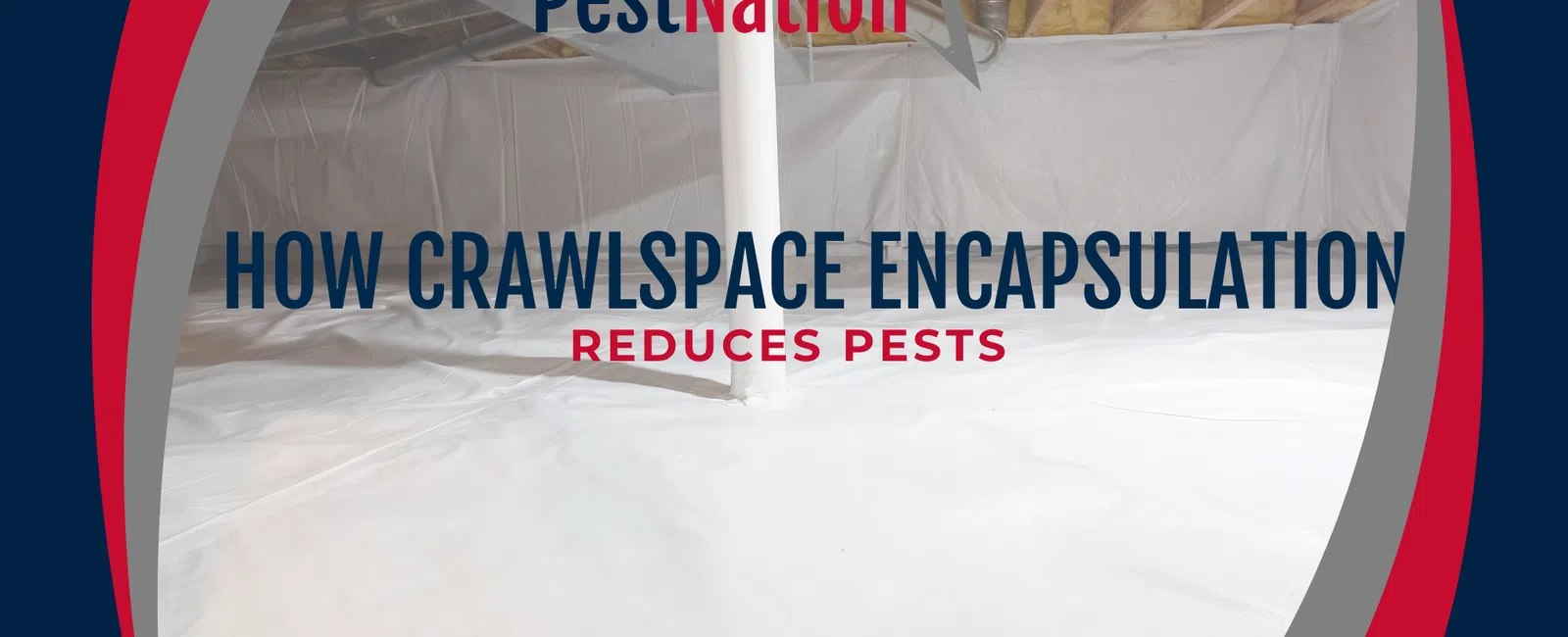
Crawlspace encapsulation is the process of sealing and protecting a crawlspace from excessive moisture and outside air infiltration.
A professionally encapsulated crawlspace typically includes:
- Heavy-duty vapor barriers covering the ground
- Sealed foundation vents
- Air sealing around penetrations
- Moisture management improvements
- Optional dehumidification systems
- Insulation upgrades when appropriate
Rather than allowing outside humidity to circulate freely beneath the home, encapsulation creates a cleaner, drier, and more controlled environment.
Although encapsulation is not a standalone pest treatment, it significantly reduces many of the conditions that encourage pests to establish themselves beneath a home.
Why Crawlspaces Attract Pests
Before understanding how encapsulation helps, it is important to understand why crawlspaces attract pests in the first place.
Most pests are looking for four basic necessities:
- Moisture
- Shelter
- Food sources
- Minimal disturbance
Traditional crawlspaces often provide all four.
Common conditions found in unsealed crawlspaces include:
- Damp soil
- High humidity
- Condensation
- Wood debris
- Standing water
- Dark, protected spaces
These conditions create ideal habitats for many common Southeastern pests.
This is why crawlspace encapsulation pests has become an important topic for homeowners interested in long-term Pest Prevention.
Moisture Is One of the Biggest Pest Attractants
Moisture plays a central role in nearly every major crawlspace pest issue.
High humidity attracts:
- Cockroaches
- Termites
- Carpenter ants
- Silverfish
- Millipedes
- Centipedes
Moisture also contributes to:
- Mold growth
- Wood decay
- Fungal activity
These secondary conditions may further encourage certain insects and wood-destroying organisms.
Encapsulation dramatically reduces ground moisture evaporation, helping maintain lower humidity levels throughout the crawlspace.
A drier crawlspace becomes significantly less attractive to many common pests.
Crawlspace Encapsulation Helps Reduce Cockroach Activity
American cockroaches and smokybrown cockroaches commonly inhabit crawlspaces throughout the Southeast.
These insects prefer:
- Warm temperatures
- Damp environments
- Organic debris
- Limited human activity
When crawlspaces remain humid year-round, cockroach populations can become well established before eventually migrating into kitchens, bathrooms, garages, and utility rooms.
Reducing moisture through encapsulation makes these environments less favorable.
While professional crawlspace pest control treatments may still be necessary, encapsulation often reduces the environmental conditions supporting long-term infestations.
Rodents Prefer Protected Crawlspaces
Mice and rats frequently use crawlspaces as sheltered nesting areas.
Once inside, rodents may:
- Build nests
- Damage insulation
- Chew electrical wiring
- Enter wall voids
- Contaminate surfaces
Encapsulation alone does not prevent rodents from entering.
However, many encapsulation projects include:
- Air sealing
- Gap repairs
- Foundation improvements
These exclusion measures reduce potential entry points while creating an environment that is less suitable for nesting.
Professional Atlanta, Charlotte, Orlando, and Charleston interior and exterior pest treatments often recommend combining exclusion work with encapsulation for maximum effectiveness.
Termites Still Require Professional Monitoring
Some homeowners mistakenly believe encapsulation eliminates termite risks.
While encapsulation helps reduce excess moisture—a major termite attractant—it does not prevent termites from existing in surrounding soil.
Subterranean termites remain capable of entering homes through:
- Foundation cracks
- Expansion joints
- Structural penetrations
For this reason, encapsulation should always be combined with:
- Routine PestNation pest inspections
- Professional termite monitoring
- Moisture management
- Preventative Pest Control
Together, these strategies provide more comprehensive protection than encapsulation alone.
Fewer Insects Means Fewer Spiders
Spiders primarily enter crawlspaces because they have abundant food sources.
When encapsulation reduces populations of:
- Cockroaches
- Crickets
- Silverfish
- Other crawling insects
Spider activity often decreases as well.
Rather than treating spiders alone, addressing the underlying insect population frequently provides better long-term results.
This demonstrates how environmental improvements contribute to effective crawlspace pest control.
Improved Indoor Air Quality
Many homeowners are surprised to learn that crawlspaces directly influence indoor air quality.
Air naturally moves upward through homes, carrying moisture and airborne particles from below.
An encapsulated crawlspace may help reduce:
- Excess humidity
- Mold spores
- Musty odors
- Dust accumulation
Although this primarily benefits indoor comfort, drier indoor conditions also reduce the attractiveness of certain moisture-loving pests.
Improved environmental conditions support broader Pest Prevention goals.
Protecting Structural Components
Moisture affects more than pest activity.
Excess crawlspace humidity contributes to:
- Wood rot
- Insulation deterioration
- Corrosion
- Mold growth
As wood becomes weakened, it becomes increasingly attractive to:
- Carpenter ants
- Termites
- Wood-destroying insects
Encapsulation helps preserve structural materials by reducing chronic moisture exposure.
Protecting the structure also reduces opportunities for future pest infestations.
Encapsulation Supports Long-Term Pest Prevention
The most effective Pest Control programs focus on prevention rather than reaction.
Encapsulation aligns well with this philosophy because it addresses environmental conditions before they create pest problems.
Benefits include:
- Lower humidity
- Reduced moisture
- Fewer insect harborage areas
- Improved crawlspace cleanliness
- Better structural protection
Rather than simply eliminating existing pests, encapsulation helps reduce future pest pressure.
The Importance of Professional Pest Inspections
Even with encapsulation, routine inspections remain essential.
PestNation pest inspections evaluate:
- Moisture conditions
- Termite activity
- Rodent evidence
- Entry points
- Crawlspace integrity
- Environmental risk factors
Regular inspections help identify changing conditions before they develop into larger infestations.
This proactive approach supports both encapsulation investments and ongoing Pest Prevention efforts.
Encapsulation Works Best with Professional Pest Control
Homeowners should view encapsulation as one component of a larger integrated pest management strategy.
Professional Pest Control services may include:
- Exterior treatments
- Interior monitoring
- Rodent exclusion
- Moisture evaluations
- Termite inspections
- Seasonal pest management
Atlanta, Charlotte, Orlando, and Charleston pest control professionals frequently recommend combining encapsulation with routine service because each addresses different aspects of pest prevention.
Together, they provide stronger long-term protection than either solution alone.
Additional Ways to Reduce Crawlspace Pest Activity
Homeowners can further reduce pest risks by:
- Repairing plumbing leaks promptly
- Maintaining proper grading around foundations
- Removing wood debris beneath the home
- Trimming vegetation away from crawlspace vents
- Eliminating standing water
- Sealing foundation openings
These maintenance practices complement encapsulation while strengthening crawlspace pest control efforts.
Crawlspace encapsulation offers benefits that extend well beyond moisture management. By creating a cleaner, drier, and more controlled environment beneath the home, encapsulation reduces many of the conditions that attract insects and rodents. Lower humidity, fewer moisture-related problems, improved structural protection, and better exclusion all contribute to reducing pest pressure over time. While encapsulation alone is not a substitute for professional pest management, it serves as an important part of a comprehensive prevention strategy.
For homeowners seeking Atlanta, Charlotte, Orlando, and Charleston pest control solutions, combining crawlspace encapsulation with regular PestNation pest inspections, Atlanta, Charlotte, Orlando, and Charleston interior and exterior pest treatments, and ongoing Pest Control services provides a proactive approach to long-term Pest Prevention. Addressing crawlspace encapsulation pests before infestations develop helps protect the home's structure, improve indoor conditions, and reduce recurring pest problems for years to come.