Most homeowners spend very little time in their attic or inspecting the roofline of their home. Because these areas are largely out of sight, they often become ideal hiding places for pests long before any obvious warning signs appear inside the living space. Small gaps around soffits, roof vents, fascia boards, chimneys, and utility penetrations can provide easy access for insects, rodents, birds, and other wildlife seeking shelter from the weather. Once inside, many pests can remain undetected for weeks or even months while nesting, reproducing, or damaging insulation and structural materials.
Throughout the Southeast, warm temperatures, humid conditions, and mild winters allow many pest species to remain active for much of the year. Homes in Atlanta, Charlotte, Orlando, and Charleston are particularly susceptible because changing seasons encourage pests to move between outdoor habitats and sheltered indoor spaces. Through comprehensive PestNation pest inspections and customized Atlanta, Charlotte, Orlando, and Charleston interior and exterior pest treatments, PestNation helps homeowners identify attic vulnerabilities before infestations become widespread. Combined with professional Pest Control and Wildlife Control services, early detection helps protect both the structure and the occupants of the home.
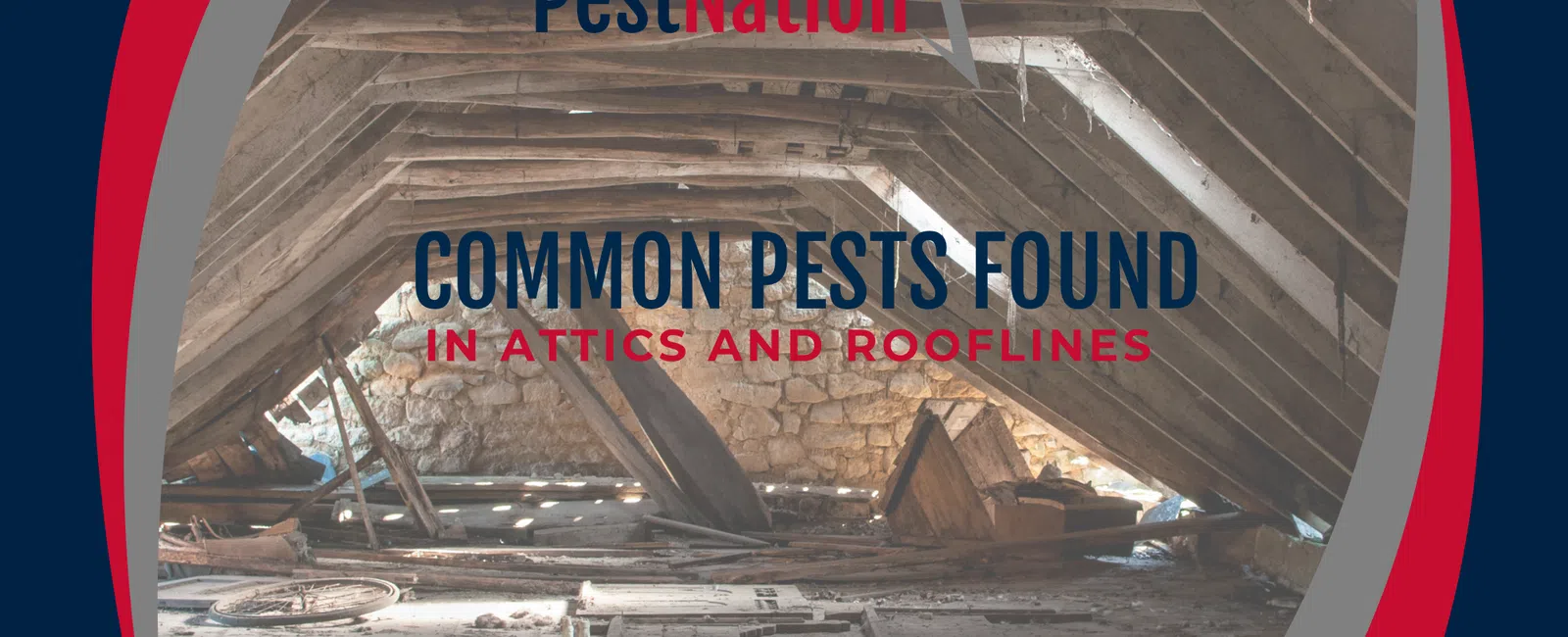
Understanding which attic pests are most common—and why they are attracted to rooflines—is one of the best ways to reduce long-term pest problems. While every property is unique, most attic infestations begin because pests find an accessible entry point and an environment that provides shelter, warmth, and limited disturbance.
Why Attics and Rooflines Attract Pests
Attics offer many of the conditions pests need to survive.
These areas are typically:
- Warm and dry
- Quiet and rarely disturbed
- Protected from predators
- Filled with insulation for nesting
- Close to roofline entry points
Rooflines also provide natural access routes for climbing pests and wildlife.
Common access points include:
- Damaged soffits
- Loose fascia boards
- Roof vents
- Gable vents
- Chimney gaps
- Utility penetrations
- Openings around flashing
Many homeowners never notice these small openings because they are located high above ground level.
Professional roofline pest control begins by identifying and correcting these vulnerabilities before pests become established.
Rodents Are Among the Most Common Attic Pests
Mice and rats are two of the most frequently encountered attic pests throughout the Southeast.
Rodents commonly enter attics by climbing:
- Utility lines
- Trees
- Gutters
- Downspouts
- Fences connected to structures
Once inside, they use insulation and stored materials to create nests.
Rodents may cause significant damage by:
- Chewing electrical wiring
- Damaging insulation
- Contaminating surfaces with droppings
- Gnawing structural materials
- Entering wall cavities
Because rodents reproduce quickly, a small problem can grow into a much larger infestation if left unaddressed.
Routine PestNation pest inspections help identify rodent activity before extensive damage occurs.
Squirrels Frequently Enter Rooflines
Squirrels are highly capable climbers and commonly enter homes through roofline openings.
Typical entry locations include:
- Damaged soffits
- Roof vents
- Loose fascia
- Gable vents
- Construction gaps
Inside attics, squirrels often:
- Build nests
- Damage insulation
- Chew wood
- Gnaw electrical wiring
- Create noise throughout the day
Unlike nocturnal rodents, squirrel activity is often heard during daylight hours.
Professional Wildlife Control services are important because squirrels can be persistent and may attempt to re-enter if access points remain open.
Raccoons Seek Shelter in Attics
Raccoons are among the largest wildlife species commonly found in attics.
Female raccoons frequently choose attics as safe locations to raise their young.
Once inside, raccoons may:
- Tear insulation
- Damage ductwork
- Break soffits
- Contaminate attic spaces
- Damage roofing materials
Because raccoons are powerful animals, they often enlarge small roofline openings while entering or exiting the home.
Wildlife Control professionals typically recommend both humane removal and permanent exclusion repairs.
Bats Can Occupy Small Roofline Gaps
Bats require surprisingly little space to enter structures.
They commonly access attics through:
- Ridge vents
- Roofline gaps
- Chimney flashing
- Fascia openings
While bats play an important ecological role by consuming insects, they should not occupy residential attic spaces.
Bat colonies may produce:
- Guano accumulation
- Odors
- Staining
- Air quality concerns
Because bats are protected in many areas, removal often requires specialized timing and professional handling.
Birds Can Nest Inside Roof Structures
Birds frequently enter attic spaces through damaged vents or construction gaps.
Species commonly encountered include:
- Sparrows
- Starlings
- Pigeons
Bird nests may:
- Block ventilation
- Introduce parasites
- Create fire hazards
- Damage insulation
Removing nesting materials and repairing entry points are important components of long-term roofline pest control.
Wasps and Hornets Build Roofline Nests
Rooflines provide numerous protected locations for stinging insects.
Common nesting sites include:
- Soffits
- Eaves
- Porch ceilings
- Attic voids
- Roof overhangs
Paper wasps and hornets often begin with small spring nests that expand significantly throughout the summer.
Early identification prevents colonies from becoming larger and more difficult to manage.
Atlanta, Charlotte, Orlando, and Charleston interior and exterior pest treatments frequently include routine inspection of roofline nesting areas.
Cockroaches Can Occupy Attic Spaces
Although cockroaches are commonly associated with kitchens and bathrooms, certain species may inhabit attics under the right conditions.
American cockroaches and smokybrown cockroaches may enter attic spaces through:
- Roofline gaps
- Utility penetrations
- Exterior wall voids
These insects prefer:
- Warm temperatures
- Moisture
- Dark hiding areas
Reducing moisture and sealing entry points helps discourage attic infestations.
Carpenter Ants and Termites
Wood-destroying insects may also be found around roof structures.
Carpenter ants often exploit:
- Moist wood
- Roof leaks
- Damaged framing
Termites may reach attic framing by traveling through wall systems from lower portions of the structure.
Regular PestNation pest inspections help identify early signs of wood-destroying insect activity before major structural damage develops.
Moisture Increases Attic Pest Activity
Roof leaks and poor ventilation create conditions that attract pests.
Moisture-related issues may include:
- Condensation
- Roof leaks
- Damaged flashing
- Poor attic ventilation
These conditions support:
- Mold growth
- Wood decay
- Increased insect activity
Moisture management plays an important role in reducing attic pest populations.
Landscaping Influences Roofline Pest Pressure
The landscape surrounding a home often contributes to attic infestations.
Common concerns include:
- Tree limbs touching the roof
- Dense vegetation near siding
- Climbing vines
- Overgrown shrubs
These natural bridges allow rodents, squirrels, ants, and other pests easier access to rooflines.
Maintaining proper clearance between vegetation and structures reduces opportunities for pest entry.
Warning Signs of Attic Pest Activity
Homeowners should watch for signs including:
- Scratching noises
- Gnawing sounds
- Droppings
- Insulation disturbance
- Unpleasant odors
- Visible nesting materials
- Chewed wiring
- Stains around ceilings
Early recognition often allows for simpler treatment and fewer repairs.
Why Professional Inspections Matter
Many attic infestations remain hidden until damage becomes significant.
Professional PestNation pest inspections evaluate:
- Roofline vulnerabilities
- Wildlife activity
- Rodent evidence
- Moisture conditions
- Structural concerns
- Potential entry points
Routine inspections help homeowners address problems before infestations expand throughout the property.
Preventing Future Attic Infestations
Long-term prevention includes:
- Sealing roofline gaps
- Repairing damaged vents
- Installing quality vent screens
- Trimming tree branches
- Maintaining roofing systems
- Monitoring moisture
- Scheduling routine inspections
These preventive measures significantly reduce opportunities for attic pests to establish themselves.
Combining Wildlife Control with Pest Control
Many attic infestations involve both insects and wildlife.
An effective management strategy often combines:
- Wildlife removal
- Rodent exclusion
- Insect treatments
- Roofline repairs
- Moisture management
- Ongoing monitoring
Professional Pest Control and Wildlife Control services address both current infestations and future prevention.
Attics and rooflines provide ideal environments for many common pests because they offer warmth, shelter, protection, and limited human activity. Rodents, squirrels, raccoons, bats, birds, cockroaches, carpenter ants, termites, and stinging insects frequently exploit small roofline openings to gain access to these spaces. Without routine inspections, infestations may continue unnoticed while causing structural damage, contaminating insulation, and creating safety concerns for homeowners.
For homeowners seeking Atlanta, Charlotte, Orlando, and Charleston pest control services, protecting the attic begins with prevention. Through comprehensive PestNation pest inspections and customized Atlanta, Charlotte, Orlando, and Charleston interior and exterior pest treatments, PestNation helps identify attic pests, correct structural vulnerabilities, and implement effective roofline pest control strategies. Combined with professional Wildlife Control, moisture management, and exclusion work, ongoing Pest Control services provide long-term protection that helps homeowners keep one of the most vulnerable areas of their home free from unwanted pests.