
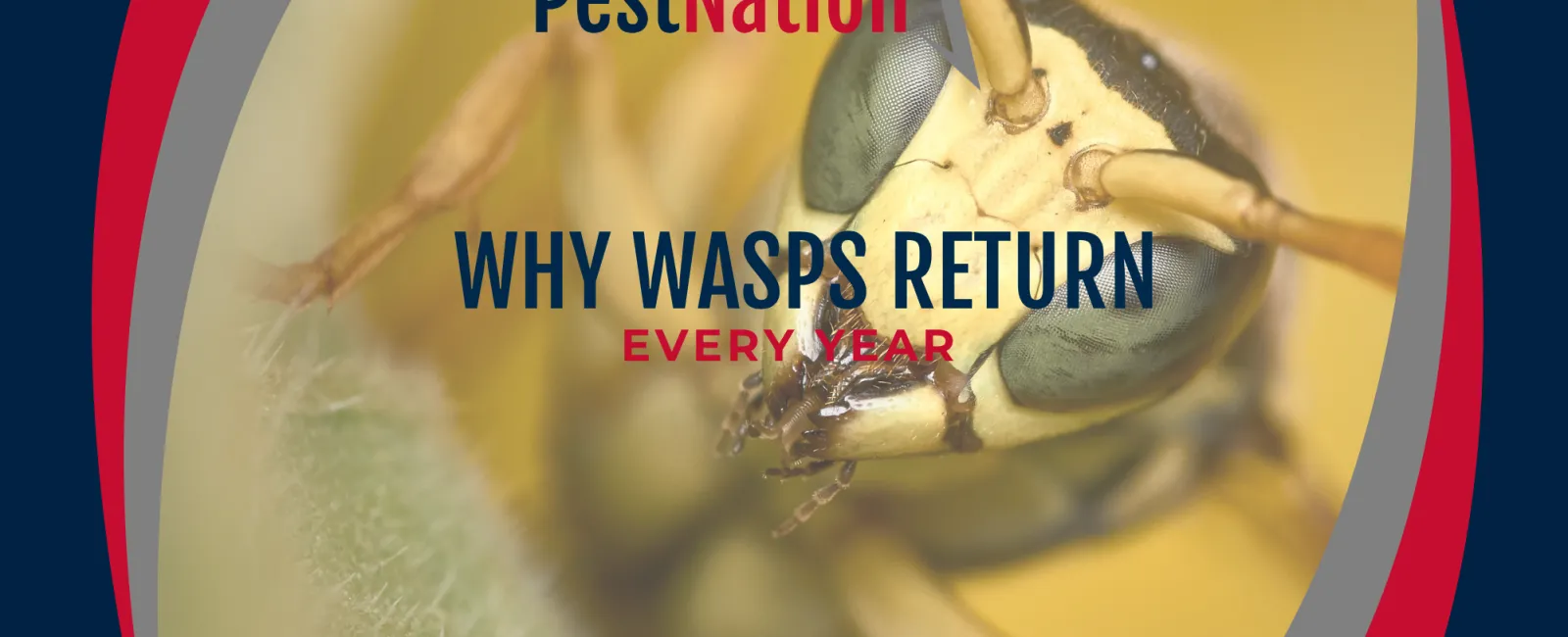
For many homeowners across the Southeast, spotting wasps around the home becomes a predictable seasonal event. As temperatures begin to rise each spring, wasps seem to reappear around porches, rooflines, decks, sheds, garages, and outdoor living spaces. Homeowners often wonder whether the same nest is being reused year after year or if new colonies are simply choosing the same location repeatedly. In cities like Atlanta and Charlotte, as well as in Orlando and coastal communities that rely on Charleston pest control services, recurring wasp activity is one of the most common pest concerns during the warmer months.
The reality is that while most wasp species do not reuse old nests, they frequently return to the same areas because those locations continue to provide the resources they need to survive. Shelter, food sources, nesting opportunities, and favorable environmental conditions all contribute to recurring infestations. Through detailed PestNation pest inspections and comprehensive Atlanta, Charlotte, Orlando, and Charleston interior and exterior pest treatments, PestNation helps homeowners understand why wasps return and how effective Wasp Control strategies can reduce future activity.
Understanding the factors that attract wasps year after year is one of the most important steps toward long-term wasp prevention. By addressing these conditions proactively, homeowners can reduce nesting opportunities and create a safer outdoor environment.
Do Wasps Reuse Old Nests?
One of the most common misconceptions about wasps is that they return to old nests every year.
In reality, most common wasp species found throughout the Southeast do not reuse existing nests.
Instead:
- Colonies die off at the end of the season
- Worker wasps perish during colder months
- Only fertilized queens survive the winter
- New nests are constructed each spring
However, even though the old nest is abandoned, new queens often choose locations very close to previous nesting sites.
This creates the appearance that the same colony has returned.
PestNation pest inspections frequently identify recurring nesting areas where environmental conditions continue attracting new queens season after season.
Why Certain Areas Attract Wasps
Wasps are highly selective when choosing nesting locations.
They seek areas that provide:
- Protection from weather
- Shelter from predators
- Easy access to food
- Stable structural support
Homes often provide all of these requirements.
Common nesting locations include:
- Roof overhangs
- Porch ceilings
- Deck structures
- Attic vents
- Sheds
- Garages
- Utility boxes
In Atlanta and Charlotte homes, covered outdoor structures are particularly attractive. Orlando and Charleston pest control environments often experience even higher nesting activity because warm conditions extend nesting seasons.
If a location successfully supported a colony in the past, it is likely to remain attractive to future queens.
The Role of Overwintering Queens
The annual cycle begins with overwintering queens.
During fall and winter, fertilized queens seek protected areas such as:
- Attics
- Crawl spaces
- Wall voids
- Tree bark
- Wood piles
Once spring temperatures increase, queens emerge and begin searching for suitable nesting sites.
Many queens remain relatively close to the area where they survived winter.
As a result, homes that experienced wasp activity previously often experience renewed activity the following season.
This pattern contributes significantly to recurring infestations throughout the Southeast.
Climate Conditions in the Southeast
The Southeast provides ideal conditions for wasp survival.
Key factors include:
- Long warm seasons
- High humidity
- Mild winters
- Extended insect activity
In Orlando and Charleston pest control environments, warm weather often arrives earlier and lasts longer than in other regions.
Atlanta and Charlotte also experience extended periods of favorable conditions for colony development.
Because wasps have a longer active season, colonies have more time to grow and produce future queens.
This increases the likelihood of recurring activity in subsequent years.
Food Sources Keep Wasps Nearby
Food availability plays a major role in determining where wasps establish nests.
Adult wasps consume:
- Sugary liquids
- Nectar
- Fruit juices
- Human food sources
They also hunt insects to feed developing larvae.
Common attractants around homes include:
- Outdoor dining areas
- Garbage containers
- Fallen fruit
- Pet food
- Compost piles
When these resources remain available, wasps are more likely to establish colonies nearby.
Atlanta, Charlotte, Orlando, and Charleston interior and exterior pest treatments often include recommendations for reducing food attractants around outdoor living spaces.
Landscaping Encourages Nesting Activity
Landscaping can significantly influence wasp populations.
Features that attract wasps include:
- Dense shrubs
- Flowering plants
- Trees
- Wood piles
- Mulch beds
These areas provide:
- Shelter
- Moisture
- Access to insects
Many homeowners unintentionally create ideal nesting environments close to patios, decks, and entryways.
PestNation pest inspections frequently identify landscaping conditions that contribute to recurring wasp activity.
Proper landscape maintenance is an important part of long-term wasp prevention.
Structural Vulnerabilities Around the Home
Wasps are highly skilled at finding protected nesting locations.
Common structural attractants include:
- Roofline gaps
- Loose siding
- Attic vents
- Porch ceilings
- Deck framing
- Utility penetrations
These features provide ideal shelter for queens establishing new colonies.
In Atlanta, Charlotte, Orlando, and Charleston pest control environments, recurring infestations often occur because structural vulnerabilities remain unchanged year after year.
Addressing these issues can significantly reduce nesting opportunities.
Why Early Season Activity Matters
Many homeowners focus on wasp problems only after large nests become visible.
However, early spring is often the most important time for prevention.
At this stage:
- Queens are establishing new colonies
- Nest populations remain small
- Treatment is easier and safer
Once colonies mature:
- Worker populations increase dramatically
- Defensive behavior becomes more aggressive
- Nest removal becomes more complicated
Seasonal pest control programs that begin early in the season can help reduce colony establishment before populations expand.
Common Wasp Species That Return
Several wasp species frequently create recurring problems throughout the Southeast.
Paper Wasps
Often build nests:
- Under eaves
- On porch ceilings
- Around decks
Yellowjackets
Prefer:
- Underground nests
- Wall voids
- Structural cavities
Hornets
Typically build:
- Large aerial nests
- Tree nests
- Elevated structural nests
Each species has different nesting preferences, but all benefit from favorable environmental conditions.
Professional Wasp Control strategies often begin with proper species identification.
Why DIY Prevention Often Falls Short
Many homeowners attempt prevention by removing visible nests.
While this may provide temporary relief, it often fails to address:
- Nesting attractants
- Structural vulnerabilities
- Food sources
- Overwintering locations
As a result, new queens frequently establish colonies nearby.
Professional inspections help identify the underlying reasons wasps continue returning.
Long-term prevention requires more than simply removing existing nests.
The Importance of Professional Inspections
PestNation pest inspections play a critical role in identifying recurring wasp issues.
Inspections may uncover:
- Early nest development
- Hidden colonies
- Structural entry points
- Environmental attractants
- Seasonal risk factors
In Atlanta, Charlotte, Orlando, and Charleston pest control environments, early detection often prevents larger infestations later in the season.
Regular inspections provide valuable opportunities to address risks before colonies become established.
Effective Wasp Prevention Strategies
Long-term wasp prevention typically includes:
- Removing food attractants
- Sealing structural gaps
- Maintaining landscaping
- Monitoring high-risk areas
- Addressing moisture issues
- Scheduling seasonal inspections
These strategies help reduce the conditions that encourage recurring nesting activity.
When combined with professional Wasp Control services, they provide significantly better long-term results.
Why Ongoing Seasonal Pest Control Matters
Because wasps remain active throughout much of the Southeast, ongoing monitoring is essential.
Seasonal pest control programs help:
- Detect queen activity early
- Reduce nesting opportunities
- Monitor recurring problem areas
- Maintain exterior protection
This proactive approach is often more effective than reacting after large nests become established.
Homes that receive routine inspections and preventative treatment generally experience fewer recurring infestations.
Wasps may not reuse old nests, but they frequently return to the same areas because those locations continue providing shelter, food, and ideal nesting conditions. The Southeast's warm climate, extended pest seasons, and abundance of suitable nesting sites make recurring wasp activity a common challenge for homeowners. Without addressing the environmental and structural factors attracting wasps, new colonies can continue forming year after year.
For homeowners in Atlanta and Charlotte, as well as in Orlando and coastal communities served by Charleston pest control professionals, long-term wasp prevention requires a proactive approach. Through detailed PestNation pest inspections and comprehensive Atlanta, Charlotte, Orlando, and Charleston interior and exterior pest treatments, PestNation helps homeowners identify recurring risk factors and implement effective Wasp Control solutions. By reducing nesting opportunities, addressing structural vulnerabilities, and maintaining seasonal pest control programs, homeowners can significantly reduce wasp activity and enjoy safer outdoor living spaces throughout the year.