
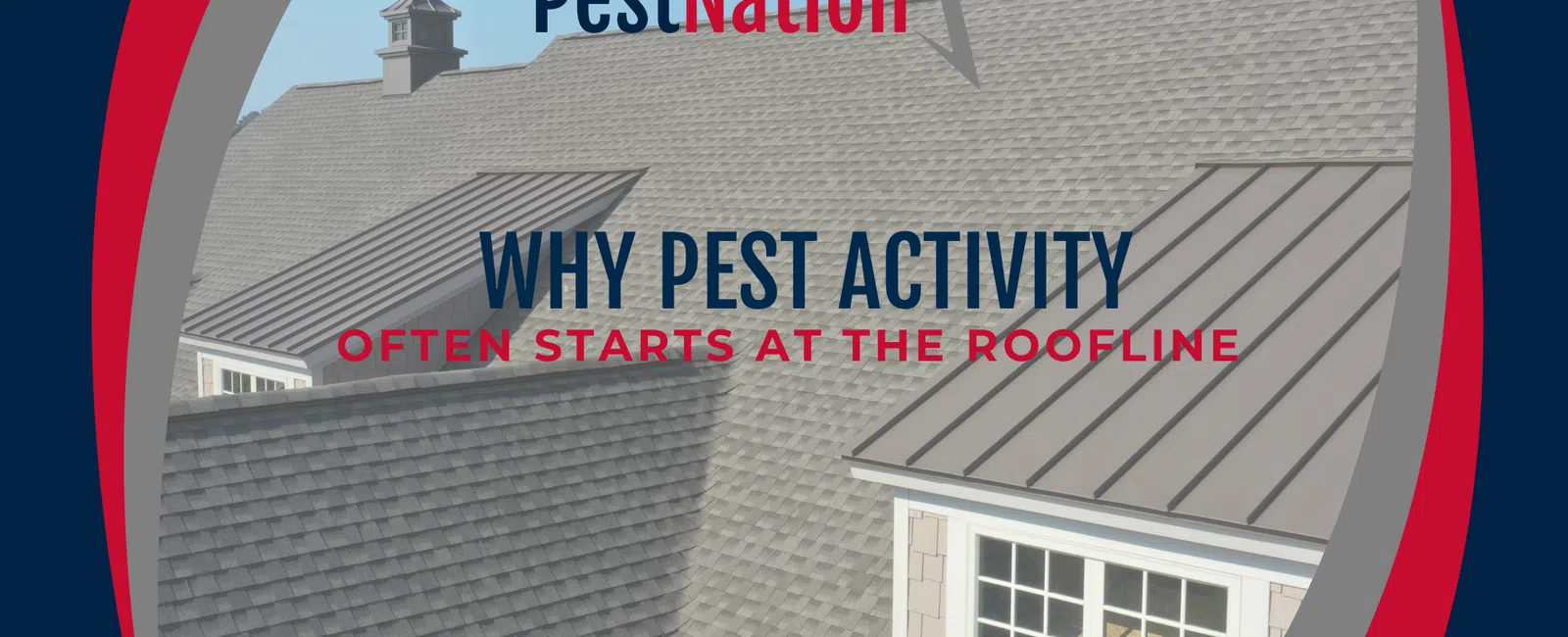
When homeowners think about pest entry, they often focus on the lower parts of a house: door thresholds, foundation cracks, garage openings, and gaps around windows. Those areas certainly matter, but they are only part of the building envelope. Rooflines, eaves, soffits, fascia, attic vents, roof vents, gable vents, gutters, and other upper exterior components can also create potential access points when materials become damaged, screens deteriorate, or vegetation provides pests with a route toward the structure.
Understanding roof pest entry points is an important part of effective pest exclusion because many pests are capable climbers, fliers, or opportunistic invaders. Ants may follow branches or siding toward upper openings, cockroaches can use roofline harborages in warm and humid climates, spiders may build webs near lights and insect activity, and wasps may investigate gaps around eaves or vents. Roofline activity does not automatically mean pests are nesting inside the home, but recurring sightings near soffits, fascia, attic spaces, vents, or upper-floor rooms can justify a closer inspection of those areas.
Why Homeowners Often Overlook Upper Pest Entry Points
Ground-level pest prevention is easier to see and inspect. Homeowners routinely walk past doors, windows, foundations, and garage openings, so defects in those areas are more noticeable.
Upper exterior areas are different.
Potential concerns may develop around:
- Eaves
- Soffits
- Fascia
- Attic vents
- Gable vents
- Roof vents
- Roof penetrations
- Gutters
- Flashing transitions
- Upper siding
- Exterior trim
These components may be several stories above the ground or partially hidden by roof overhangs, landscaping, or architectural features.
As a result, deterioration can progress without being noticed until pest activity, water staining, damaged materials, or other symptoms become visible.
Guidance from the U.S. EPA - Integrated Pest Management Toolkit emphasizes identifying pest entry points and reducing conditions that provide food, water, shelter, or access, providing useful context for why rooflines and other upper exterior areas should be considered as part of a whole-home pest exclusion strategy.
The goal is not to seal every visible opening. Instead, homeowners and professionals should distinguish between necessary building features and unnecessary gaps or damage that pests may exploit.
Soffits Are Important Components of the Roofline
Soffits cover the underside of roof overhangs and help protect exposed structural areas while often contributing to attic ventilation.
When soffit materials are intact, they form part of the physical barrier between outdoor conditions and attic spaces.
Problems may develop when soffits become:
- Loose
- Cracked
- Missing
- Water damaged
- Rotting
- Separated at joints
- Damaged by storms
Even small openings can give insects or other pests an opportunity to investigate protected spaces.
A loose soffit panel does not prove that pests have entered, but it creates a condition worth correcting.
Fascia Damage Can Create Additional Openings
Fascia is installed along the roof edge and often supports gutters.
Because fascia is exposed to weather and drainage conditions, it can deteriorate when moisture persists.
Potential warning signs include:
- Peeling paint
- Soft wood
- Rot
- Loose sections
- Open joints
- Water staining
If deterioration becomes severe, gaps may form where pests can access areas behind gutters, roof edges, or soffit assemblies.
Maintaining fascia is therefore both a home-maintenance concern and a component of Pest Exclusion.
Roof and Attic Vents Need Proper Screening
Homes require ventilation, especially in attic and roof assemblies.
Common ventilation components include:
- Ridge vents
- Gable vents
- Soffit vents
- Roof vents
- Turbine vents
These openings should not be blocked simply to prevent pests.
Ventilation serves an important building function, and improper alteration can contribute to moisture problems, heat buildup, or other performance issues.
The correct goal is to make sure appropriate vent screens or protective components are intact and installed as intended.
Resources from the U.S. EPA - Pest Control Resources for Housing Managers discuss structural openings, vents, screens, maintenance, and other conditions that can influence pest entry, reinforcing why exclusion should involve more than simply treating pests after they appear indoors.
Damaged or missing screening deserves repair, but ventilation systems should remain functional.
Gable Vents Can Become Entry Points When Screens Fail
Gable vents are often located high on exterior walls and may be overlooked during routine inspections.
The exterior louver may appear intact while internal screening has:
- Torn
- Corroded
- Shifted
- Detached
This can leave openings behind the visible vent cover.
Flying insects, spiders, and other pests may investigate these protected locations.
Homeowners should not climb ladders or enter unsafe areas to inspect high vents. When the condition cannot be safely observed from the ground, a qualified professional should perform the evaluation.
Roof Penetrations Can Create Small Gaps
Roofs contain multiple penetrations for plumbing, mechanical, electrical, and ventilation systems.
These may include:
- Plumbing vent pipes
- Exhaust vents
- Utility components
- Satellite or communication equipment
- Mechanical penetrations
Flashing and sealant around these areas are designed to help manage water intrusion, but materials can deteriorate over time.
Small gaps or damaged transitions may create potential pest access routes.
Because roof penetrations also involve water-management concerns, they should generally be evaluated by an appropriate roofing or building professional rather than altered solely as a pest-control measure.
Flashing Transitions Can Develop Vulnerabilities
Flashing helps direct water away from vulnerable roof joints and transitions.
Common locations include:
- Roof-to-wall intersections
- Chimneys
- Dormers
- Valleys
- Penetrations
Damaged or improperly functioning flashing may contribute to water intrusion.
If moisture damages nearby wood or trim, the resulting deterioration can create pest-conducive conditions.
A roof leak does not automatically create a pest infestation, but persistent dampness can make certain areas more favorable for insects and other organisms.
Tree Branches Can Create Direct Routes to the Roof
Trees are one of the most important exterior factors affecting roofline pest activity.
Branches touching or overhanging a roof may allow certain pests to bypass ground-level barriers.
Potential travelers can include:
- Ants
- Cockroaches
- Spiders
- Other climbing insects
Branches may also drop leaves, twigs, seeds, and other debris into gutters and valleys.
Maintaining appropriate separation between trees and the structure can reduce direct pathways while also improving roof visibility.
Large limbs should be trimmed by qualified tree professionals rather than homeowners attempting unsafe elevated work.
Vines Can Also Provide Pest Pathways
Vines growing against siding, masonry, or roof edges can create sheltered travel routes.
Dense vegetation may:
- Hold moisture
- Hide exterior gaps
- Trap organic debris
- Reduce airflow
- Make inspection difficult
Vines reaching soffits, fascia, gutters, or rooflines can provide continuous contact between the ground and upper portions of the home.
Removing or controlling excessive vegetation can support pest exclusion and make structural maintenance easier.
Dense Shrubs Can Hide Roofline Conditions
Shrubs do not need to reach the roof to contribute to pest pressure.
Dense vegetation close to walls can provide:
- Shade
- Moisture
- Insect habitat
- Protected movement routes
Pests may then travel upward along siding, trim, utility lines, or other exterior features.
Keeping vegetation appropriately trimmed creates inspection space and reduces unnecessary shelter near the building.
Gutters Can Become Pest-Conducive Areas
Gutters collect more than rainwater.
They may also accumulate:
- Leaves
- Pine needles
- Roof debris
- Seeds
- Organic material
When drainage becomes restricted, standing water and damp debris can remain for extended periods.
This can create favorable conditions for certain insects.
Clogged gutters can also overflow and keep fascia, soffits, siding, and landscaping unnecessarily wet.
Guidance from UGA Extension - Insect and Arthropod Pests of Southeastern Neighborhoods discusses structural openings, moisture, vegetation, exterior maintenance, and other pest-conducive conditions common around Southeastern homes, helping explain why roofline maintenance and surrounding property conditions can influence pest activity.
Routine gutter maintenance therefore supports both building performance and Residential Pest Control prevention.
Standing Water in Gutters Can Increase Insect Activity
Clogged gutters may trap enough water to support mosquito development under favorable conditions.
Other insects may also benefit from moist organic debris.
While gutters are not the primary habitat for every pest, they can contribute to the overall environmental conditions around the roofline.
Homeowners should have clogged or poorly draining gutters corrected before moisture begins affecting adjacent materials.
Overflowing Gutters Can Damage Fascia and Soffits
Water that repeatedly spills over gutter edges can soak nearby materials.
Over time, this may contribute to:
- Wood deterioration
- Soft fascia
- Loose soffits
- Paint failure
- Open joints
Once materials deteriorate, pests may gain access to spaces that were previously protected.
This illustrates why pest prevention and home maintenance are closely connected.
Repairing the damaged building component is often just as important as addressing the pest activity itself.
Roof Leaks Can Create Pest-Conducive Conditions
Roof leaks can affect:
- Attic framing
- Insulation
- Roof decking
- Wall cavities
- Ceilings
Persistent moisture can contribute to fungal growth and wood deterioration.
Some insects prefer damp environments, while deteriorated materials can create more protected cracks and cavities.
However, a leak does not prove that pests are present.
The correct response is to repair the water source, dry affected materials as needed, and evaluate any pest evidence separately.
Attics Offer Shelter When Pests Gain Access
Attics can be attractive because they are:
- Dark
- Protected
- Warm
- Relatively undisturbed
Depending on climate and ventilation, they may also experience periods of elevated humidity.
When access points exist, certain pests may use attics as temporary shelter or harborage.
Potential pests can include:
- Ants
- Cockroaches
- Spiders
- Wasps
- Other occasional invaders
Not every pest species commonly enters through attics, and entry patterns vary by location and property condition.
Species identification and inspection remain important.
Ants May Travel Along Upper Exterior Surfaces
Some ant species are excellent climbers.
They may travel along:
- Tree branches
- Siding
- Utility lines
- Gutters
- Exterior trim
toward rooflines or upper openings.
A trail disappearing beneath an eave or fascia board may indicate a travel route, although it does not confirm the nest location.
Professional Ant Control may be appropriate when trails repeatedly connect exterior vegetation with upper structural openings.
Cockroaches Can Be Associated With Elevated Areas
Certain outdoor cockroach species, including smoky brown cockroaches, may be associated with rooflines, gutters, trees, and attic areas in warm Southern environments.
Moist gutters, vegetation, and tree cover can bring these pests closer to upper structural openings.
This makes roofline inspection particularly relevant in PestNation's Southeast service markets.
However, not every cockroach species shares this behavior.
German cockroaches, for example, are much more strongly associated with indoor kitchens and other areas near food, water, and warmth.
Species identification should guide Roach Control recommendations.
Spiders Often Follow Flying Insects
Spiders may become noticeable around eaves, porches, upper windows, and exterior lights.
Their presence is often related to prey availability.
Flying insects attracted to lighting can create feeding opportunities for spiders.
As a result, homeowners may see webs around:
- Porch lights
- Eaves
- Soffits
- Upper windows
- Roofline fixtures
Reducing insect attraction and removing recurring webbing can help, but the presence of spiders does not necessarily indicate they are entering the attic or living space.
Wasps May Investigate Protected Roofline Areas
Wasps commonly investigate sheltered areas around:
- Eaves
- Soffits
- Vents
- Trim
- Roof overhangs
Some species may construct nests in protected exterior areas.
Damaged soffits or openings may also provide access to concealed spaces.
If a nest is active in a difficult or elevated location, homeowners should avoid attempting unsafe removal and should consider professional Pest Control.
Exterior Lighting Can Increase Nighttime Pest Activity
Lighting near upper walls and eaves can attract flying insects after dark.
Fixtures mounted near:
- Rooflines
- Upper porches
- Eaves
- Balconies
may increase local insect activity.
Spiders and other predators may then gather nearby.
Reducing unnecessary nighttime lighting, using appropriate fixtures, or positioning lighting away from frequently used openings may help reduce pest activity in some situations.
Repeated Indoor Sightings Near Ceilings Can Be a Clue
Pests repeatedly appearing near:
- Ceilings
- Upper-floor windows
- Attic access points
- High wall corners
- Exterior-facing rooms
may justify evaluation of nearby roofline conditions.
These sightings do not prove where pests entered, but they can help focus an inspection.
For example, repeated cockroach activity near an attic access may prompt evaluation of soffits, vents, or nearby roofline harborages.
Similarly, ants appearing high on interior walls may be traveling through concealed wall or ceiling spaces.
Look for Indirect Evidence From the Ground
Homeowners do not need to climb onto a roof to identify potential concerns.
From a safe ground-level position, they may notice:
- Loose soffit panels
- Damaged fascia
- Missing vent screens
- Water staining
- Sagging gutters
- Heavy webbing
- Visible nests
- Vegetation touching the roof
- Open trim joints
Binoculars or photographs taken from safe locations may also help identify visible concerns.
If the area cannot be safely evaluated from the ground, a qualified professional should inspect it.
Avoid Unsafe Ladder and Roof Inspections
Rooflines can be dangerous to access.
Homeowners should avoid:
- Walking roofs
- Climbing unstable ladders
- Reaching over roof edges
- Disturbing nests from elevated positions
Pest prevention is not worth risking a fall or electrical injury.
Roofers, siding professionals, pest-control professionals, and other qualified trades can evaluate inaccessible areas depending on the concern.
Pest Exclusion Does Not Mean Sealing Every Opening
A common mistake is assuming that every visible gap should be filled.
Some openings are necessary for:
- Ventilation
- Drainage
- Thermal movement
- Building performance
For example, blocking an attic vent to prevent insects could create serious moisture or heat problems.
Effective Pest Exclusion involves understanding which openings are defects and which are intentional building features.
Appropriate screening, repair, flashing, or sealing should preserve the original function of the component.
Different Defects May Require Different Professionals
A pest professional may identify a possible entry point, but another trade may need to repair it.
Examples include:
- Roof flashing repairs by roofers
- Soffit or fascia replacement by exterior contractors
- Ventilation repairs by appropriate building professionals
- Tree trimming by arborists
- Gutter repairs by gutter contractors
This coordinated approach helps ensure pest exclusion does not interfere with building function.
Roofline Maintenance Should Be Comprehensive
Effective roofline prevention may involve maintaining:
- Roofing
- Gutters
- Soffits
- Fascia
- Vent screens
- Flashing
- Exterior trim
- Landscaping
- Tree branches
- Utility penetrations
A pest problem associated with one area may actually reflect several contributing conditions.
For example, a tree branch may provide access to a gutter filled with damp leaves beside a damaged soffit.
Addressing all three conditions creates a stronger preventive result than treating insects alone.
Moisture Management Is an Important Part of Exclusion
Moisture can make roofline areas more attractive and accelerate structural deterioration.
Homeowners should address:
- Clogged gutters
- Roof leaks
- Poor drainage
- Damaged flashing
- Persistent condensation
Removing water sources can reduce pest-conducive conditions and help preserve exterior components.
Moisture management should work alongside Pest Exclusion, not as a separate concern.
Sanitation Still Matters Outdoors
Roofline pest prevention also benefits from general property sanitation.
Potential exterior food or shelter sources can include:
- Garbage
- Pet food
- Compost
- Organic debris
- Leaf accumulation
Reducing these attractants can decrease overall pest pressure around the property.
For example, a cockroach population supported by damp leaf litter and garbage at ground level may eventually travel upward through vegetation or exterior walls.
Monitoring Helps Distinguish Temporary Activity From Infestation
Seeing one insect near an eave does not necessarily indicate a serious problem.
Homeowners should pay attention to whether activity is:
- Repeated
- Seasonal
- Concentrated in one area
- Moving indoors
- Associated with visible damage
Recurring patterns provide more useful information than isolated sightings.
This is where PestNation Pest Inspections can help determine whether roofline activity represents simple exterior pest pressure, a structural entry issue, or an established infestation.
Professional Pest Inspections Can Identify Multiple Factors
A professional inspection may evaluate:
- Pest species
- Visible entry points
- Roofline harborages
- Vent screening
- Moisture conditions
- Vegetation
- Gutters
- Interior evidence
An inspection can also help distinguish between a pest-management issue and a building-repair issue.
For example, insects around rotting fascia may require pest treatment, but the damaged fascia itself still requires appropriate repair.
Integrated Pest Management Supports Roofline Prevention
Information from the U.S. EPA - Introduction to Integrated Pest Management emphasizes prevention, monitoring, accurate identification, and appropriate control methods rather than relying on treatment alone.
This framework is especially relevant to roof pest entry points because long-term management often depends on multiple actions:
- Repairing damaged components
- Managing moisture
- Trimming vegetation
- Maintaining screens
- Monitoring activity
- Using appropriate pest treatment when needed
A coordinated strategy helps reduce both access and the environmental conditions that support recurring activity.
Southern Weather Can Increase Roofline Pest Pressure
PestNation's service markets experience combinations of heat, humidity, storms, rainfall, and vegetation growth that can influence upper-level pest activity.
In Atlanta, warm summers, mature tree cover, and seasonal storms can increase debris accumulation and insect pressure around gutters and rooflines.
Charlotte experiences similar combinations of heat, humidity, rainfall, and suburban tree canopy.
Orlando's extended warmth, frequent rain, dense vegetation, and long pest-active season can support substantial outdoor insect activity throughout much of the year.
Charleston's coastal humidity, mature vegetation, storms, and mild winters can likewise keep pest pressure elevated.
These environmental conditions help explain why Atlanta Pest Control, Charlotte Pest Control, Orlando Pest Control, and Charleston Pest Control strategies should include evaluation of the entire exterior, not just foundations and doors.
How PestNation Addresses Roofline Pest Activity
At PestNation, effective Residential Pest Control involves evaluating how pests are interacting with the property rather than treating every visible insect as an isolated problem.
PestNation Pest Inspections can help identify potential roofline access points, pest harborages, vegetation concerns, moisture conditions, and signs of active infestation. Depending on the pest involved, services such as Ant Control, Roach Control, broader Pest Control, or appropriate Pest Exclusion may be relevant.
Homes receiving Atlanta Interior and Exterior Pest Treatments, Charlotte Interior and Exterior Pest Treatments, Orlando Interior and Exterior Pest Treatments, or Charleston Interior and Exterior Pest Treatments may benefit from evaluating whether exterior roofline conditions are contributing to repeated indoor or outdoor sightings.
Treatment can address active pest pressure, while maintenance and exclusion can reduce the conditions allowing that pressure to continue.
Rooflines deserve the same attention as foundations, doors, and windows when homeowners think about pest prevention. Soffits, fascia, vents, gutters, flashing, roof penetrations, tree branches, and upper exterior trim can all become potential roof pest entry points when materials are damaged or pest-conducive conditions develop. At the same time, many roofline openings are intentional and essential for ventilation or drainage, so effective pest exclusion depends on identifying actual defects rather than sealing components indiscriminately.
Recurring activity around eaves, upper windows, attic accesses, soffits, gutters, or roof vents should be evaluated in the context of the entire property. Moisture management, vegetation trimming, gutter maintenance, sanitation, structural repair, monitoring, and appropriate Pest Control can all contribute to better long-term results. When roofline conditions cannot be safely inspected from the ground, PestNation Pest Inspections and qualified building professionals can help determine whether the issue involves an active infestation, an exterior harborage, a maintenance concern, or a combination of these factors.