
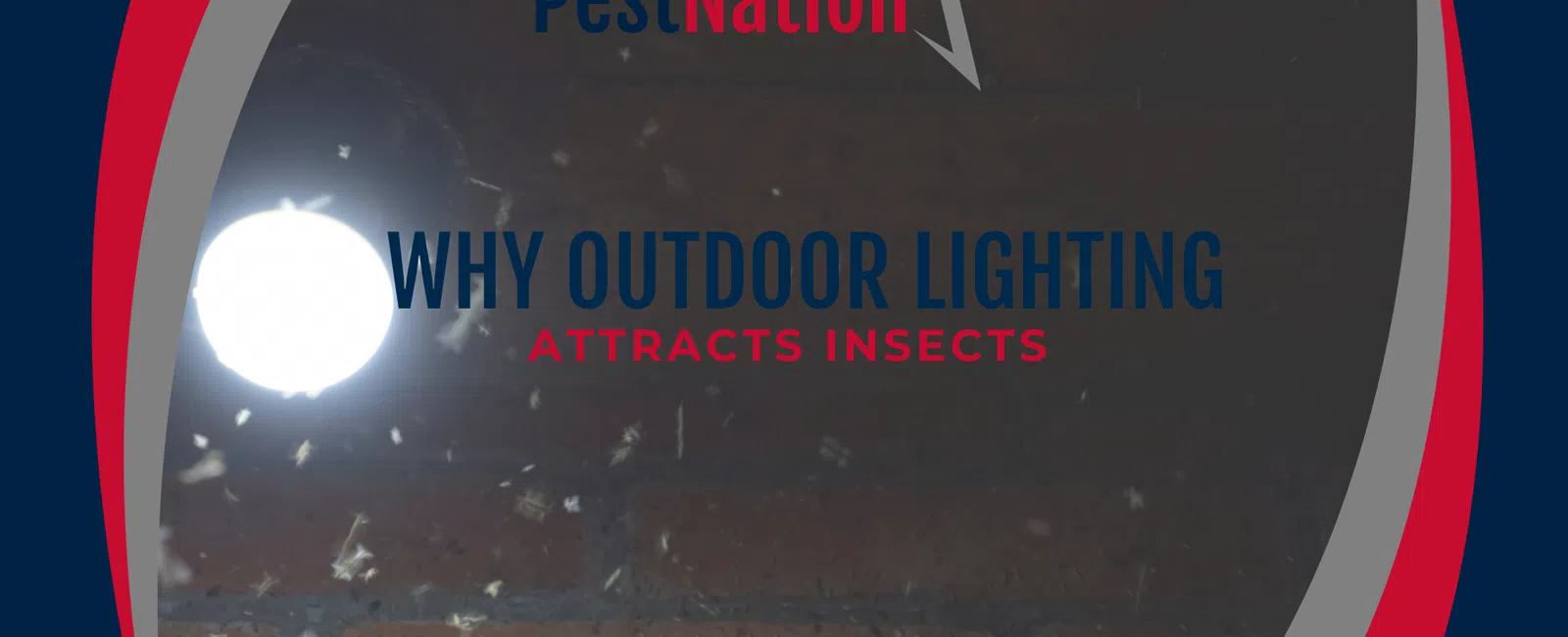
Artificial lighting has transformed how we use our outdoor spaces. From illuminating entryways and patios to improving safety around commercial buildings, outdoor lighting provides convenience and security after dark. However, many property owners also notice that the same lights drawing people outside seem to attract large numbers of insects. Soon afterward, spiders often appear nearby, building webs around light fixtures, windows, porches, and entryways where insects gather.
Understanding why insects attracted to lights behave this way can help homeowners, renters, business owners, and property managers make informed decisions about lighting, landscaping, and outdoor pest control. While lights alone do not create a pest infestation, they can contribute to increased insect activity that encourages spiders and other predators to remain close to your property. By combining smart lighting choices with preventative pest management, you can significantly reduce nighttime pest activity while maintaining a safe and attractive outdoor environment.
Why Are Insects Attracted to Lights?
Many nighttime insects have evolved to navigate using natural sources of light such as the moon and stars. Artificial lighting interferes with these navigation methods, causing certain insects to circle or remain near illuminated areas instead of continuing their normal flight patterns.
Research published by Penn State Extension - Outdoor Lights and Insects explains why many flying insects are naturally attracted to artificial lighting and how outdoor lighting choices can influence nighttime pest activity around homes and businesses. Their findings help explain why porch lights, parking lot lights, and decorative landscape lighting often become gathering places for insects after sunset.
Not every insect responds to light in the same way. Some species are strongly attracted to certain wavelengths, while others are barely affected. The intensity, color temperature, placement, and duration of outdoor lighting all influence how many insects appear.
Common insects frequently found around outdoor lighting include:
- Moths
- Flying ants
- Midges
- Mayflies
- Beetles
- Caddisflies
- Mosquitoes
- Certain species of flies
Why Do Spiders Gather Around Outdoor Lights?
Many people assume outdoor lights directly attract spiders. In reality, spiders are following their food.
Lights attract insects, creating concentrated feeding opportunities for web-building spiders. Over time, spiders learn that light fixtures provide a reliable source of prey, making them ideal places to build webs.
Educational resources from the University of Kentucky Department of Entomology provide valuable insight into insect behavior, helping homeowners understand why porch lights, security lights, and landscape lighting often attract insects that can also draw spiders closer to a property.
Common places where spiders build webs include:
- Porch lights
- Garage lights
- Entry doors
- Exterior windows
- Security lights
- Outdoor signs
- Deck railings
- Lighted landscaping
Although spiders can actually reduce insect populations by feeding on flying pests, excessive webbing around entrances and outdoor seating areas quickly becomes a nuisance.
Does Every Type of Outdoor Light Attract Insects?
No. Different light sources produce different amounts of insect activity.
Several factors influence insect attraction, including:
Light Color
Warm-colored bulbs generally attract fewer insects than cool white or bluish lights.
Lights with color temperatures around 2200K to 3000K tend to produce less insect activity than bright daylight-style LEDs.
Brightness
Brighter lights are typically visible from greater distances, attracting insects from a wider area.
Using only the amount of lighting necessary for safety can reduce unnecessary insect traffic.
Ultraviolet Light
Many insects are especially attracted to ultraviolet wavelengths.
Older mercury vapor bulbs and some fluorescent lighting emit higher levels of UV light than many modern LEDs.
Placement
Lighting positioned away from doors and gathering areas can reduce the number of insects reaching patios, entrances, and outdoor dining spaces.
Common Outdoor Lighting That Attracts Insects
Nearly every property contains multiple sources of nighttime lighting.
Examples include:
- Porch lights
- Landscape lighting
- Flood lights
- Security lights
- Parking lot lights
- Decorative pathway lights
- Motion-activated lights
- Commercial building signage
- Pool lighting
- Outdoor entertainment areas
Even attractive landscape lighting can unintentionally increase nighttime insect activity if poorly positioned.
Why Mosquitoes May Still Be Around
Many people assume mosquitoes are strongly attracted to lights. While some mosquito species may be drawn toward illuminated areas, they are generally much more attracted to:
- Carbon dioxide
- Body heat
- Human scent
- Standing water
- Moist environments
Outdoor lighting may increase mosquito visibility, but eliminating breeding sites and using professional mosquito control remains much more effective than simply changing light bulbs.
How Landscaping Can Make the Problem Worse
Outdoor lighting often works together with landscaping to create ideal conditions for insects.
Dense shrubs near lights provide shelter during the day before insects emerge at night.
Other contributing factors include:
- Overgrown vegetation
- Standing water
- Thick mulch
- Flowering plants
- Excess moisture
- Poor drainage
- Leaf litter
When insects have both shelter and attractive lighting nearby, populations often become more noticeable.
Commercial Properties Face Similar Challenges
Businesses often rely on extensive exterior lighting for safety, visibility, and customer convenience.
Commercial properties frequently experience insect buildup around:
- Restaurant patios
- Hotel entrances
- Office buildings
- Apartment complexes
- Shopping centers
- Warehouses
- Gas stations
- Parking garages
These insects not only create unpleasant customer experiences but may also contribute to sanitation concerns in food service environments.
Smart Lighting Strategies That Reduce Pest Activity
Complete darkness is rarely practical, but several lighting improvements can help minimize insect attraction.
Consider:
Choose Warm LED Bulbs
Warm white LEDs produce less attraction for many flying insects than cool blue-white lighting.
Install Motion Sensors
Motion-activated lighting reduces the amount of time lights remain on overnight.
Direct Light Downward
Shielded fixtures reduce unnecessary light dispersion into surrounding landscapes.
Move Decorative Lighting
Position lighting farther from seating areas and entryways whenever possible.
Eliminate Unnecessary Lighting
Turn off decorative lighting when it is no longer needed.
These simple adjustments can noticeably reduce the number of insects attracted to lights over time.
Integrated Pest Management Makes the Biggest Difference
Lighting changes work best when combined with comprehensive pest prevention.
The University of California Integrated Pest Management (UC IPM) emphasizes that successful pest management involves reducing the environmental conditions that support pests rather than relying solely on pesticide applications. Their guidance reinforces the value of combining lighting improvements, moisture control, sanitation, and habitat reduction to create long-term solutions.
Integrated Pest Management (IPM) often includes:
- Sealing exterior entry points
- Managing moisture
- Removing standing water
- Proper trash management
- Trimming vegetation
- Monitoring pest activity
- Targeted treatments when necessary
This balanced approach helps reduce overall pest populations while minimizing unnecessary chemical use.
Why Preventative Outdoor Pest Control Matters
Many property owners wait until insects become overwhelming before taking action.
Preventative outdoor pest control helps interrupt pest activity before populations become established.
Professional pest management may include:
- Exterior perimeter treatments
- Spider web removal
- Ant control
- Mosquito reduction
- Pest monitoring
- Seasonal inspections
- Habitat modification recommendations
Routine service often provides more consistent results than reacting only after pest numbers increase.
The Importance of Professional Pest Inspections
Lighting may reveal increased insect activity, but it can also indicate larger pest issues.
Professional PestNation Pest Inspections help identify:
- Hidden nesting sites
- Moisture problems
- Structural vulnerabilities
- Landscape conditions
- Seasonal pest risks
- Spider activity
- Ant colonies
- Conditions attracting insects
Early identification allows problems to be addressed before they become more expensive or difficult to manage.
How PestNation Helps Reduce Outdoor Pest Activity
At PestNation, pest management goes beyond simply treating visible insects. Every property is unique, requiring solutions tailored to its lighting, landscaping, structural features, and surrounding environment.
Whether customers need Residential Pest Control, Exterior Pest Control, or Interior Pest Control, professional technicians evaluate the factors contributing to ongoing pest activity and recommend practical solutions that provide lasting protection.
Property owners searching for Atlanta Pest Control, Charlotte Pest Control, Orlando Pest Control, or Charleston Pest Control can benefit from customized treatment programs designed to reduce insect populations around homes and businesses throughout the year.
PestNation also provides Atlanta Interior and Exterior Pest Treatments, Charlotte Interior and Exterior Pest Treatments, Orlando Interior and Exterior Pest Treatments, and Charleston Interior and Exterior Pest Treatments, helping protect properties both inside and outside the structure. Services may include general pest control, spider control, ant control, mosquito control, and comprehensive pest inspections to address current activity while helping prevent future infestations.
Industry guidance from the U.S. Environmental Protection Agency - Safer Pest Control reinforces the importance of combining preventative pest management practices with professional outdoor pest control to reduce pest activity while minimizing unnecessary pesticide use. This balanced approach aligns with integrated pest management strategies that focus on long-term prevention.
Outdoor lighting is an important feature for safety, security, and curb appeal, but it can unintentionally encourage insects and spiders to gather around homes and commercial properties. Understanding why insects attracted to lights behave this way allows property owners to make informed decisions about lighting choices, landscaping practices, and preventative maintenance.
Fortunately, outdoor lighting does not have to become a constant source of pest problems. By selecting appropriate lighting, reducing conditions that support insect populations, maintaining the landscape, and investing in professional outdoor pest control, homeowners and businesses can enjoy well-lit outdoor spaces with fewer unwanted visitors. When combined with routine inspections and proactive pest management, these strategies provide long-term protection and a more comfortable outdoor environment throughout every season.