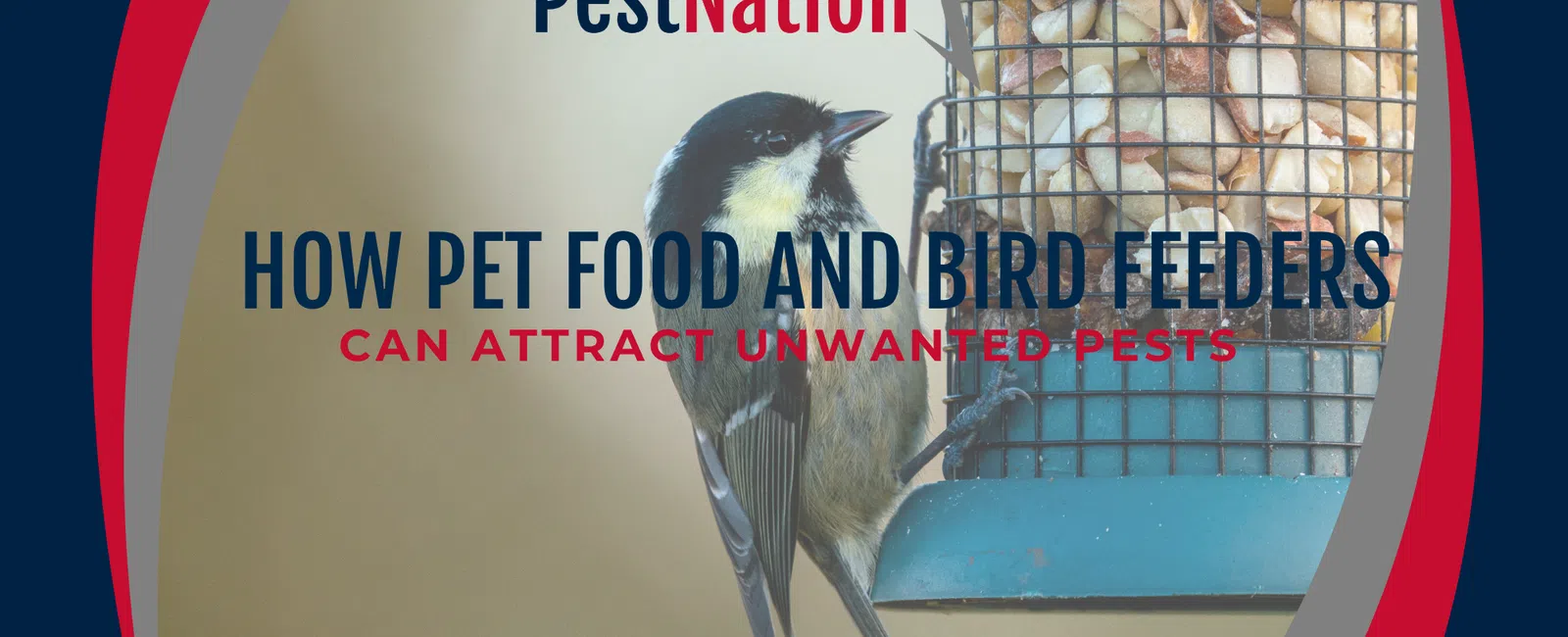
Feeding pets outdoors and maintaining bird feeders are common practices for many homeowners. Outdoor pet bowls provide convenience for pets that spend time outside, while bird feeders create opportunities to enjoy local wildlife throughout the year. However, these food sources can also attract insects, rodents, and larger nuisance animals when they are not properly managed.
Many pest infestations begin outside before eventually spreading into the home. Leftover pet food, spilled bird seed, and standing water around feeding stations provide a dependable source of food and moisture that pests quickly learn to exploit. Understanding how pet food attracts pests is an important part of protecting your property while still enjoying pets and backyard birds. Combined with proper sanitation and routine PestNation Pest Inspections, homeowners can significantly reduce pest activity around their homes.
Why Outdoor Feeding Areas Attract Pests
Like all animals, pests are constantly searching for food, water, and shelter.
Outdoor feeding stations often provide all three in one convenient location.
Pet food and bird seed contain proteins, carbohydrates, fats, and grains that are attractive to a wide variety of pests. Even small amounts of spilled food can become enough to support insect or rodent activity.
Common pests attracted to feeding areas include:
- Mice
- Rats
- Ants
- Cockroaches
- Squirrels
- Raccoons
- Opossums
- Birds that may carry parasites
Once pests discover a reliable food source, they often return repeatedly and establish nests or colonies nearby.
The University of California Integrated Pest Management Program recommends reducing access to food sources as one of the most effective long-term pest prevention strategies. Eliminating spilled food and maintaining clean outdoor environments removes the conditions that encourage pest populations to grow.
Outdoor Pet Food Can Lead to Rodent Problems
Leaving pet food outdoors throughout the day or overnight is one of the most common ways homeowners unintentionally encourage rodent activity.
Dry kibble is highly nutritious and emits odors that mice and rats can detect from surprising distances.
After rodents begin feeding regularly, they may establish nests beneath:
- Decks
- Sheds
- HVAC equipment
- Wood piles
- Crawlspaces
- Dense shrubs
As rodent populations increase, they often begin searching for additional food and shelter inside nearby homes.
Effective rodent prevention around homes starts by feeding pets only during scheduled mealtimes and bringing food bowls indoors immediately afterward.
Bird Feeders Can Feed More Than Birds
Bird feeders are designed to support wildlife, but they frequently attract more than just birds.
Seed that falls beneath feeders becomes an easily accessible food source for numerous pests.
Common visitors include:
- Mice
- Rats
- Squirrels
- Chipmunks
- Ants
- Cockroaches
Many rodents rarely climb the feeder itself because enough seed accumulates on the ground each day.
Placing bird feeders away from the home and cleaning spilled seed regularly helps reduce unwanted pest activity while continuing to support backyard birds.
Ants Quickly Discover Pet Food
Ants are highly efficient foragers that constantly search for dependable food sources.
Outdoor pet food contains proteins, fats, and carbohydrates that worker ants quickly locate. Once food is found, ants leave pheromone trails that guide thousands of additional workers directly to the same location.
Before long, what began as a few ants around a food bowl can become a well-established trail extending across patios, sidewalks, porches, and even inside the home.
Cleaning feeding areas after every meal and removing leftover food greatly reduces the likelihood of ant infestations.
Professional Ant Control can help eliminate established colonies that continue returning despite proper sanitation.
Cockroaches Benefit from Outdoor Feeding Stations
Cockroaches are opportunistic scavengers that consume nearly any available organic material.
Pet feeding stations often provide:
- Dry kibble
- Wet food residue
- Food crumbs
- Standing water
- Damp soil
These conditions become especially attractive during warm, humid weather.
The NC State Extension encourages homeowners to eliminate food residue, reduce excess moisture, and maintain good sanitation around the home to discourage cockroaches and other nuisance pests.
Regular cleaning combined with Interior Pest Control and Exterior Pest Control can significantly reduce cockroach activity.
Standing Water Attracts Additional Pests
Outdoor water bowls benefit pets, but neglected water sources may also encourage pest activity.
Standing water attracts:
- Mosquitoes
- Cockroaches
- Ants
- Rodents
- Wildlife
Mosquitoes require stagnant water to reproduce, and even small amounts can support breeding during warm weather.
Water bowls should be emptied, cleaned, and refilled regularly.
Additional standing water around bird baths, flower pots, clogged gutters, and low areas in the yard should also be addressed.
Professional Mosquito Control can further reduce mosquito populations around outdoor living spaces.
Wildlife Quickly Learns Where Food Is Available
Food intended for pets and birds often attracts larger nuisance wildlife.
Common visitors include:
- Raccoons
- Opossums
- Skunks
- Feral cats
- Squirrels
These animals may overturn trash cans, damage landscaping, nest beneath decks, or introduce fleas and ticks to the property.
Repeated feeding can also cause wildlife to become increasingly comfortable around people.
Keeping feeding areas clean and limiting excess food helps discourage repeat visits.
Bird Feeders May Increase Rodent Populations
A single bird feeder can scatter several pounds of seed over time.
That accumulated seed provides a dependable food source for mice and rats throughout every season.
Once rodent populations increase outdoors, they often begin exploring:
- Garages
- Crawlspaces
- Basements
- Attics
- Storage buildings
The Cornell Cooperative Extension recommends placing bird feeders away from buildings, cleaning fallen seed frequently, and using catch trays to reduce waste and discourage rodents.
These simple adjustments support better rodent prevention around homes while allowing homeowners to continue feeding birds responsibly.
Proper Pet Food Storage Matters
Even unopened pet food can attract pests if stored improperly.
Rodents and some insects can chew through paper bags, cardboard containers, and lightweight plastic packaging.
Pet food should be stored:
- In airtight containers.
- Off the floor whenever possible.
- In cool, dry areas.
- Away from garages with visible rodent activity.
Proper storage helps reduce odors while protecting food quality and limiting pest access.
Bird Feeders Require Routine Maintenance
Maintaining bird feeders benefits both birds and homeowners.
Dirty feeders may accumulate:
- Mold
- Wet seed
- Bird droppings
- Food residue
These conditions attract insects while increasing the risk of disease transmission among birds.
The U.S. Environmental Protection Agency Safe Pest Control Program encourages homeowners to focus on sanitation, exclusion, and habitat modification before relying solely on pesticides. Keeping feeders clean and limiting food waste aligns with these Integrated Pest Management principles.
Landscaping Around Feeding Areas Matters
Overgrown shrubs and dense vegetation surrounding feeding stations provide excellent shelter for rodents and insects.
Keeping nearby landscaping trimmed improves visibility while reducing hiding places.
Property owners should also avoid placing feeders directly beside:
- Foundations
- Decks
- Crawlspace vents
- HVAC equipment
- Storage sheds
Maintaining open space around feeding areas makes them less attractive to pests and easier to inspect.
Practical Tips for Preventing Pest Problems
Homeowners can continue feeding pets and birds while reducing pest activity by following several simple practices.
Helpful recommendations include:
- Feed pets only during scheduled mealtimes.
- Bring food bowls indoors immediately after use.
- Store pet food in airtight containers.
- Clean spills promptly.
- Sweep fallen bird seed regularly.
- Position bird feeders away from the home.
- Empty standing water frequently.
- Trim vegetation around feeding areas.
- Inspect outdoor spaces for rodent activity.
- Schedule routine pest inspections.
These simple steps help minimize conditions where pet food attracts pests while improving rodent prevention around homes.
Professional Pest Control Completes the Prevention Plan
Good sanitation greatly reduces pest activity, but established infestations often require professional treatment.
PestNation professionals inspect both the home and surrounding property to identify:
- Active pest populations
- Rodent nesting areas
- Entry points
- Food sources
- Moisture problems
- Landscaping conditions
Recommended services may include Residential Pest Control, Exterior Pest Control, Interior Pest Control, Rodent Control, Ant Control, Cockroach Control, Mosquito Control, or Wasp & Hornet Control.
Whether homeowners need Atlanta Pest Control, Charlotte Pest Control, Orlando Pest Control, or Charleston Pest Control, PestNation provides customized treatment plans that address both existing infestations and the environmental conditions supporting them.
PestNation also offers Atlanta Interior and Exterior Pest Treatments, Charlotte Interior and Exterior Pest Treatments, Orlando Interior and Exterior Pest Treatments, and Charleston Interior and Exterior Pest Treatments, helping homeowners maintain healthier, pest-resistant properties throughout the year.
Outdoor pet feeding stations and bird feeders can provide enjoyment for families and wildlife, but they also create opportunities for insects, rodents, and nuisance animals to establish themselves around a property. Food residue, spilled seed, standing water, and nearby shelter all contribute to increased pest activity when left unmanaged.
Fortunately, preventing these problems is often straightforward. Practicing good sanitation, storing food properly, maintaining clean feeding areas, and following effective rodent prevention around homes strategies can dramatically reduce the likelihood of infestations. Combined with routine PestNation Pest Inspections and professional pest management services, homeowners can continue enjoying their pets and backyard birds without inviting unwanted pests to make themselves at home.