
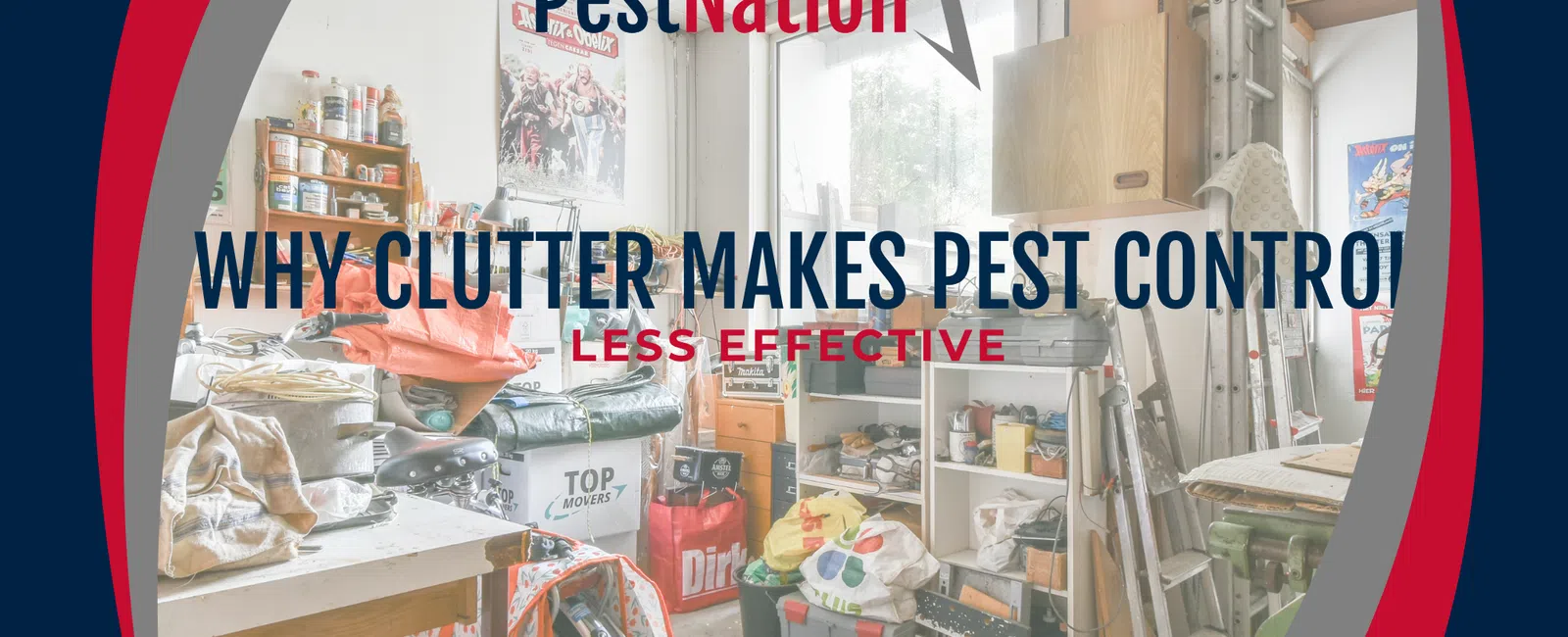
Clutter is often viewed as an organizational challenge, but it can also create significant pest management concerns. Boxes stacked in garages, overflowing storage closets, unused furniture in basements, and piles of paper or clothing provide ideal hiding places for many common household pests. These environments make it easier for insects and rodents to remain undetected while making professional treatments less effective. Understanding the connection between clutter pest problems and successful pest management is an important part of protecting homes, apartments, offices, and commercial properties.
Whether you are a homeowner, renter, property manager, or business owner, reducing clutter is one of the most practical pest prevention tips you can follow. Organized spaces allow pest management professionals to inspect more thoroughly, identify infestations sooner, and apply treatments where they will have the greatest impact. When clutter is minimized, pests have fewer places to hide, nest, and reproduce, making long-term pest control significantly more successful.
Why Clutter Attracts Pests
Many pests are naturally drawn to dark, quiet, and undisturbed areas. Clutter provides exactly those conditions.
Stacks of boxes, piles of newspapers, stored clothing, unused equipment, and crowded storage shelves create countless hiding places where pests can live without being noticed. Unlike open spaces that are frequently cleaned and disturbed, cluttered areas often remain untouched for months or even years.
Common pests that benefit from clutter include:
- Cockroaches
- Rodents
- Ants
- Spiders
- Silverfish
- Earwigs
- Crickets
- Stored product pests
Once pests establish themselves inside cluttered areas, populations can grow before property owners recognize there is a problem.
Hidden Harborage Areas Make Treatments More Difficult
One of the biggest challenges with clutter pest problems is that clutter creates harborage.
Harborage refers to protected areas where pests can hide, rest, reproduce, and avoid predators or disturbances.
Examples include:
- Cardboard boxes
- Storage bins
- Paper files
- Clothing piles
- Furniture stored in garages
- Unused appliances
- Wood piles
- Basement storage
When pests remain hidden deep inside clutter, they may avoid direct contact with treatment products, reducing the effectiveness of pest control efforts.
Rodents Love Cluttered Spaces
Mice and rats constantly seek secure nesting locations.
Clutter provides protection from both predators and human activity while offering easy access to nesting materials.
Rodents commonly build nests using:
- Cardboard
- Fabric
- Insulation
- Paper
- Dryer lint
- Stored clothing
Garages, attics, storage rooms, crawl spaces, and utility closets often become ideal nesting environments when clutter accumulates.
Rodents may remain unnoticed until droppings, gnaw marks, or unusual noises become obvious.
Cockroaches Thrive in Clutter
Cockroaches prefer dark, warm spaces close to moisture and food sources.
Even small amounts of clutter around kitchens, laundry rooms, utility areas, or storage rooms can provide enough shelter for cockroach populations to establish themselves.
Cardboard is particularly attractive because it:
- Retains moisture
- Provides insulation
- Contains organic fibers
- Creates narrow hiding spaces
Removing unnecessary cardboard storage is one of the simplest pest prevention tips homeowners can implement.
Clutter Makes Pest Inspections Less Thorough
Professional inspections rely on access.
When rooms are heavily cluttered, technicians may be unable to fully inspect:
- Baseboards
- Utility penetrations
- Plumbing connections
- Electrical outlets
- Wall voids
- Behind appliances
- Storage rooms
- Crawl space entrances
Hidden infestations can remain undetected simply because critical areas are inaccessible.
Professional PestNation Pest Inspections become significantly more effective when inspectors can fully examine the property.
Pest Treatments Need Access
Successful pest treatments depend on placing products where pests travel and hide.
Heavy clutter can prevent technicians from reaching:
- Wall edges
- Cracks and crevices
- Utility openings
- Foundation walls
- Behind cabinets
- Mechanical rooms
- Storage shelves
Even highly effective products perform poorly when they cannot reach target areas.
Reducing clutter allows pest control professionals to treat problem areas more thoroughly.
Food Storage and Clutter Often Go Together
Clutter frequently contributes to sanitation problems.
Examples include:
- Forgotten pantry items
- Open pet food
- Expired groceries
- Overflowing storage containers
- Paper bags
- Food residue beneath stacked items
These conditions provide both shelter and food for pests.
Keeping storage areas organized makes it much easier to identify spills, expired products, and pest activity before infestations spread.
Outdoor Clutter Creates Exterior Pest Problems
Clutter outside the home also contributes to pest activity.
Common outdoor hiding places include:
- Firewood piles
- Unused flower pots
- Construction materials
- Yard equipment
- Debris piles
- Leaf accumulation
- Stacked lumber
- Outdoor storage boxes
These locations provide shelter for rodents, spiders, ants, cockroaches, and many other pests before they move indoors.
Routine Exterior Pest Control becomes much more effective when outdoor harborage areas are minimized.
Businesses Face Similar Challenges
Commercial properties often contain storage areas that become cluttered over time.
Examples include:
- Warehouses
- Supply closets
- Restaurant storage rooms
- Maintenance areas
- Retail stockrooms
- Office filing rooms
Businesses should establish regular housekeeping procedures that prevent excessive storage from creating pest harborage.
Organized storage improves both pest management and workplace safety.
Integrated Pest Management Starts with Prevention
Professional pest control works best when combined with preventative practices.
Guidance from the U.S. Environmental Protection Agency - Integrated Pest Management (IPM) explains how reducing clutter, eliminating food sources, and limiting pest harborage areas are key components of an effective pest management strategy. These principles emphasize preventing pest problems by modifying the environment rather than relying solely on pesticide applications.
Integrated Pest Management (IPM) typically includes:
- Reducing clutter
- Removing food sources
- Eliminating standing water
- Sealing entry points
- Monitoring pest activity
- Targeted treatments
- Routine inspections
This balanced approach provides long-term protection while minimizing unnecessary pesticide use.
Organization Improves Long-Term Pest Prevention
Clean, organized spaces make it easier to identify pest activity early.
Educational resources published by the University of Georgia Extension highlight how proper sanitation, storage, and routine home maintenance can reduce conditions that attract pests and improve long-term pest prevention. Their recommendations reinforce that organization plays an important role in maintaining a healthier, less pest-friendly environment.
Some simple organizational improvements include:
- Store items in sealed plastic containers
- Avoid storing cardboard directly on floors
- Leave space between stored items and walls
- Rotate stored inventory regularly
- Dispose of unused materials
- Keep utility areas accessible
These simple habits significantly reduce opportunities for pests to hide.
Storage Areas Need Routine Attention
Storage rooms are among the most commonly overlooked areas during routine cleaning.
Recommendations from Clemson Cooperative Extension - Home & Garden Information Center reinforce the importance of keeping storage areas organized and minimizing clutter to make pest inspections and treatments more effective. Their guidance supports regular cleaning, proper storage methods, and reducing unnecessary materials that provide hiding places for pests.
Even seasonal storage should be inspected periodically rather than left untouched indefinitely.
Moisture and Clutter Often Occur Together
Clutter can also hide moisture problems.
Water leaks behind stored boxes or furniture may remain unnoticed for long periods.
Moisture attracts pests such as:
- Cockroaches
- Silverfish
- Earwigs
- Centipedes
- Ants
Research from North Carolina State Extension discusses how moisture management, sanitation, and structural maintenance work together to reduce pest activity. Identifying hidden leaks before they create favorable pest conditions is an important part of maintaining a healthy property.
Professional Pest Control Is Most Effective with Preparation
Preparing a property before treatment helps improve results.
This may include:
- Removing unnecessary clutter
- Vacuuming affected areas
- Organizing storage rooms
- Moving items away from walls
- Cleaning food spills
- Repairing leaks
The University of California Integrated Pest Management (UC IPM) emphasizes that environmental management—including sanitation, exclusion, and habitat reduction—is one of the most effective long-term strategies for preventing recurring pest infestations. Their recommendations support preparing properties so pest treatments can reach targeted areas more effectively.
How PestNation Helps Solve Clutter Pest Problems
At PestNation, effective pest management goes beyond treating visible insects and rodents. Successful long-term results depend on identifying the conditions that allow pests to thrive, including excessive clutter and inaccessible storage areas.
Whether customers need Residential Pest Control, Interior Pest Control, Exterior Pest Control, or comprehensive PestNation Pest Inspections, technicians evaluate each property for structural vulnerabilities, sanitation concerns, moisture issues, and harborage areas that may be contributing to clutter pest problems.
Property owners looking for Atlanta Pest Control, Charlotte Pest Control, Orlando Pest Control, or Charleston Pest Control can benefit from customized pest management programs designed to address rodents, cockroaches, ants, spiders, and other common pests.
PestNation also provides Atlanta Interior and Exterior Pest Treatments, Charlotte Interior and Exterior Pest Treatments, Orlando Interior and Exterior Pest Treatments, and Charleston Interior and Exterior Pest Treatments. Services include general pest control, rodent control, cockroach control, ant control, spider control, and professional pest inspections that work together to reduce existing infestations while helping prevent future problems.
Clutter does far more than make a space feel disorganized—it creates ideal environments where pests can hide, reproduce, and avoid detection. These hidden harborage areas reduce the effectiveness of inspections and treatments, allowing infestations to grow larger before they are discovered. Recognizing the relationship between organization and clutter pest problems helps property owners take meaningful steps toward long-term pest prevention.
One of the most valuable pest prevention tips is also one of the simplest: maintain clean, organized, and accessible spaces throughout your property. Combined with regular inspections, moisture control, sanitation, and professional pest management, reducing clutter makes it easier to identify pest activity early and supports more effective treatment results. A proactive approach not only protects your property but also creates a healthier, more comfortable environment for everyone who lives or works there.