
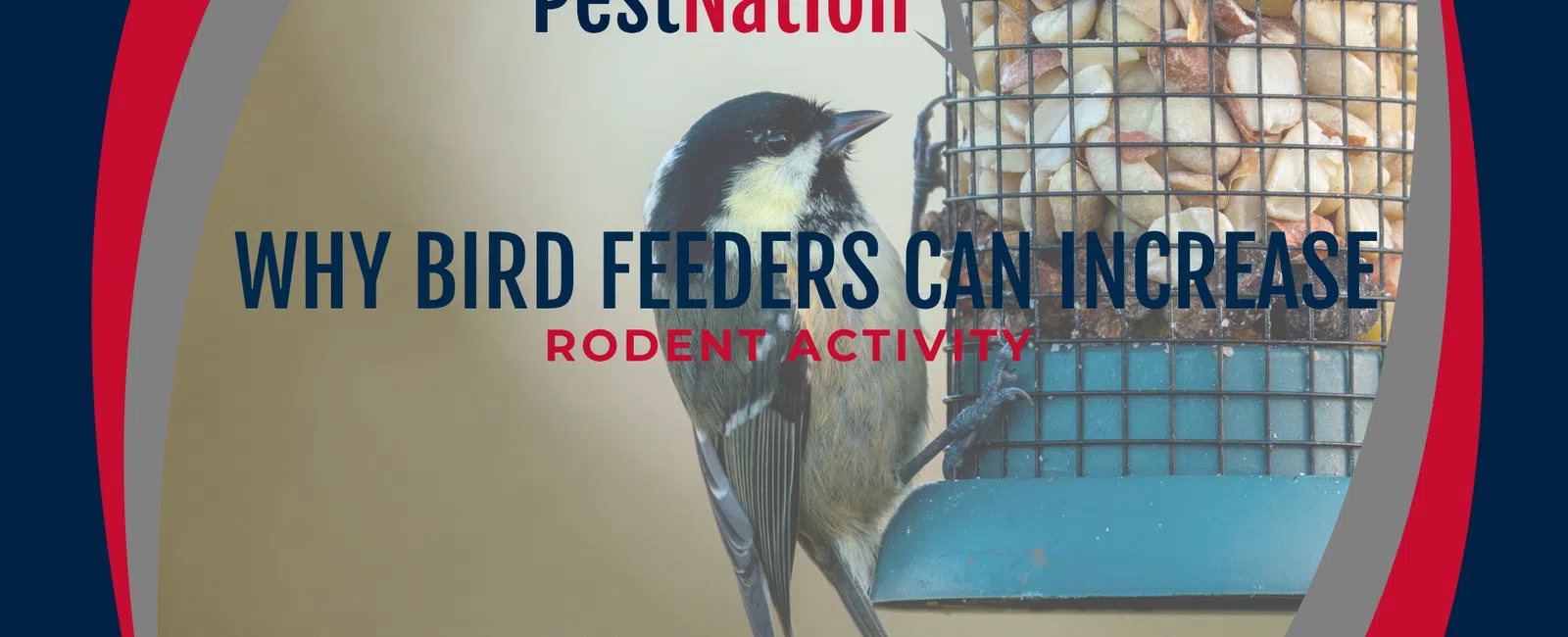
Bird feeders can bring color and activity to a backyard, but they can also create an unintended food source for other animals. Homeowners may notice rodents attracted to bird feeders when seed regularly falls to the ground, remains accessible overnight, or is stored where mice and rats can reach it. The feeder itself does not automatically create a rodent infestation. The greater concern is the dependable supply of food that can develop around a feeding area.
Homeowners do not necessarily need to stop feeding birds to reduce rodent pressure. Practical prevention focuses on limiting spilled seed, managing other outdoor food sources, reducing nearby shelter, monitoring for rodent evidence, and inspecting buildings for potential entry points. Effective outdoor pest control considers the entire property because bird seed may be only one of several resources encouraging rodents to remain nearby.
Why Rodents May Be Attracted to Bird Feeders
Mice and rats are opportunistic feeders. When food is readily available and relatively easy to access, rodents may incorporate that source into their regular movement around a property.
Bird seed can become particularly attractive when it accumulates beneath a feeder. Seed may reach the ground because birds scatter it while feeding, wind moves it, feeders overflow, or more food is provided than birds consume.
A few scattered seeds do not automatically create a rodent problem. The concern increases when fresh seed repeatedly accumulates in the same location. Over time, that area can become a predictable food source that mice or rats revisit.
The UC IPM - Rats discusses the importance of removing food and shelter that can support rat activity. This provides useful context for understanding why spilled bird seed should be considered alongside garbage, pet food, fruit, vegetation, and other conditions when evaluating rodent pressure around a home.
Spilled Seed Can Create a Reliable Food Source
One of the most important factors is consistency.
Rodents exploring a residential environment may encounter food in many locations. If seed is available beneath a feeder every day, the feeding area can become a reliable stop along a rodent's regular travel route.
Repeated accumulation can occur even when homeowners are careful because birds naturally move and scatter seed as they feed.
Weather can contribute as well. Wind may blow seed from open feeders, while rain can move discarded seed into landscaping or groundcover where it becomes harder to notice.
Routine cleanup helps interrupt that predictable food supply without requiring homeowners to eliminate bird feeding altogether.
Some Rodents May Access the Feeder Directly
Ground-level seed is not the only potential attraction.
Depending on the feeder design and surrounding property, certain rodents may be able to reach elevated feeders.
Roof rats deserve particular attention because they are capable climbers. They may use features such as:
- Fences
- Tree branches
- Shrubs
- Vines
- Poles
- Sheds
- Nearby structures
These features can connect rodent shelter or travel routes with an elevated food source.
Rodent behavior varies by species, however, so climbing activity should not automatically be attributed to roof rats without proper identification.
Feeder Placement Can Influence Accessibility
Where a feeder is located can affect how rodents interact with it.
A feeder positioned directly beside dense vegetation, a fence, low branches, or another structure may be easier for climbing rodents to approach than one in a more open area.
There is no universal placement distance that works for every property. Landscaping, feeder design, rodent species, nearby structures, and yard configuration all vary.
Instead, homeowners can consider whether the location creates obvious connections between the feeder and:
- Dense shrubs
- Fences
- Branches
- Roofs
- Sheds
- Garages
Thoughtful placement can be one component of a larger outdoor pest control strategy.
Bird Seed Is Usually Only Part of the Picture
When rodents are present around a bird feeder, it is important to inspect the rest of the property rather than assuming the feeder is the only cause.
Other accessible foods may include:
- Outdoor pet food
- Garbage
- Compost
- Fallen fruit
- Nuts
- Garden produce
- Food residue around outdoor spaces
A property may contain several food sources at once.
For example, rodents could shelter beneath a shed, feed on spilled bird seed, and also visit garbage containers or fruit trees.
Removing only one food source may reduce activity, but it does not guarantee that rodents will leave if other resources remain available.
Stored Bird Seed Can Also Attract Rodents
Bird seed should also be considered before it ever reaches the feeder.
Bags of seed stored in garages, sheds, utility rooms, or other accessible locations may become food sources if rodents can reach them.
Evidence can include:
- Gnawed packaging
- Spilled seed
- Droppings
- Nesting material
- Tracks
Storage areas can be especially attractive because they may provide both food and shelter.
Secure storage and routine inspection can help homeowners recognize activity before substantial amounts of seed become accessible.
Shelter Near Feeding Areas Can Encourage Activity
Food is only one part of a rodent-friendly environment.
Mice and rats also seek protected areas where they can rest, hide, or nest.
Potential harborage around residential properties includes:
- Dense shrubs
- Groundcover
- Vines
- Wood piles
- Outdoor clutter
- Sheds
- Decks
- Stored materials
None of these features automatically creates a rodent infestation. Their significance depends on how they interact with food, water, travel routes, and structural access.
A feeding area surrounded by dense cover may provide rodents with both food and nearby protection, making the location more useful than an exposed food source by itself.
Landscaping Can Create Concealed Travel Routes
Vegetation can also help rodents move between different parts of a property.
Dense groundcover may conceal ground-level movement, while shrubs, vines, branches, and fences can provide routes for climbing species.
These pathways may connect:
- Feeding areas
- Garbage containers
- Sheds
- Neighboring yards
- Garages
- Building exteriors
This is one reason outdoor pest control should look at the property as a connected environment.
Reducing unnecessary vegetation contact with structures and keeping exterior areas visible can improve monitoring while limiting some protected travel routes.
Outdoor Rodents May Explore Nearby Structures
A rodent feeding outdoors does not automatically mean the home is infested.
However, rodents regularly moving through the yard may encounter garages, crawlspaces, sheds, attics, or the exterior of the house.
Whether they enter depends in part on whether accessible openings are present.
Potential rodent entry points include:
- Gaps around exterior doors
- Garage-door openings
- Utility penetrations
- Foundation gaps
- Damaged vents
- Roof openings
- Deteriorated exterior components
Food-source management is therefore more effective when paired with structural inspection.
Exclusion Helps Limit Movement Indoors
The CDC - Seal Up to Prevent Rodents emphasizes inspecting buildings for openings that rodents may use to enter. This guidance is particularly relevant when outdoor food sources are present because reducing available seed should be paired with efforts to limit rodents' ability to move from the yard into garages, crawlspaces, attics, sheds, or living areas.
Professional Pest Exclusion focuses on identifying and addressing accessible structural openings.
Exclusion does not guarantee that rodents will never approach a property. Instead, it helps create a stronger barrier between exterior rodent activity and interior spaces.
Cleaning Beneath Feeders Can Reduce Food Availability
One of the most practical prevention measures is preventing excessive seed accumulation beneath feeding areas.
Regular observation can help homeowners determine how much food is reaching the ground.
If substantial amounts accumulate, adjustments to feeding practices or feeder design may help reduce waste.
Cleanup is particularly useful when discarded seed collects in:
- Mulch
- Groundcover
- Patio edges
- Grass
- Areas beneath shrubs
The goal is not necessarily to remove every individual seed. It is to prevent the feeding area from becoming a consistently abundant food source for rodents.
Other Food Sources Should Be Managed Too
Cleaning beneath a feeder will have limited impact if rodents still have access to several other dependable food sources.
Garbage containers, pet food, compost, fallen fruit, nuts, and garden produce should be considered during an exterior inspection.
The CDC - Rodent Control recommends reducing rodent access to food, water, shelter, and buildings. That broader approach reinforces why bird-feeder management should be combined with sanitation, exclusion, and habitat modification rather than treated as a stand-alone solution.
A comprehensive inspection may reveal that the bird feeder is only one small part of the conditions supporting activity.
Monitoring Can Reveal Developing Rodent Activity
Homeowners do not need to wait until they repeatedly see live rodents before paying attention to possible activity.
Potential signs include:
- Droppings
- Gnaw marks
- Burrows
- Tracks
- Nesting material
- Damaged seed containers
- Repeated sightings
These signs can help determine where rodents are traveling and which resources they may be using.
One isolated sign does not necessarily indicate widespread activity. Repeated evidence, especially in multiple areas, provides more reason for closer inspection.
Accurate Identification Helps Guide Prevention
Mice, roof rats, Norway rats, and other rodents do not behave identically.
Identification can provide clues about likely:
- Feeding behavior
- Nesting areas
- Climbing ability
- Travel routes
- Harborage
For example, roof rats are often associated with elevated travel and climbing, while other rodents may be more frequently observed near ground-level shelter.
These are general behavioral tendencies rather than absolute rules.
Professional PestNation Pest Inspections can help identify the rodent involved when homeowners are uncertain about droppings, gnawing, tracks, or other evidence.
Outdoor Pest Control Should Consider the Whole Property
Effective outdoor pest control evaluates the relationship between food, shelter, travel routes, and building access.
An exterior assessment may consider:
- Bird-feeding areas
- Garbage storage
- Pet-feeding areas
- Fruit and nut trees
- Dense landscaping
- Sheds and decks
- Wood piles
- Exterior openings
This whole-property approach helps avoid concentrating on one visible condition while overlooking another resource that may be equally important.
The UC IPM - Pest Prevention for Property Managers emphasizes preventive practices such as sanitation, maintenance, exclusion, and reducing conditions that support pests. These principles apply well to residential rodent prevention because controlling accessible food works best when the surrounding habitat and structure are considered at the same time.
Integrated Pest Management Provides a Broader Strategy
Integrated Pest Management, or IPM, combines multiple methods based on the pest and conditions present.
For rodent concerns around bird feeders, that may include:
- Identifying the rodent
- Monitoring activity
- Reducing accessible food
- Improving sanitation
- Modifying habitat
- Addressing structural entry points
- Using appropriate professional control when needed
This approach recognizes that no single action is guaranteed to eliminate established rodent activity.
Removing a feeder, cleaning spilled seed, or sealing one opening may help, but rodents may continue using other food sources, shelters, or travel routes.
Atlanta Pest Control and Bird-Feeding Areas
For homeowners seeking Atlanta Pest Control, mature trees, wooded neighborhoods, fences, sheds, and dense landscaping can create numerous connections between bird-feeding areas and potential rodent shelter.
Routine cleanup beneath feeders can be paired with inspection of nearby vegetation, stored seed, garages, crawlspaces, and exterior openings.
When evidence continues, professional Rodent Control or Pest Exclusion may be appropriate based on inspection findings.
Charlotte Pest Control and Seasonal Rodent Pressure
For Charlotte Pest Control, changing temperatures and seasonal food availability can influence rodent movement.
Bird-feeding areas may become one of several dependable food sources around suburban properties.
Monitoring feeders, storage areas, garages, and nearby landscaping can help homeowners recognize patterns before rodents begin regularly exploring the structure.
Orlando Pest Control and Year-Round Food Sources
For homeowners needing Orlando Pest Control, warm conditions can support outdoor rodent activity throughout much of the year.
Bird seed, fruit, garbage, pet food, vegetation, and exterior shelter can remain available across seasons.
Year-round sanitation and monitoring can therefore be valuable parts of Residential Pest Control and rodent prevention.
Charleston Pest Control and Exterior Habitat
For Charleston Pest Control, dense vegetation, sheds, crawlspaces, bird-feeding areas, and humid outdoor environments may all be relevant during a rodent inspection.
Homeowners who repeatedly find droppings, damaged seed containers, or rodent activity near the home may benefit from a professional evaluation of food sources, shelter, travel routes, and structural access.
When appropriate, Rodent Control, Pest Exclusion, or targeted Interior and Exterior Pest Treatments can be considered according to the pest species and inspection findings.
Homeowners may notice rodents attracted to bird feeders because spilled seed can provide a predictable and accessible source of food. Bird activity, wind, overflowing feeders, and routine feeding can all contribute to seed accumulating beneath a feeder. In some situations, climbing rodents may also access elevated food by using fences, vegetation, poles, or nearby structures.
A bird feeder itself does not automatically create an infestation, and homeowners do not necessarily need to stop feeding birds. Practical prevention focuses on reducing excessive seed accumulation, storing bird food securely, managing other outdoor food sources, limiting unnecessary harborage, and monitoring for evidence of rodents. Thoughtful feeder placement can also help reduce convenient connections with dense vegetation and structures.
Effective outdoor pest control should extend beyond the feeder. Rodents may also be responding to garbage, pet food, fruit, compost, shelter, or structural openings elsewhere on the property. If those conditions remain, removing one source of bird seed alone may not resolve established activity.
When repeated sightings, droppings, gnawing, damaged seed containers, nesting material, or activity near the structure continues, PestNation Pest Inspections can help identify the rodent species and contributing conditions. By combining monitoring, sanitation, habitat modification, Pest Exclusion, professional Rodent Control, and appropriate Residential Pest Control, homeowners can continue enjoying backyard birds while reducing conditions that unintentionally make the property more attractive to rodents.