Pharaoh ants are among the more challenging household ants to manage because an infestation can involve much more than a single nest and a visible line of workers. These extremely small ants can establish colonies inside structures, use protected nesting locations that are difficult to access, and maintain multiple foraging trails between nests and available food or water. Their colony structure and ability to form new nesting groups can also make inappropriate treatment methods counterproductive. For homeowners, property managers, renters, and residential property owners, understanding these characteristics is essential before attempting pharaoh ant control.
A few ants on a kitchen counter may appear to be a minor nuisance, but with Pharaoh ants, the workers that homeowners see can represent only a fraction of the infestation. Successful management typically requires accurate identification and a strategy focused on the colony rather than simply eliminating visible workers. Because Pharaoh ants behave differently from many other household ant species, professional ant treatment may be appropriate when activity is persistent, widespread, or difficult to trace. Effective management also involves considering food, moisture, sanitation, nesting locations, and structural conditions together rather than assuming every small household ant should be treated the same way.
What Do Pharaoh Ants Look Like?
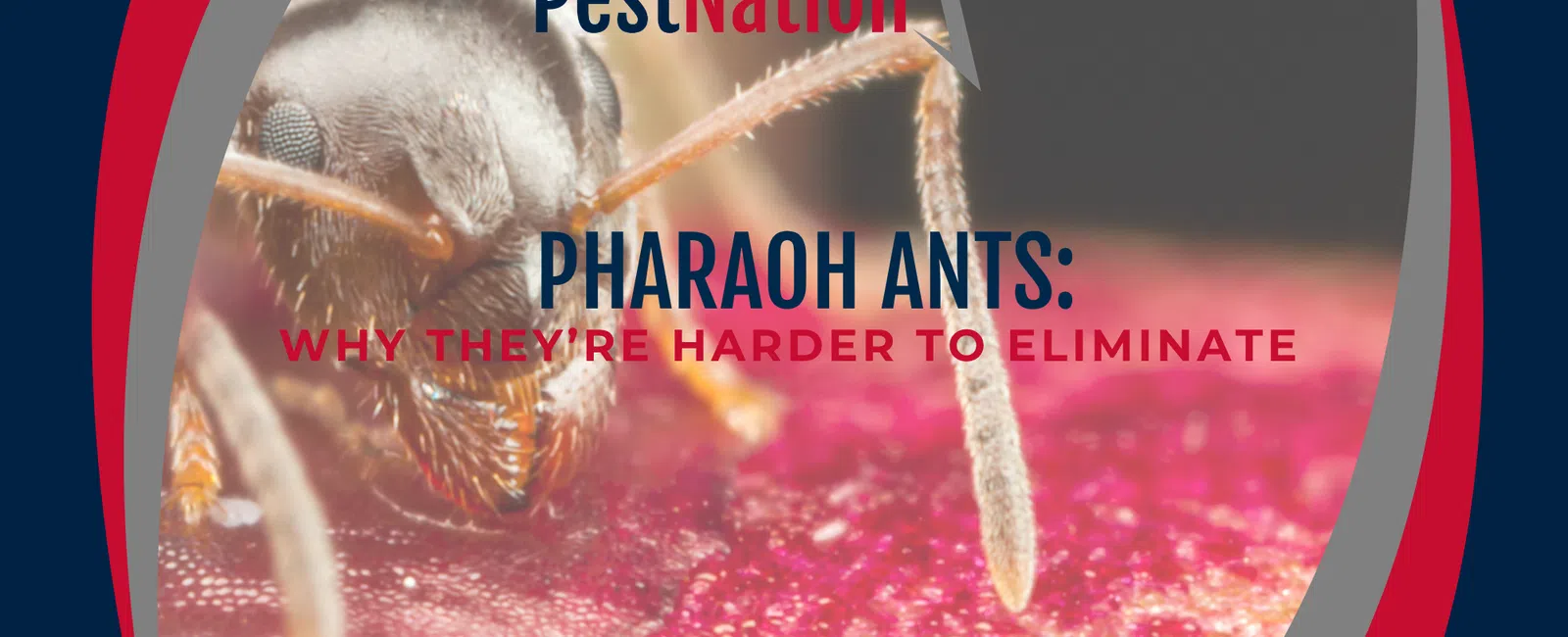
Correct identification is the first important step in managing Pharaoh ants. They are extremely small ants, with workers measuring roughly 1/16 inch long. University of Minnesota Extension describes workers as light yellow to reddish, with darker coloration toward the rear of the body. Their small size means they may easily be confused with other tiny household ants, particularly thief ants, and distinguishing between species may require magnification or professional identification.
Identification information from the University of Minnesota - Pharaoh Ant Identification provides useful context for recognizing Pharaoh ants and understanding their indoor activity, helping homeowners distinguish these ants from other small species that may be found inside buildings. The resource specifically emphasizes that ants can be difficult to identify from appearance alone and that correct identification matters because different ants may require different management strategies.
Homeowners may initially describe Pharaoh ants simply as tiny yellow, tan, or reddish ants. However, color and size alone are not enough for dependable identification. Other small ant species may overlap in appearance, and management recommendations should not be generalized across species.
Why Proper Identification Is So Important
The importance of identification goes beyond simply knowing the name of the pest. Ant species differ in colony organization, preferred nesting locations, food preferences, foraging behavior, and response to control measures.
A method appropriate for another household ant may be ineffective or potentially disruptive when used against Pharaoh ants. This is particularly important because Pharaoh ant colonies can respond to certain disturbances by dividing into additional groups.
Guidance from the University of Minnesota Extension - Ants explains important differences among household ant species and provides information about Pharaoh ant management, helping demonstrate why correct identification is essential before choosing an appropriate control strategy. University of Minnesota Extension also notes that Pharaoh ants can be difficult to distinguish from thief ants without close examination.
For homeowners facing recurring tiny ants indoors, a PestNation Pest Inspection can help determine whether Pharaoh ants or another species may be involved before an Ant Control strategy is selected.
Pharaoh Ants Are Primarily Indoor Pests
One characteristic that helps distinguish Pharaoh ants from many common nuisance ants is their strong association with indoor environments. University of Minnesota's identification resource notes that Pharaoh ants are found inside buildings throughout the year and do not establish ordinary outdoor nests in the way many familiar household ants do.
Inside a structure, they can take advantage of protected spaces that offer relatively stable temperatures and access to food or moisture.
Potential nesting locations may include:
- Wall voids
- Cabinet voids
- Spaces around plumbing
- Behind baseboards
- Around appliances
- Utility chases
- Areas near heating equipment
- Other small protected structural spaces
Because these areas are concealed, finding a visible trail does not necessarily reveal where the colony is located.
Colony Structure Makes Pharaoh Ant Control Difficult
Pharaoh ants can form complex colonies containing many workers and multiple queens. Instead of depending on one easily located nest, an infestation may involve multiple nesting locations distributed throughout a structure.
That creates a major challenge for pharaoh ant control.
Workers may travel between nesting locations and food sources, while reproductive members remain protected in areas that homeowners cannot see or reach. Even if large numbers of workers are eliminated in one location, other portions of the infestation may remain active.
This is why the number of ants visible on a countertop does not necessarily correspond to the true size or distribution of the colony.
What Is Budding in Pharaoh Ant Colonies?
One of the most important behaviors associated with Pharaoh ants is budding.
Budding occurs when part of an established colony separates and establishes another nesting group. Workers, queens, and developing ants can relocate to a different protected area and continue functioning as a new colony unit.
This behavior allows Pharaoh ants to spread through buildings rather than relying exclusively on the establishment of one central nest.
In practical terms, an infestation that initially appears concentrated near one kitchen or bathroom may eventually involve activity in other rooms or structural areas.
Why Random Spraying Can Make Pharaoh Ant Problems Harder
Pharaoh ants require special caution because certain repellent or indiscriminate insecticide applications can disturb colonies and contribute to colony fragmentation or budding. That is one reason homeowners should avoid automatically spraying every visible trail without first determining which ant species is present.
The concern is not that every pesticide treatment always causes budding. Rather, treatment selection and application need to account for Pharaoh ant biology. A strategy designed simply to kill exposed workers may disturb activity without eliminating the queens and colony components that sustain the infestation.
This makes Pharaoh ants fundamentally different from pests for which direct treatment of visible individuals may provide meaningful control.
Killing Visible Worker Ants Is Usually Not Enough
The ants moving along countertops, sinks, cabinets, or floors are typically worker ants engaged in foraging.
Their job is to search for resources and return them to the colony.
Eliminating those workers can make the area temporarily appear pest-free. However, the colony may still contain:
- Queens
- Developing larvae
- Pupae
- Additional workers
- Other nesting groups
As long as reproductive portions of the colony remain intact, new workers can continue appearing.
Recurring ants after an apparent treatment therefore do not necessarily mean that the original treatment killed nothing. They may indicate that additional colonies or nesting sites remain active.
Multiple Nesting Locations Complicate Treatment
A major Pharaoh ant infestation can involve ants occupying numerous protected spaces within a building.
One group might be associated with a kitchen wall while another is located near a bathroom plumbing chase. Additional activity may occur near mechanical systems, cabinets, or adjoining units in multi-family housing.
This distributed nesting behavior makes it difficult to solve the problem by locating one obvious nest.
It also explains why professional ant treatment may require monitoring activity across multiple rooms rather than concentrating treatment wherever the greatest number of workers happens to be visible.
Pharaoh Ants Follow Organized Foraging Trails
Like many ants, Pharaoh ant workers establish trails between nesting areas and useful resources.
Homeowners may observe ants traveling along:
- Countertop edges
- Baseboards
- Plumbing lines
- Cabinet seams
- Wall edges
- Window areas
- Utility components
Several trails may exist at the same time, particularly when multiple nesting locations are present.
Observing where ants travel can provide useful information. Immediately destroying every trail before an inspection can sometimes remove clues that would otherwise help identify where ants are moving and what resources they are using.
Sugary Foods Can Attract Pharaoh Ants
Pharaoh ants are often discovered around kitchens because food is readily available.
Common resources may include:
- Sugar
- Syrup
- Sweet beverages
- Fruit residue
- Baked goods
- Crumbs
- Food spills
However, Pharaoh ants should not be thought of only as "sugar ants."
Their feeding behavior can involve a wider range of materials, and colony nutritional needs may change.
Proteins and Grease Can Also Be Important
In addition to sugary materials, Pharaoh ants may forage for protein-rich or greasy foods.
Potential resources include:
- Meat residue
- Grease
- Cooking debris
- Pet food
- Other insects
- Food waste
This matters because cleaning only obvious sugary spills may leave other attractive food sources available.
Food debris beneath appliances, cabinets, pet bowls, and other overlooked areas can continue supporting foraging activity even when visible countertops are kept clean.
Moisture Is Another Critical Resource
Food is only part of the equation. Pharaoh ants also need water.
Indoor environments can provide moisture around:
- Sinks
- Dishwashers
- Bathrooms
- Plumbing lines
- Water heaters
- Refrigerators
- HVAC equipment
- Condensation
- Leaking fixtures
Even relatively minor leaks can provide dependable moisture in a protected location.
Kitchens and bathrooms are therefore particularly important areas to inspect when Pharaoh ant activity is present.
Plumbing Areas Can Combine Food, Water, and Shelter
The area beneath a kitchen sink illustrates why some structural locations are especially attractive.
It may contain:
- Plumbing penetrations
- Moisture
- Cabinet voids
- Food residue
- Protected gaps
Those conditions give ants both resources and concealed travel routes.
Bathroom vanities and laundry areas can create similar combinations.
Correcting plumbing leaks and sealing appropriate structural gaps can help reduce favorable conditions, although these measures alone may not eliminate an established Pharaoh ant infestation.
Why Sanitation Helps but Usually Is Not Enough
Sanitation is an important component of pharaoh ant control because reducing accessible food forces ants to rely on fewer resources and can make monitoring easier.
Useful practices include:
- Cleaning crumbs promptly
- Wiping food residue from counters
- Cleaning beneath appliances
- Storing foods in secure containers
- Managing pet food
- Emptying trash regularly
- Cleaning grease around cooking areas
However, even excellent sanitation may not eliminate colonies already established inside structural spaces.
Ants can forage widely and exploit extremely small food sources. Sanitation should therefore support an active colony-management strategy rather than be treated as a complete solution.
Integrated Pest Management Is Especially Relevant
Guidance from the U.S. EPA - Integrated Pest Management Principles emphasizes pest identification, monitoring, prevention, and appropriate control methods, reinforcing why Pharaoh ant management should begin with understanding the species and conditions contributing to the infestation rather than relying solely on reactive treatment of visible ants. EPA's IPM framework emphasizes using knowledge of pest life cycles and environmental interactions when determining how a pest should be managed.
For Pharaoh ants, this means considering the colony structure, nesting pattern, food resources, water availability, foraging trails, and previous treatment history together.
Why Baiting May Be Part of Pharaoh Ant Management
Baiting strategies are often considered for Pharaoh ants because worker ants naturally collect food and transport resources back toward nesting areas.
This colony-oriented behavior can make baiting fundamentally different from simply spraying individual workers.
However, bait selection and placement should account for factors such as:
- Species identification
- Current feeding behavior
- Colony distribution
- Foraging trails
- Nest locations
- Competing food sources
- Previous treatments
The appropriate product or treatment plan can vary, so homeowners should avoid assuming that any ant bait will automatically solve every Pharaoh ant infestation.
Following product labeling and using a species-appropriate strategy are essential.
Why Bait Placement Matters
A treatment can only interact with foraging ants if it is available where they are actually traveling.
Pharaoh ants may maintain multiple trails, and one highly visible trail may represent only one portion of the infestation.
This is another reason monitoring can be important before and during treatment.
Changes in trail activity may indicate that ants have changed resources, shifted nesting locations, or are using different pathways.
Professional monitoring can help determine whether activity is decreasing broadly or merely disappearing from one visible area.
Exterior Spraying Is Not a Universal Solution
Many common nuisance ants establish outdoor colonies and enter buildings from exterior nests. Pharaoh ants are different because they are strongly associated with indoor nesting.
That means a standard perimeter-focused approach used for some outdoor ant species should not automatically be assumed appropriate for Pharaoh ants.
This distinction is critical when selecting Ant Control.
The correct response depends on which ant species is actually present and where it is nesting.
Sealing Gaps Supports Prevention
Although Pharaoh ant colonies may already be established indoors, structural exclusion can still support longer-term prevention.
Inspect appropriate areas around:
- Plumbing penetrations
- Utility lines
- Door frames
- Window frames
- Baseboards
- Wall openings
Closing unnecessary gaps can reduce travel routes and limit movement between certain structural areas.
However, extensive sealing should be coordinated with active treatment when ants are already established so that colony behavior and existing trails are considered rather than simply forcing ants to find alternate routes.
Moisture Management Supports Ant Control
Repairing water problems can reduce resources available to Pharaoh ants.
Homeowners should investigate:
- Dripping faucets
- Pipe leaks
- Condensation
- Dishwasher leaks
- Water beneath refrigerators
- HVAC condensate issues
- Persistent bathroom moisture
Even small moisture sources can matter when ants are nesting nearby.
Moisture correction also supports broader Residential Pest Control because damp environments may attract other household pests.
Recurring Ant Activity May Indicate More Than One Nest
One of the most frustrating aspects of a Pharaoh ant infestation is its ability to appear resolved and then return.
Recurring activity may indicate:
- Additional nesting locations
- Colony budding
- Surviving queens
- Untreated portions of the infestation
- New foraging routes
- Incomplete access to treatment
Seeing ants return in a different room does not necessarily mean they traveled there directly from the original visible trail. Another nesting group may already have been established elsewhere in the structure.
This distributed colony behavior is one of the strongest reasons that Pharaoh ants can require more intensive monitoring than many other nuisance ants.
Multi-Unit Properties Can Be Especially Challenging
Apartments, condominiums, assisted living facilities, and other multi-unit buildings provide Pharaoh ants with many interconnected areas.
Wall voids, utility chases, plumbing systems, and other structural pathways can allow ants to move between portions of a building.
Treating only one room or unit may therefore fail to account for a larger infestation involving adjoining spaces.
Property managers noticing recurring tiny ants across several units should consider the possibility that the problem extends beyond an individual kitchen or bathroom.
When Professional Ant Treatment Is Appropriate
Professional evaluation becomes particularly valuable when:
- Ants persist after repeated attempts at control.
- Activity occurs in multiple rooms.
- Several trails are visible.
- The species cannot be confidently identified.
- Ants repeatedly appear around plumbing or wall voids.
- Previous spraying has not resolved the infestation.
- Activity spreads through a multi-unit building.
- Ants disappear temporarily and then return elsewhere.
A professional ant treatment program can begin with species identification and an assessment of where ants are foraging, which resources are supporting them, and how widely the infestation may be distributed.
This is substantially different from treating every household ant infestation with the same product.
Pest Inspections Can Help Reveal Contributing Conditions
PestNation Pest Inspections can help evaluate recurring ant activity along with structural and environmental factors that may be contributing to the problem.
Depending on the property, an inspection may identify:
- Foraging trails
- Possible nesting areas
- Food sources
- Moisture problems
- Plumbing leaks
- Structural gaps
- Activity in multiple rooms
These findings can help guide Ant Control toward the actual infestation rather than only the location where ants happened to be observed.
Pharaoh Ant Control in Southern Homes
Homeowners seeking Atlanta Pest Control, Charlotte Pest Control, Orlando Pest Control, or Charleston Pest Control encounter many different ant species throughout the year. Tiny ants seen indoors should not automatically be assumed to be Pharaoh ants, and the Southern climate does not make every small ant infestation biologically equivalent.
Accurate identification is especially important because Pharaoh ants behave differently from many outdoor-nesting nuisance ants.
For homes requiring Atlanta Interior and Exterior Pest Treatments, Charlotte Interior and Exterior Pest Treatments, Orlando Interior and Exterior Pest Treatments, or Charleston Interior and Exterior Pest Treatments, treatment recommendations should reflect the pest actually identified. A broad exterior strategy that is useful for one ant species may not address an indoor Pharaoh ant colony.
How PestNation Approaches Pharaoh Ant Problems
At PestNation, effective Pest Control begins with understanding what pest is present and what conditions are supporting its activity. Pharaoh ants require particular attention because visible workers may represent only a small portion of a colony system distributed throughout protected indoor locations.
When Pharaoh ants are suspected, PestNation Pest Inspections can help evaluate ant activity, likely foraging routes, moisture conditions, accessible food sources, and structural areas associated with recurring sightings. Appropriate Ant Control and Residential Pest Control strategies can then focus on the biology and extent of the infestation rather than relying solely on reactive treatment of individual ants.
Where relevant, Atlanta Interior and Exterior Pest Treatments, Charlotte Interior and Exterior Pest Treatments, Orlando Interior and Exterior Pest Treatments, and Charleston Interior and Exterior Pest Treatments may form part of broader pest-management programs. However, treatment for Pharaoh ants should always account for their indoor nesting behavior and colony structure rather than assuming that the same approach used for another ant species is appropriate.
Pharaoh ants are difficult to eliminate because they combine several challenging biological traits: extremely small workers, concealed indoor nesting, multiple queens, multiple nesting locations, extensive foraging routes, and the ability to form additional colony groups through budding. These characteristics help explain why repeatedly killing the ants visible on a counter may provide only temporary relief while leaving the underlying colony structure intact. Incorrect or indiscriminate treatment may further complicate management, making accurate identification especially important before attempting pharaoh ant control.
Long-term management works best when colony-focused treatment is supported by sanitation, moisture correction, monitoring, appropriate exclusion, and continued observation for activity in additional areas. Persistent or widespread infestations can warrant professional ant treatment, particularly when ants are appearing in several rooms or returning after previous attempts at control. By treating Pharaoh ants according to their specific biology instead of managing them like every other household ant, homeowners and property managers can take a more informed and effective approach to controlling these unusually persistent pests.