
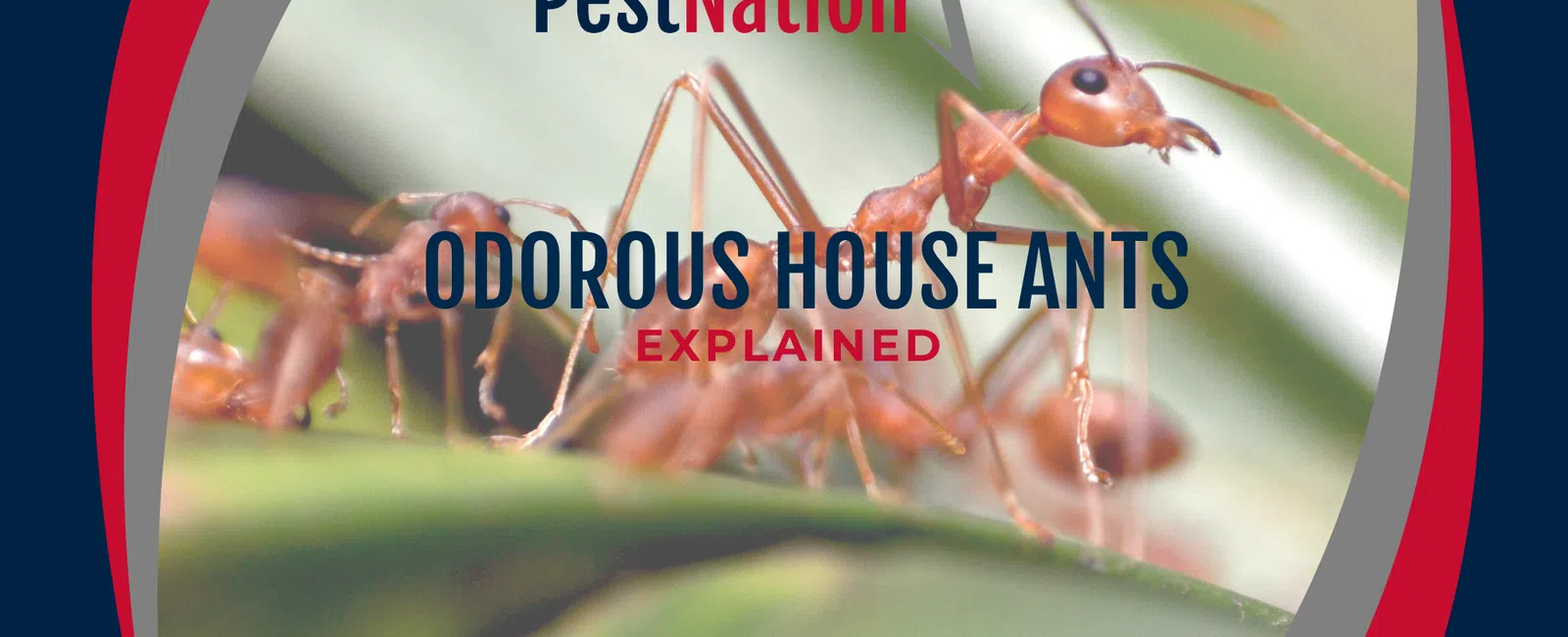
Small ants appearing around countertops, sinks, windows, baseboards, or exterior foundations can be difficult for homeowners to identify. One species frequently encountered in and around homes is the odorous house ant. These ants are known for their small size, dark coloration, extensive foraging trails, preference for sugary foods, and the distinctive odor produced when workers are crushed. They can nest both outdoors and inside buildings, allowing colonies to take advantage of changing weather, moisture, food sources, and protected structural spaces throughout the year. University of Minnesota Extension describes workers as approximately 1/10 inch long and brown to dark brown.
Understanding odorous house ants is important because successful management depends on much more than killing the individual workers homeowners can see. Established colonies can contain numerous ants, and their nesting and foraging behavior can make recurring activity frustrating. Furthermore, several other household ants can appear similar at first glance. Effective ant control services therefore begin with accurate identification, followed by an evaluation of nesting sites, food and moisture sources, entry routes, and colony activity. Treating all small household ants in the same way can lead to ineffective control because different species have different biology and management requirements.
What Are Odorous House Ants?
Odorous house ants are small household nuisance ants that can live outdoors or establish nests within structures. Workers are generally brown to dark brown and are considerably smaller than larger species such as carpenter ants.
Their common name comes from the noticeable odor released when workers are crushed. The smell is often described as resembling rotten coconut, blue cheese, or another strong, unusual odor. University of Minnesota Extension specifically lists this odor as one identifying characteristic of the species.
Guidance from Penn State Extension - Odorous House Ant provides information about odorous house ant identification, nesting behavior, food preferences, moisture and warmth, and management, helping explain why understanding colony behavior is important when addressing an established infestation.
Although the odor can provide a useful clue, it should never be treated as the only method of identification. Human descriptions of smells are subjective, and other ant species can also produce noticeable odors when disturbed or crushed.
Why Identification Matters Before Ant Control
Tiny household ants are easy to confuse.
Homeowners may refer to almost any small ant around a kitchen as a "sugar ant," but species found indoors can include odorous house ants, Pharaoh ants, Argentine ants, thief ants, and others.
Educational resources from the University of Minnesota Extension - Ants discuss identification and management considerations for common household ants, providing useful context for why homeowners should identify the ant species before selecting an appropriate control strategy. The resource specifically notes that different ants may require different control approaches and describes distinguishing characteristics of odorous house ants.
Correct identification matters because ants differ in:
- Colony structure
- Nesting behavior
- Number of queens
- Food preferences
- Foraging patterns
- Seasonal activity
- Response to control measures
These differences can significantly influence an appropriate Ant Control strategy.
How Odorous House Ants Differ From Pharaoh Ants
Odorous house ants should not be confused with Pharaoh ants.
Pharaoh ants are typically lighter yellowish to reddish ants strongly associated with indoor nesting. Their colony biology is particularly important because inappropriate treatment can contribute to colony fragmentation.
Odorous house ants, by comparison, are generally darker and frequently establish both indoor and outdoor nests. Although both species may forage inside homes, their identification and treatment considerations are not interchangeable.
This distinction demonstrates why professional identification may be useful when tiny ants repeatedly appear indoors.
Odorous House Ants Are Not Argentine Ants
Argentine ants can also develop large populations and prominent foraging trails, especially in Southern landscapes.
However, Argentine ants and odorous house ants are separate species with different biological characteristics.
A long trail of small ants around siding or landscaping is therefore not enough to identify the species accurately.
Similarly, homeowners should not assume that a treatment successful against Argentine ants will automatically provide the same results against odorous house ants.
Carpenter Ants Are Much Different
Carpenter ants are generally much larger than odorous house ants and are associated with nesting in wood.
University of Minnesota Extension notes that carpenter ants do not eat wood but remove it to construct galleries and nesting spaces.
Odorous house ants do not create the same type of wood galleries.
If large ants are repeatedly emerging from structural wood, the issue should therefore be evaluated differently from a typical odorous house ant infestation.
Fire Ants Also Require Different Management
Fire ants are another important Southern ant group, but they are very different from odorous house ants.
Fire ants commonly establish obvious outdoor soil mounds and can sting when colonies are disturbed. Odorous house ants are primarily nuisance ants and are more often noticed through trails around homes, landscaping, food, or moisture.
Again, the important principle is that Pest Control recommendations should follow identification rather than treating every ant species as biologically identical.
Odorous House Ant Colonies Can Become Large
Colony structure helps explain why odorous house ants can become persistent.
Colonies may contain substantial numbers of workers and can include multiple queens. This means visible workers represent only the foraging portion of a much larger colony.
Removing workers from a countertop may reduce activity temporarily without reaching queens, developing ants, or protected nesting locations.
The colony can then continue producing workers and sending them toward food or moisture.
This is why established infestations often require a colony-focused approach.
Outdoor Nesting Locations Can Be Difficult to Find
Odorous house ants commonly nest outdoors in protected locations.
Potential nesting areas include:
- Beneath stones
- Under mulch
- Beneath landscape materials
- Under boards
- Around logs
- Beneath debris
- Near tree roots
- Around landscaped areas
These nests can be difficult to identify because they may lack obvious mounds or highly visible entrances.
Outdoor nesting areas near foundations provide convenient access to structural openings when workers begin searching indoors for resources.
Landscaping Can Support Ant Activity
Landscape conditions often influence ant pressure around homes.
Mulch, leaf litter, dense vegetation, irrigation, and debris can create shaded, protected environments where ants can forage or establish nesting locations.
Homeowners should pay particular attention to:
- Mulch against foundations
- Vegetation touching siding
- Accumulated leaves
- Landscape timbers
- Potted plants
- Irrigated beds
- Wood debris
Maintaining landscaping does not guarantee that ants will disappear, but reducing unnecessary shelter and moisture can make the immediate perimeter less favorable.
Odorous House Ants Can Also Nest Indoors
One reason infestations become difficult is that colonies are not always located outside.
Odorous house ants may establish protected indoor nesting locations where warmth and moisture are available.
Potential areas can include:
- Wall voids
- Areas around plumbing
- Beneath flooring
- Around windows
- Door frames
- Structural gaps
- Other concealed spaces
University of Minnesota's identification resource notes that odorous house ants can nest indoors and may be encountered inside buildings year-round.
An indoor nest can make an infestation more persistent because the colony does not need to cross the exterior perimeter each time workers forage.
Moisture Can Strongly Influence Ant Activity
Water is one of the resources ants require for survival.
Odorous house ants may become especially noticeable around areas where moisture is consistently available.
Common locations include:
- Kitchen sinks
- Bathroom sinks
- Dishwashers
- Plumbing fixtures
- Laundry rooms
- Water heaters
- Damp windows
- Condensation
- Plumbing leaks
Even minor moisture problems can provide dependable water.
For homeowners experiencing persistent ant activity around kitchens or bathrooms, checking for leaks and condensation should be part of the investigation.
Plumbing Leaks Can Support Recurring Activity
A slow leak beneath a sink may seem minor from a maintenance standpoint, yet it can provide a reliable water source for ants.
Inspect areas around:
- Supply lines
- Drain connections
- Faucets
- Dishwashers
- Refrigerators
- Toilets
Moist cabinetry, water staining, or recurring condensation deserves attention.
Correcting water sources can support Residential Pest Control, but eliminating moisture alone may not remove an established colony.
Sugary Foods Are Important Foraging Resources
Odorous house ants have a strong preference for sugary materials and commonly feed on sweets. University of Minnesota Extension notes that they feed on sweets, particularly honeydew outdoors, while also foraging indoors for sweets and other foods.
Inside homes, potential food sources may include:
- Syrup
- Honey
- Juice
- Soft drinks
- Fruit
- Baked goods
- Candy
- Food residue
Even tiny amounts can support repeated foraging.
A sticky beverage spill behind a container or small amount of syrup inside a cabinet may be enough to attract workers.
Odorous House Ants Eat More Than Sugar
Despite their attraction to sweet foods, these ants should not simply be considered "sugar ants."
They may also forage for other foods, including meats and insects.
This means homeowners should address broader sanitation issues rather than focusing exclusively on sugar.
Potential resources include:
- Grease
- Pet food
- Food crumbs
- Meat residue
- Trash
- Other insects
Keeping kitchens clean reduces available resources and makes it easier to monitor persistent activity.
Workers Create Foraging Trails
Odorous house ant workers travel between nesting areas and dependable food or water sources.
Once a productive resource is located, repeated traffic can create noticeable trails.
Homeowners may see ants moving along:
- Countertops
- Baseboards
- Walls
- Cabinets
- Foundations
- Window frames
- Exterior siding
- Landscape edges
A trail can help reveal the general direction ants are traveling, although it does not always lead directly to a nest.
Workers may travel substantial distances through structural gaps or concealed spaces before appearing indoors.
Ant Trails May Change Over Time
A trail that disappears does not necessarily indicate that the entire colony has been eliminated.
Workers may change routes when:
- Food disappears
- Moisture changes
- Structural areas are disturbed
- Weather changes
- Another resource becomes available
This can create the impression that treatment worked before ants unexpectedly reappear elsewhere.
Recurring activity in several locations may therefore justify a more thorough PestNation Pest Inspection.
Rainfall Can Influence Indoor Movement
Weather conditions can change where ants forage and nest.
Heavy rain can saturate soil, disturb outdoor nesting environments, and alter food availability. Dry conditions can have the opposite effect by increasing the importance of dependable indoor moisture.
Temperature changes may also encourage workers to shift between outdoor and protected structural areas.
This means homeowners may notice sudden increases in ants after storms or during periods of extreme weather without the weather necessarily having created a new colony.
The existing ants may simply have changed where they are foraging.
Warm Southern Conditions Can Extend Ant Activity
Homes throughout much of the Southeast experience long periods of warmth and humidity.
These conditions can extend the season during which ants remain active outdoors and around structures.
Landscaping, rainfall, irrigation, vegetation, and year-round indoor temperatures can provide numerous opportunities for colonies to remain active.
Homeowners seeking Atlanta Pest Control, Charlotte Pest Control, Orlando Pest Control, or Charleston Pest Control may therefore encounter ant activity at different times depending on local weather and property conditions.
Sanitation Is an Important Part of Ant Prevention
Reducing food availability helps make indoor spaces less attractive.
Helpful practices include:
- Cleaning spills quickly
- Wiping counters regularly
- Cleaning beneath appliances
- Storing food in secure containers
- Rinsing recyclable containers
- Managing pet food
- Emptying trash regularly
Sanitation can reduce ant foraging success and help homeowners determine whether activity is declining.
However, sanitation should not be presented as a complete treatment for an established colony.
Food Storage Can Reduce Accessible Resources
Pantry products should be kept in properly closed containers, especially if ants have already been observed.
Inspect:
- Sugar containers
- Baking ingredients
- Snacks
- Cereals
- Pet treats
- Sweeteners
Ants can enter damaged packaging or exploit small amounts of residue around containers.
Keeping pantry shelves clean also makes trails easier to detect.
Moisture Correction Supports Long-Term Control
Homeowners should address moisture at the same time they improve sanitation.
Repair:
- Leaking faucets
- Dripping pipes
- Dishwasher leaks
- Condensation problems
- Other unnecessary indoor moisture
Outside, also check irrigation, drainage, gutters, and damp landscaping near the foundation.
Removing dependable water sources is an important supporting measure in long-term Ant Control.
Pest Exclusion Can Reduce Indoor Access
Odorous house ant workers can exploit small gaps in a home's exterior.
Potential entry points include:
- Door frames
- Window frames
- Utility penetrations
- Foundation cracks
- Siding gaps
- Plumbing penetrations
- Cable openings
Maintaining weather stripping, repairing damaged seals, and closing appropriate exterior gaps can reduce opportunities for ants to enter.
Exclusion is particularly useful as part of long-term prevention but should not be treated as a guaranteed way to eliminate a colony already nesting inside the structure.
Inspect Windows and Doors
Windows and doors deserve regular attention because seals deteriorate over time.
Look for:
- Failed caulk
- Loose weather stripping
- Damaged screens
- Gaps around frames
- Worn door sweeps
Ants may follow structural edges and exploit surprisingly small openings.
Periodic exterior maintenance therefore supports both energy efficiency and pest prevention.
Utility Penetrations Are Commonly Overlooked
Plumbing lines, HVAC lines, electrical conduit, cable connections, and other utilities must pass through the building envelope.
Small gaps may remain around these penetrations.
Inspect accessible areas around:
- HVAC refrigerant lines
- Exterior faucets
- Cable wiring
- Plumbing lines
- Electrical conduit
Appropriate sealing can help reduce ant pathways while also supporting broader Residential Pest Control efforts.
Why Spraying Visible Workers May Not Solve the Problem
A line of ants on a countertop naturally attracts attention, but those workers are not necessarily the core of the infestation.
The queens and developing colony members remain inside protected nesting areas.
Killing only exposed workers may temporarily reduce visible traffic while leaving the colony capable of sending additional workers.
That is why effective ant control services often focus on colony management rather than treating every visible ant as an isolated pest.
Colony-Focused Management Can Be More Effective
Management strategies should take into account:
- Species identification
- Nest locations
- Colony structure
- Foraging trails
- Available food
- Moisture
- Indoor versus outdoor activity
For established odorous house ant infestations, appropriately selected baiting strategies may sometimes be used because foraging workers can carry food resources back toward the colony.
Resources from the University of Kentucky Entomology - Managing Odorous House Ants provide information about odorous house ant biology and management, reinforcing why persistent infestations often require attention to nesting sites, foraging behavior, food and moisture sources, and the colony rather than only the workers visible inside the home.
No single bait, product, or application strategy should be assumed appropriate for every infestation. Colony distribution, competing food sources, season, and property conditions can influence management decisions.
Integrated Pest Management Provides a Useful Framework
Successful ant management benefits from combining several approaches.
The U.S. EPA - Integrated Pest Management Principles emphasizes accurate pest identification, monitoring, prevention, and appropriate control methods. This framework is particularly relevant to odorous house ants because it encourages property owners to understand pest biology and environmental conditions before selecting controls.
An integrated approach may include:
- Identification
- Monitoring
- Sanitation
- Moisture correction
- Exclusion
- Landscape maintenance
- Colony-focused control when needed
This is generally more useful than repeatedly responding to individual workers without investigating why they are present.
When Professional Ant Treatment May Be Appropriate
Professional evaluation may be useful when:
- Ant trails repeatedly return.
- Several rooms are affected.
- Indoor nesting is suspected.
- The species cannot be identified confidently.
- Ants appear around several plumbing areas.
- Activity continues despite sanitation and exclusion.
- Colonies seem established both indoors and outdoors.
- Previous attempts at control have provided only temporary results.
Professional ant control services can begin with identification and an assessment of how extensively the property is affected.
How PestNation Approaches Odorous House Ants
At PestNation, effective Pest Control starts with determining what type of ant is present and identifying the conditions supporting recurring activity.
PestNation Pest Inspections can help evaluate foraging trails, potential nesting areas, food and water sources, moisture concerns, landscaping conditions, and structural access points. When an odorous house ant infestation is confirmed, appropriate Ant Control can focus on the biology and extent of the colony rather than simply eliminating the workers visible at the moment of treatment.
For homeowners seeking Atlanta Pest Control, Charlotte Pest Control, Orlando Pest Control, or Charleston Pest Control, treatment considerations may differ depending on local environmental conditions and the ant species identified.
Where relevant, Atlanta Interior and Exterior Pest Treatments, Charlotte Interior and Exterior Pest Treatments, Orlando Interior and Exterior Pest Treatments, and Charleston Interior and Exterior Pest Treatments can support broader Residential Pest Control programs. The specific approach should always be selected according to confirmed pest activity rather than assuming every small household ant needs identical treatment.
Odorous house ants are easy to underestimate because the individual workers are tiny, but their ability to establish substantial colonies, nest in protected indoor and outdoor locations, and maintain persistent foraging trails can make them difficult to manage once established. Their characteristic odor can provide a useful identification clue, but appearance, nesting behavior, and other characteristics should also be considered because several household ant species can look similar. Accurate identification is therefore the foundation of effective management.
Long-term management of odorous house ants typically requires more than removing the workers visible around a sink or countertop. Sanitation, moisture correction, landscaping maintenance, exclusion, monitoring, and colony-focused control can all play important roles depending on the infestation. When activity remains widespread or repeatedly returns, professional ant control services and PestNation Pest Inspections can help determine where ants are nesting, what resources are sustaining them, and which management strategy is appropriate for the species actually present.