
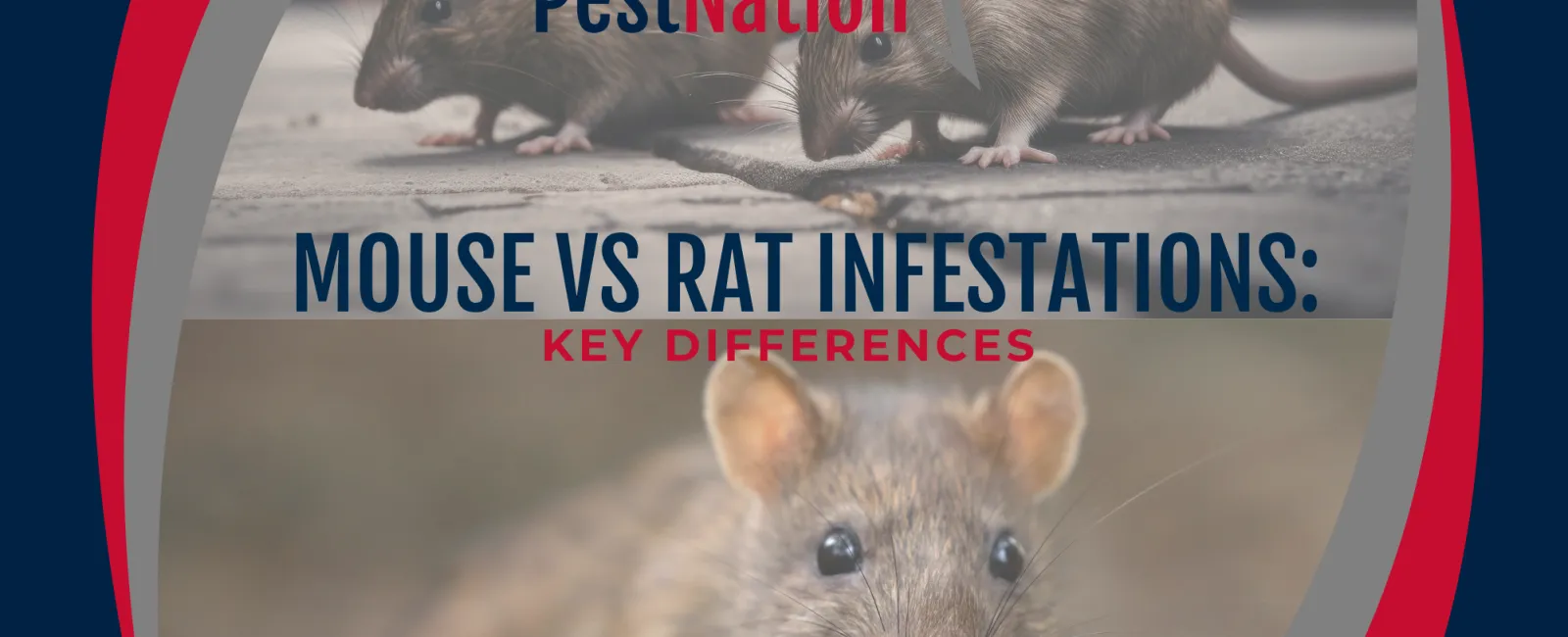
Rodent infestations are one of the most common and persistent pest issues facing homeowners across the Southeastern United States. Whether in dense urban areas like Atlanta and Charlotte or humid coastal regions relying on Charleston pest control services, rodents continue to invade homes in search of food, shelter, and warmth. However, not all rodent infestations are the same. Mice and rats differ significantly in behavior, habits, risks, and the methods required for effective control.
Understanding the key differences between mouse and rat infestations is essential for proper identification and treatment. Many homeowners may not realize which type of rodent they are dealing with, leading to ineffective pest control strategies. Because mice and rats behave differently and require distinct approaches, recognizing these differences is critical for implementing successful mouse control and rat control solutions. Through detailed PestNation pest inspections and comprehensive Atlanta, Charlotte, Charleston interior and exterior pest treatments, PestNation helps homeowners accurately identify infestations and apply targeted strategies for long-term Rodent Exclusion in the Southeast.
Rodents are highly adaptable and capable of causing significant damage to homes. From chewing through wiring and insulation to contaminating food supplies, both mice and rats present serious risks. However, their patterns of behavior, nesting preferences, and entry methods vary, which makes accurate identification a key first step in addressing any infestation.
Why Rodent Infestations Are Common in the Southeast
The Southeastern United States provides ideal conditions for rodent populations to thrive. Mild winters allow rodents to remain active year-round, while warm temperatures support rapid breeding cycles.
In cities like Atlanta and Charlotte, rapid development and expanding neighborhoods often displace rodents from natural habitats, pushing them into residential structures. Coastal areas that rely on Charleston pest control services face additional challenges due to moisture, vegetation, and crawl space construction that provides ideal shelter.
Because these conditions allow both mice and rats to flourish, rodent infestations are a recurring issue for homeowners. Effective mouse control and rat control require understanding how each species behaves and what attracts them to homes.
Physical Differences Between Mice and Rats
One of the most noticeable distinctions between mice and rats is their physical appearance.
Mice
Mice are small rodents, typically measuring between 2.5 to 4 inches in body length. They have:
- Small, slender bodies
- Large ears relative to their size
- Thin tails
- Pointed noses
Their small size allows them to access extremely tight spaces, making mouse control particularly challenging.
Rats
Rats are significantly larger, often measuring between 7 to 10 inches in body length. They have:
- Heavier, more robust bodies
- Smaller ears relative to head size
- Thick tails
- Blunt noses
Because of their size, rats require slightly larger entry points than mice, but they are still capable of squeezing through surprisingly small openings.
Understanding these physical differences can help homeowners identify which rodent they are dealing with during PestNation pest inspections.
Behavior and Activity Patterns
Mice and rats exhibit different behaviors that influence how infestations develop.
Mouse Behavior
Mice are curious and exploratory. They tend to investigate new objects in their environment and are more likely to interact with traps or bait stations.
Mice also:
- Stay close to nesting areas
- Travel short distances for food
- Build multiple small nests
- Reproduce rapidly
In Atlanta and Charlotte homes, mice are often found in kitchens, cabinets, and pantry areas where food is readily available.
Rat Behavior
Rats are more cautious and wary of new objects, a behavior known as neophobia. This makes rat control more complex, as rats may avoid traps or bait until they become familiar with them.
Rats also:
- Travel longer distances for food
- Establish fewer but larger nests
- Prefer stable, established pathways
- Exhibit more destructive behavior
In Charleston pest control environments, rats are often found in crawl spaces, basements, and exterior areas before moving indoors.
Entry Points and Access
One of the most important differences between mice and rats is how they enter homes.
Mice Entry Points
Mice can squeeze through openings as small as a dime. This allows them to enter homes through:
- Tiny cracks in foundations
- Gaps around utility lines
- Small openings around windows and doors
Because of their small size, mouse infestations can begin almost anywhere in a structure.
Rat Entry Points
Rats require slightly larger openings, typically the size of a quarter or larger. Common entry points include:
- Damaged vents
- Gaps in crawl space enclosures
- Openings around plumbing
- Roofline access points
Rodent Exclusion in the Southeast focuses on sealing these entry points to prevent both mice and rats from entering homes.
Nesting Habits
Mice and rats also differ in how and where they build nests.
Mouse Nesting
Mice prefer to build nests close to food sources. They use soft materials such as:
- Paper
- Fabric
- Insulation
- Cardboard
Common nesting locations include:
- Inside cabinets
- Behind appliances
- Inside wall voids
Rat Nesting
Rats tend to build larger nests in more secluded areas. These may include:
- Crawl spaces
- Attics
- Basements
- Outdoor burrows
In Atlanta and Charlotte, rats are often found nesting in attics or exterior areas, while Charleston pest control professionals frequently encounter rats in crawl spaces due to humidity.
Signs of Infestation
Recognizing the signs of infestation can help determine whether mice or rats are present.
Mouse Infestation Signs
- Small, pellet-shaped droppings
- Scratching noises in walls
- Chewed food packaging
- Small nests in hidden areas
Rat Infestation Signs
- Larger droppings
- Grease marks along walls
- Loud movement noises
- Significant structural damage
PestNation pest inspections help identify these signs and determine the severity of the infestation.
Damage Caused by Mice vs Rats
Both mice and rats can cause significant damage, but the extent and type of damage often differ.
Mouse Damage
Mice typically cause damage through:
- Chewing wires
- Contaminating food
- Nesting in insulation
While smaller in size, mice can still create serious issues due to their rapid reproduction.
Rat Damage
Rats tend to cause more extensive damage, including:
- Chewing through structural materials
- Damaging plumbing and wiring
- Creating larger nesting areas
- Contaminating larger spaces
In both cases, rodent damage can lead to costly repairs if infestations are not addressed promptly.
Health Risks
Both mice and rats pose health risks to homeowners. They can spread bacteria, contaminate surfaces, and contribute to poor indoor air quality.
Common concerns include:
- Food contamination
- Allergic reactions
- Exposure to bacteria
- Respiratory issues
In densely populated cities like Atlanta and Charlotte, shared environments can increase the spread of rodent-related health concerns.
The Importance of Professional Pest Inspections
Accurate identification is essential for effective rodent control. PestNation pest inspections provide a comprehensive evaluation of the home to determine:
- The type of rodent present
- Entry points and vulnerabilities
- Nesting locations
- Severity of infestation
In Atlanta, Charlotte, and Charleston pest control scenarios, these inspections allow technicians to develop customized treatment plans tailored to the specific rodent problem.
Integrated Rodent Control Strategies
Effective mouse control and rat control require a combination of removal and prevention strategies.
Atlanta, Charlotte, Charleston interior and exterior pest treatments often include:
- Strategic trap placement
- Baiting programs
- Sealing entry points
- Monitoring for activity
- Environmental recommendations
Rodent Exclusion in the Southeast is a critical component of long-term success, ensuring that rodents cannot reenter the home after removal.
Rodent infestations are a persistent challenge throughout the Southeastern United States, but understanding the differences between mice and rats can help homeowners take the right approach to control and prevention. While mice are smaller and more curious, rats are larger, more cautious, and often more destructive. Each requires a tailored strategy for effective management.
In cities like Atlanta and Charlotte, as well as coastal areas served by Charleston pest control professionals, environmental conditions allow rodents to thrive year-round. Through detailed PestNation pest inspections and comprehensive Atlanta, Charlotte, Charleston interior and exterior pest treatments, homeowners can accurately identify infestations and implement targeted mouse control and rat control solutions. By focusing on long-term Rodent Exclusion in the Southeast, PestNation helps homeowners protect their properties from damage, reduce health risks, and maintain safe, rodent-free living environments.