
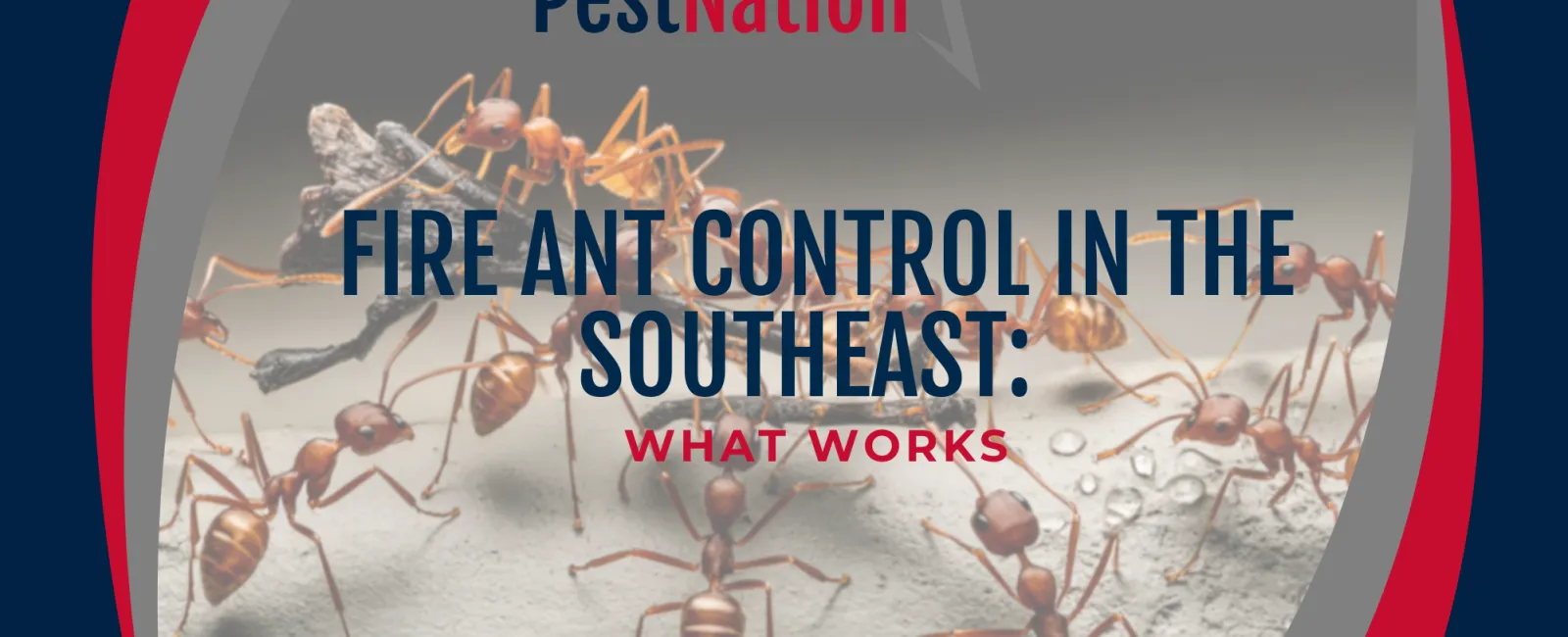
Fire ants are more than a nuisance across the Southeastern United States. From sprawling suburbs in Atlanta to coastal communities near Charleston and growing neighborhoods throughout Charlotte, these aggressive pests pose real risks to families, pets, and property. Their painful stings, rapidly expanding colonies, and resilience in warm climates make fire ant control one of the most pressing pest management concerns in the region.
The Southeast's long summers, mild winters, and frequent rainfall create ideal conditions for fire ant colonies to thrive year-round. Without a clear strategy, homeowners often find themselves fighting a losing battle. Effective fire ant treatment requires understanding how these insects behave, why do-it-yourself solutions often fail, and which professional methods deliver long-term results. This guide explains what truly works when it comes to Fire Ant Control in the Southeast and how PestNation helps homeowners regain control of their outdoor spaces.
Understanding Fire Ants in the Southeast
The primary species affecting the Southeast is the red imported fire ant. These ants build dome-shaped mounds that may not always have visible openings at the top. Colonies can contain hundreds of thousands of ants, and multiple queens may be present in a single mound, which significantly increases reproduction rates.
Unlike many other ant species, fire ants are highly territorial and aggressive. When disturbed, they swarm quickly and sting repeatedly. This behavior makes them especially dangerous in yards where children play, around HVAC systems, near foundations, and in landscaped areas.
In cities such as Atlanta and Charlotte, rapid development has created fragmented habitats where fire ants thrive in disturbed soil. In coastal regions like Charleston, sandy soil and high humidity further enhance colony growth. Because of these environmental advantages, fire ant control must be proactive rather than reactive.
Why DIY Fire Ant Treatment Often Fails
Many homeowners attempt fire ant treatment using over-the-counter granules or mound drenches. While some products can temporarily reduce visible activity, they rarely eliminate the entire colony.
Common reasons DIY methods fall short include:
-
Failure to eliminate the queen: If the queen survives, the colony rebuilds quickly.
-
Improper application timing: Bait products require ants to be actively foraging.
-
Disturbing the mound: Physical disruption can cause colony relocation rather than elimination.
-
Incomplete yard coverage: Treating only visible mounds ignores satellite colonies.
In warm climates like the Southeast, colonies can rebound in a matter of weeks. Without comprehensive fire ant control strategies, the problem often becomes cyclical.
What Actually Works for Fire Ant Control
Successful Fire Ant Control in the Southeast relies on an integrated approach. Professional pest management combines inspection, targeted treatment, and long-term prevention.
1. Professional Pest Inspections
Effective control begins with thorough PestNation pest inspections. Technicians assess:
-
Number and size of active mounds
-
Soil type and moisture conditions
-
Areas of heavy foot traffic
-
Proximity to structures
-
Potential hidden or satellite colonies
In metropolitan areas like Atlanta and Charlotte, densely packed neighborhoods require a property-wide evaluation to prevent reinfestation from adjacent lots. In Charleston pest control scenarios, sandy coastal soil often requires tailored product selection.
A detailed inspection allows for strategic placement of treatments rather than isolated mound attacks.
2. Broadcast Baiting
Broadcast baiting is one of the most effective fire ant treatment methods available. This involves spreading granular bait across the entire lawn rather than applying product to individual mounds only.
Worker ants carry the bait back to the colony, feeding it to larvae and queens. When properly timed—typically during warm, dry conditions when ants are actively foraging—this method significantly reduces colony populations.
Broadcast baiting works because it:
-
Targets multiple colonies simultaneously
-
Reaches hidden nests
-
Reduces the likelihood of colony relocation
-
Interrupts reproduction cycles
For properties in Atlanta, Charlotte, and Charleston, broadcast treatments are often recommended as a foundational step in comprehensive fire ant control.
3. Targeted Mound Treatments
While broadcast baiting is essential, targeted mound treatments remain important for heavily infested areas or high-risk zones.
Liquid drenches or fast-acting contact insecticides may be used when:
-
Mounds are located near entryways
-
Colonies threaten children's play areas
-
Immediate reduction is required
However, these treatments must be carefully applied to avoid scattering the colony. Professional Charleston interior and exterior pest treatments often combine targeted mound applications with broadcast strategies for maximum effectiveness.
4. Ongoing Monitoring and Maintenance
Fire ant control is not a one-time event in the Southeast. Due to favorable weather conditions, reinfestation can occur from nearby untreated areas.
Routine service plans from PestNation include:
-
Seasonal inspections
-
Preventative treatments
-
Monitoring for new mound development
-
Adjustments based on environmental conditions
This long-term approach ensures that fire ant populations remain suppressed, particularly in regions with extended warm seasons like Atlanta and Charleston.
Why Climate Matters in the Southeast
The Southeast presents unique environmental challenges:
-
Long warm seasons allow colonies to reproduce for extended periods.
-
Mild winters mean colonies rarely die off naturally.
-
Frequent rainfall can trigger colony relocation rather than elimination.
-
Urban expansion creates disturbed soil environments ideal for nesting.
In Charlotte and Atlanta, newly developed neighborhoods often experience high fire ant activity during the first few years after construction. In coastal Charleston pest control situations, sandy soils drain quickly, encouraging deep nest formation.
Understanding these factors is essential when designing an effective fire ant treatment plan.
Interior and Exterior Considerations
Although fire ants primarily nest outdoors, they may enter structures during extreme weather conditions such as heavy rain or drought.
Comprehensive Atlanta, Charlotte, Charleston interior and exterior pest treatments address:
-
Perimeter protection
-
Entry point sealing
-
Foundation treatments
-
Landscape barrier zones
Interior issues are less common but can occur when ants seek moisture. A combined interior and exterior strategy reduces the risk of indoor activity while focusing primarily on outdoor colony control.
The Role of Professional Expertise
Professional pest management companies like PestNation bring several advantages:
-
Access to commercial-grade products
-
Knowledge of seasonal foraging patterns
-
Strategic treatment timing
-
Safe application methods
-
Integrated pest management practices
Homeowners in Atlanta, Charlotte, and Charleston benefit from region-specific experience. Fire ant control in the Southeast is not identical to control methods used in cooler climates. Treatment protocols must account for longer breeding seasons and higher colony densities.
Preventative Strategies for Homeowners
While professional treatment is critical, homeowners can reduce risk by:
-
Avoiding excessive irrigation
-
Maintaining trimmed landscaping
-
Reducing debris and clutter
-
Sealing foundation cracks
-
Monitoring new construction soil
Early detection is key. Spotting small mounds before they mature into large colonies allows for faster intervention and more effective fire ant treatment.
Safety Considerations
Fire ants are more than inconvenient. Their stings can cause:
-
Painful pustules
-
Allergic reactions
-
Secondary infections
-
Risk to pets and livestock
In areas with heavy infestation, children and pets are particularly vulnerable. Immediate and sustained fire ant control helps reduce these health risks and restore safe outdoor use of residential spaces.
Fire ants are deeply entrenched throughout the Southeastern United States, and the climate ensures they remain a persistent threat. Quick fixes and occasional treatments rarely provide meaningful relief. Instead, long-term, strategic fire ant control tailored to regional conditions is required.
For homeowners in Atlanta, Charlotte, and Charleston, consistent professional support makes the difference between temporary suppression and true control. Through thorough PestNation pest inspections, strategic baiting, targeted mound treatment, and ongoing maintenance, effective Fire Ant Control in the Southeast becomes achievable. When properly executed, fire ant treatment not only eliminates current infestations but also protects your property against future invasions, allowing you to enjoy your yard with confidence year-round.