
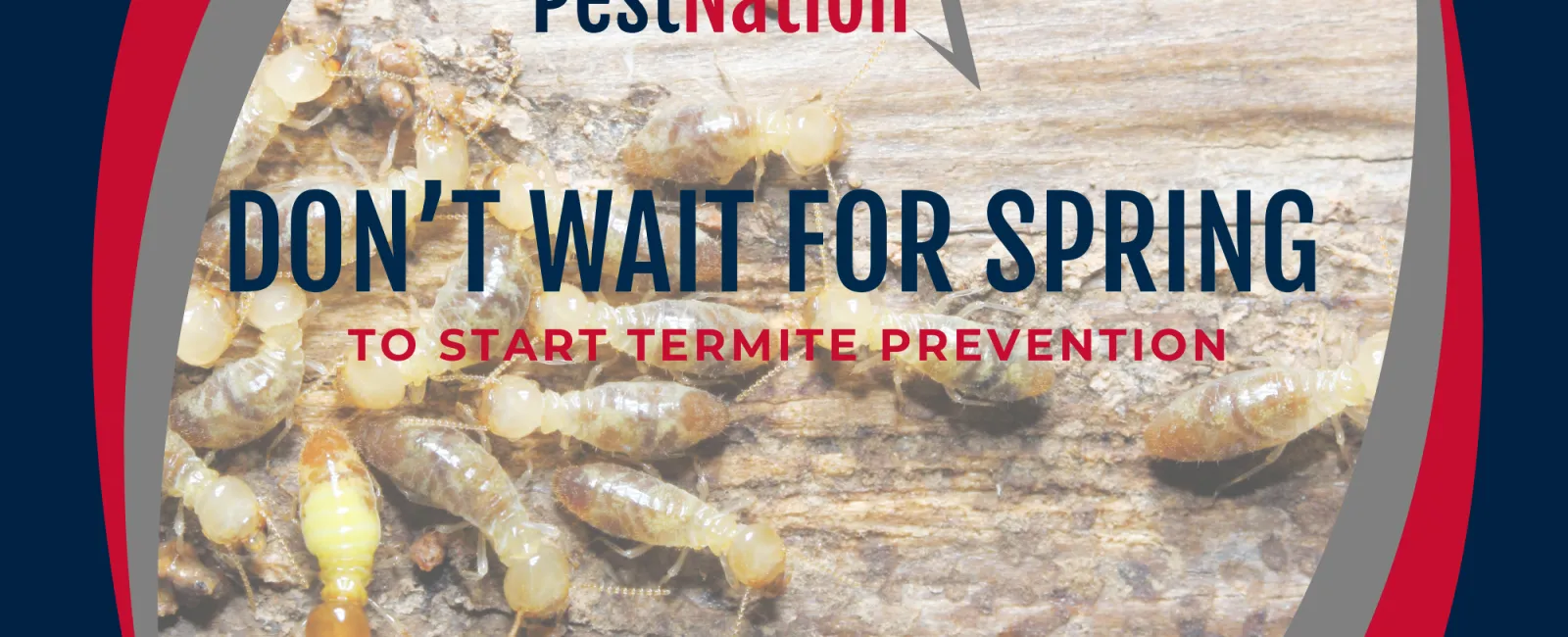
Most homeowners think of termites as a "spring problem," largely because that's when swarmers become visible around windows, door frames, and outdoor lights. But limiting termite prevention to the spring season is one of the biggest—and costliest—mistakes property owners can make. Termites are active year-round, quietly feeding on wood 24/7 while remaining hidden deep within walls, crawlspaces, and soil. By the time spring swarmers appear, a colony may have been damaging a structure for months or even years. For homeowners in Atlanta, Charlotte, and Charleston, the risk is even higher due to warm temperatures, high humidity, and consistently active subterranean termite populations.
At PestNation, we emphasize proactive protection, not reactive treatment. Waiting until spring allows termites time to establish themselves, reproduce, and expand their colonies before you ever know they are there. That's why our Charleston pest control services, Charlotte and Atlanta service teams, and our comprehensive interior and exterior pest treatments are available year-round to prevent termite activity before it becomes an expensive repair issue. This article explores why the early months of the year are critical, how termite behavior works, and why scheduling PestNation pest inspections and quarterly services outside the spring season is the smartest long-term strategy for your home and budget.
Termites Don't Take a Winter Break
Termites are cold-blooded insects, but that doesn't mean they become inactive during winter. In regions like Atlanta, Charlotte, and Charleston, temperatures rarely stay low long enough to significantly slow termite metabolism. Subterranean termites—the most destructive species in the Southeast—live underground or within insulated wood structures, where temperatures remain consistent. Soil moisture, decaying wood, and protected mud tubes allow them to continue foraging regardless of the weather outside.
Even during short periods of colder temperatures, termite colonies do not die off. Queens continue laying eggs, workers continue feeding and expanding tunnels, and soldiers maintain colony protection. Moisture-rich environments such as crawlspaces, basements, and slab foundations offer the perfect winter shelter. Because they stay active and hidden, homeowners rarely see the warning signs before substantial internal damage has already occurred.
This constant activity makes winter and early spring critical times for preventive measures. Waiting until swarmers appear means the colony has already reached maturity, making eradication more complex and costly. Year-round termite protection from PestNation ensures your home remains defended no matter the season.
Spring Swarmers Are a Late Warning Sign
Many homeowners mistakenly assume termites only become an issue once swarmers appear in spring. Swarmers are reproductive termites that fly out of an existing colony to mate and establish new colonies. Their presence means the original colony is well-established and large enough to produce reproductive individuals—a process that can take three to five years.
If you see swarmers in your home or around your property, the colony has already been active for an extended period. By that time, termites may have already hollowed out structural beams, damaged subflooring, and compromised load-bearing supports. Swarmers do not cause the damage; workers do—and they have been active long before the spring season.
Preventing swarmers means addressing termite threats before they mature. PestNation pest inspections conducted during the fall or winter allow professionals to locate early colony activity, identify high-risk areas, and implement barrier systems or baiting solutions before reproductive season begins. For Atlanta, Charlotte, and Charleston homeowners, this proactive schedule is essential for long-term structural protection.
Winter and Early Spring Are Ideal for Professional Termite Inspections
While termites remain active year-round, conditions in winter and early spring make inspections particularly effective. Cooler temperatures reduce competing insect activity, making termite evidence more visible to a trained technician. Moisture patterns are also easier to identify during these months, especially in crawlspaces and exterior foundation areas.
PestNation pest inspections conducted outside the typical spring rush offer several key advantages:
1. Less Competition for Scheduling
Spring is the busiest time for termite call volume. Homeowners who wait often face longer appointment windows. Scheduling during winter ensures faster service and more flexible appointment times.
2. Early Detection of Moisture Issues
Termites gravitate toward moisture. Winter rainfall and condensation highlight problem areas more clearly, allowing PestNation technicians to identify vulnerabilities such as leaky gutters, poor drainage, misgraded soil, or wood-to-ground contact.
3. More Time to Implement Prevention Before Swarming Season
Treatments and preventative systems installed before spring give colonies far less opportunity to send out swarmers or expand their foraging areas.
4. Better Access to Hidden Areas
Vegetation and landscaping are often less overgrown in winter, providing easier access to foundation walls, crawlspace entrances, and exterior inspection points.
For homeowners in Atlanta, Charlotte, and Charleston, the benefits of early inspections make seasonal delays unnecessary and potentially risky.
Why Southeastern Homes Face Higher Termite Risk
The Southeast is one of the most active termite regions in the United States. Mild winters, moisture-rich soil, and long warm seasons allow subterranean termites to thrive. Homes in Atlanta, Charlotte, and Charleston share several risk factors that increase vulnerability:
High Humidity and Moisture
Coastal humidity in Charleston and warm seasons in Atlanta and Charlotte create consistent moisture around foundations—ideal for termite survival.
Older Home Construction
Many neighborhoods in these cities feature older homes with aging wood, previous water damage, or outdated building materials, all of which make termite foraging easier.
Soil Types Favor Termite Colonies
Clay-heavy soils retain moisture, keeping termite tunnels cool and hydrated.
Dense Urban and Suburban Development
Homes built close together allow termites to move from property to property through interconnected soil networks.
These regional factors mean Southeastern homes need protection earlier and more consistently than homes in colder climates.
The Cost of Waiting: Structural Damage and Financial Impact
A mature termite colony can consume several pounds of wood per year. That may sound small, but the structural integrity loss accumulates quickly. Damage is often internal and hidden, making repairs extensive once discovered.
Homeowners who delay termite prevention until spring face several potential consequences:
1. Expensive Structural Repairs
Termite damage can affect:
-
Floor joists
-
Support beams
-
Wall studs
-
Subflooring
-
Trim and molding
-
Decking and porches
Repair bills commonly range from $3,000 to $8,000, but severe cases in older homes can exceed $20,000.
2. Lower Property Value
Homes with termite history often face reduced resale interest, especially if infestations were caught late or repairs were extensive.
3. Compromised Safety
Structural weakening may lead to sagging floors, warped door frames, and weakened load-bearing areas.
4. Higher Treatment Costs
Large or mature colonies require more extensive baiting, barrier treatments, and monitoring than early-stage colonies.
Choosing proactive protection with PestNation is not just a preventive step—it is a cost-saving strategy that safeguards your home's integrity.
Why Professional Treatment Outperforms DIY Methods
DIY termite treatments marketed at home improvement stores are rarely effective because they only target visible areas. Termites spend most of their time deep within the soil, inside walls, or within inaccessible structural voids.
Professional termite prevention from PestNation includes:
-
Soil barrier treatments
-
Baiting systems
-
Moisture control recommendations
-
Crawlspace inspections
-
Interior and exterior pest treatments that block other insects which can attract termites
-
Ongoing monitoring through quarterly services
These services ensure thorough coverage across the home's entire perimeter and interior risk points—something homeowners cannot achieve with DIY pesticides.
The Value of Quarterly Services and Year-Round Protection
The most reliable way to prevent termite damage is through continuous monitoring and seasonal inspections. PestNation's quarterly services help homeowners in Atlanta, Charlotte, and Charleston stay protected from shifting moisture levels, seasonal breeding cycles, and environmental changes that may attract termites.
Quarterly services provide benefits such as:
-
Early detection before colonies expand
-
Continuous barrier maintenance
-
Immediate treatment of emerging pest issues
-
Prevention of secondary infestations such as ants, roaches, or moisture-loving pests
-
Recommendations tailored to seasonal changes in each city
Because termites remain active all year, your protection should, too.
Termite prevention is not a seasonal chore—it's a year-round responsibility. Waiting until spring puts your home at risk, giving colonies the time and opportunity to expand before you even notice they are there. By the time swarmers appear, the colony is already mature and potentially causing thousands of dollars in hidden structural damage. For homeowners in Atlanta, Charlotte, and Charleston, the Southeastern climate only increases the urgency to act early.
Choosing PestNation for early inspections, preventive systems, and quarterly services ensures you stay ahead of termite threats. Our Charleston pest control teams, Charlotte professionals, and Atlanta technicians understand regional termite behavior and know how to protect homes in every season. With comprehensive interior and exterior pest treatments and detailed PestNation pest inspections, homeowners gain peace of mind knowing their property is protected long before spring arrives.
Proactive protection is not only smarter—it's more cost-effective, safer for your home, and essential for long-term structural integrity. Don't wait for visible signs. Don't wait for the swarming season. And above all, don't wait for damage. Start termite prevention now and keep your home protected all year.