
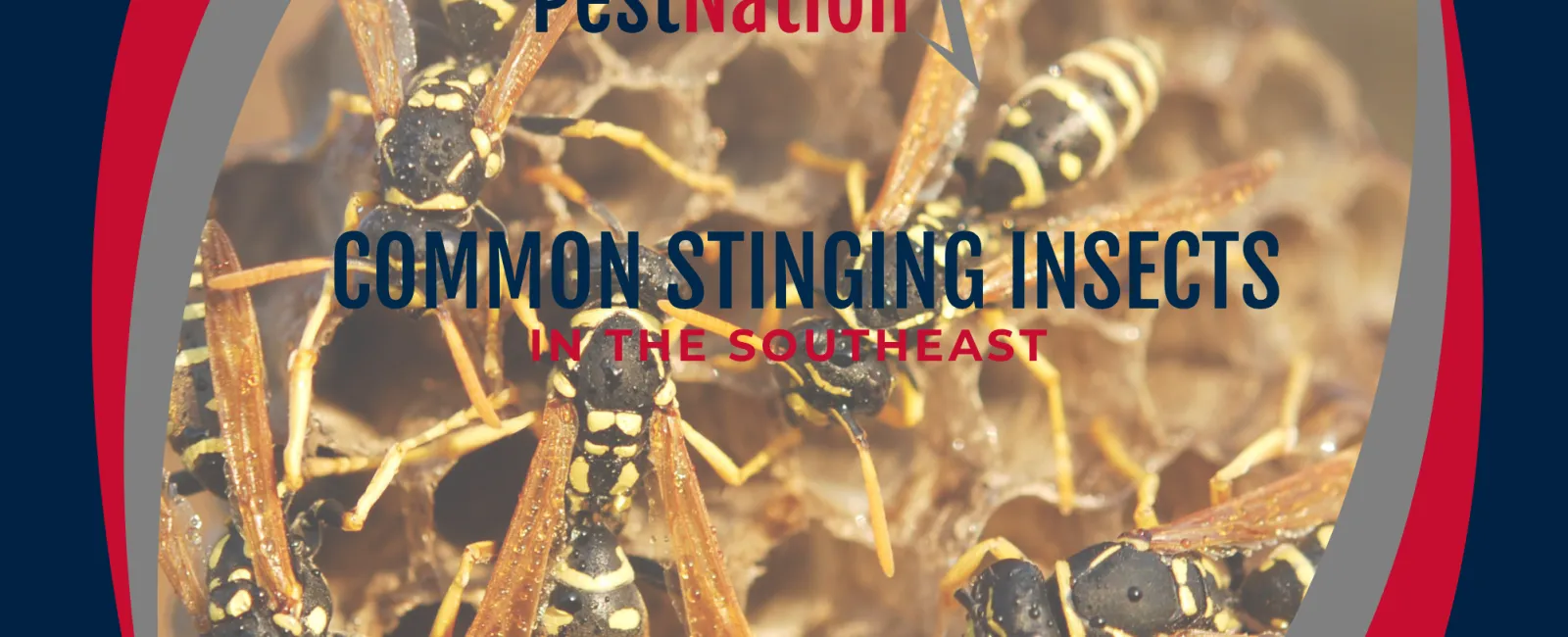
Stinging insects are a major concern for homeowners throughout the Southeastern United States, especially during the warmer months when insect activity rapidly increases. In cities like Atlanta and Charlotte, as well as in Orlando and coastal areas that rely on Charleston pest control services, stinging insects become highly active around homes, yards, patios, and outdoor gathering spaces. While many species play an important role in the environment, they can become dangerous when nests are built near high-traffic areas or inside residential structures.
Understanding the behavior of stinging insects is essential for both safety and long-term pest prevention. Species such as wasps and hornets are highly territorial and can become aggressive when they feel threatened. Seasonal behavior, structural vulnerabilities around homes, and environmental conditions all contribute to increased activity and nesting opportunities. Through detailed PestNation pest inspections and comprehensive Atlanta, Charlotte, Orlando, and Charleston interior and exterior pest treatments, PestNation helps homeowners identify active infestations and implement effective stinging insect control strategies before populations become dangerous.
Stinging insect infestations often begin quietly and go unnoticed until colonies become large and aggressive. By understanding the most common species found in the Southeast and what attracts them to residential properties, homeowners can take proactive steps to reduce risks and maintain safer outdoor environments.
Why Stinging Insects Thrive in the Southeast
The Southeastern climate creates ideal conditions for stinging insects to survive and expand.
Several environmental factors contribute to this, including:
- Long warm seasons
- High humidity
- Abundant flowering plants and food sources
- Mild winters that extend activity periods
In Atlanta and Charlotte, warm spring and summer temperatures allow colonies to grow rapidly. Orlando and Charleston pest control environments often experience even longer periods of activity due to subtropical and coastal weather conditions.
Because of these favorable conditions, stinging insects remain a consistent concern throughout much of the year.
Common Wasps Found in the Southeast
Wasps are among the most common stinging insects encountered around homes in the Southeast.
Paper Wasps
Paper wasps are recognized by their long legs and umbrella-shaped nests. They commonly build nests:
- Under eaves
- On porch ceilings
- Around decks and railings
While generally less aggressive than some other species, paper wasps will defend their nests if disturbed.
In Atlanta, Charlotte, Orlando, and Charleston pest control scenarios, paper wasp nests are commonly found around outdoor living spaces during spring and summer.
Yellowjackets
Yellowjackets are highly aggressive wasps known for building hidden nests.
Common nesting areas include:
- Underground burrows
- Wall voids
- Attic spaces
Unlike paper wasps, yellowjackets can become extremely defensive and may sting repeatedly.
Because their nests are often concealed, infestations may go unnoticed until someone accidentally disturbs the colony.
Mud Daubers
Mud daubers are solitary wasps that build small mud nests on structures. Although they are less aggressive, their nests can accumulate around homes over time.
Common locations include:
- Garages
- Sheds
- Covered patios
Mud daubers are often indicators of broader insect activity because they hunt spiders and other pests for food.
Hornets in the Southeast
Hornets are larger and often more intimidating than standard wasps. They are known for aggressive nest defense and large colony sizes.
Bald-Faced Hornets
Despite the name, bald-faced hornets are technically a type of yellowjacket.
They commonly build large aerial nests:
- In trees
- On rooflines
- Around sheds and fences
These nests can grow rapidly during summer months and may contain hundreds of insects.
In Charleston and Orlando pest control environments, high humidity and dense vegetation support large hornet populations.
Bees Around Residential Properties
While bees are essential pollinators, they can still become problematic when colonies develop near homes.
Carpenter Bees
Carpenter bees bore into wood to create nesting tunnels.
Common targets include:
- Deck railings
- Wooden siding
- Fences and outdoor furniture
Although carpenter bees are generally less aggressive, structural damage can occur over time.
Honey Bees
Honey bees typically swarm when searching for new nesting sites.
Swarms may temporarily gather:
- On tree branches
- Under roof overhangs
- Near exterior walls
Because honey bees are important pollinators, professional relocation is often preferred when possible.
Seasonal Behavior of Stinging Insects
Seasonal behavior plays a major role in stinging insect activity.
Spring
Queens emerge and begin building nests. Colonies are small but rapidly expanding.
Summer
Colonies grow significantly, increasing insect activity and defensive behavior.
Late Summer and Fall
Food competition intensifies, making wasps and hornets more aggressive around people and outdoor spaces.
In Atlanta, Charlotte, Orlando, and Charleston pest control environments, late summer is often when homeowners experience the highest levels of stinging insect activity.
Understanding these seasonal patterns helps explain why infestations can escalate quickly.
Structural Vulnerabilities That Attract Nesting
Homes often provide ideal nesting opportunities for stinging insects.
Common structural vulnerabilities include:
- Roofline gaps
- Open attic vents
- Loose siding
- Deck and porch overhangs
- Cracks around exterior structures
These areas provide shelter, warmth, and protection from weather conditions.
PestNation pest inspections frequently identify these vulnerabilities during evaluations. In Atlanta, Charlotte, Orlando, and Charleston interior and exterior pest treatments, sealing these areas is an important part of long-term stinging insect control.
Why Infestations Often Go Unnoticed
One of the biggest challenges with stinging insects is that nests are often hidden during the early stages of development.
Common hidden nesting locations include:
- Wall voids
- Attics
- Underground burrows
- Dense shrubs and trees
Because colonies start small, homeowners may not notice activity until populations become large and aggressive.
In Orlando and Charleston pest control environments, thick vegetation and moisture-rich conditions can conceal nests even more effectively.
This delayed visibility is one reason infestations can become dangerous unexpectedly.
The Dangers of DIY Nest Removal
Many homeowners attempt to remove nests themselves, but this can be extremely risky.
Common dangers include:
- Triggering defensive swarms
- Multiple stings
- Falls or injuries during removal attempts
- Incomplete nest elimination
Wasps and hornets can become highly aggressive when they perceive threats to the colony.
Professional stinging insect control uses specialized equipment and treatment strategies designed to reduce these risks safely.
The Role of Professional Pest Inspections
Effective stinging insect control begins with a detailed inspection.
PestNation pest inspections evaluate:
- Nest locations
- Species identification
- Structural vulnerabilities
- Environmental conditions attracting activity
In Atlanta, Charlotte, Orlando, and Charleston pest control scenarios, inspections often reveal hidden nests that homeowners were unaware of.
This information allows pest professionals to create targeted treatment plans for safe and effective removal.
Integrated Stinging Insect Control Strategies
Professional stinging insect control focuses on both elimination and prevention.
Atlanta, Charlotte, Orlando, and Charleston interior and exterior pest treatments may include:
- Safe nest removal
- Targeted treatment applications
- Sealing structural vulnerabilities
- Vegetation management recommendations
- Ongoing monitoring and prevention
By combining treatment with preventative measures, pest professionals can reduce the likelihood of future infestations.
Preventing Future Stinging Insect Problems
Homeowners can reduce risk by addressing conditions that attract nesting activity.
Important prevention strategies include:
- Sealing cracks and gaps around the home
- Maintaining landscaping and trimming vegetation
- Inspecting rooflines and attic vents regularly
- Removing food sources from outdoor spaces
- Scheduling routine pest inspections
These proactive steps help reduce nesting opportunities and improve long-term pest prevention.
Stinging insects are a major concern throughout the Southeast due to the region's warm climate, long active seasons, and favorable nesting conditions. From wasps and hornets to carpenter bees and yellowjackets, these insects can quickly become dangerous when nests develop near homes and outdoor living areas. Seasonal behavior, hidden nesting locations, and structural vulnerabilities all contribute to the growth of infestations.
For homeowners in Atlanta and Charlotte, as well as in Orlando and coastal areas served by Charleston pest control professionals, understanding these risks is essential for maintaining a safe property. Through detailed PestNation pest inspections and comprehensive Atlanta, Charlotte, Orlando, and Charleston interior and exterior pest treatments, PestNation helps homeowners implement effective stinging insect control strategies. By identifying nesting sites early, addressing structural vulnerabilities, and applying proactive prevention measures, homeowners can reduce infestation risks and maintain safer, more comfortable outdoor spaces throughout the year.