
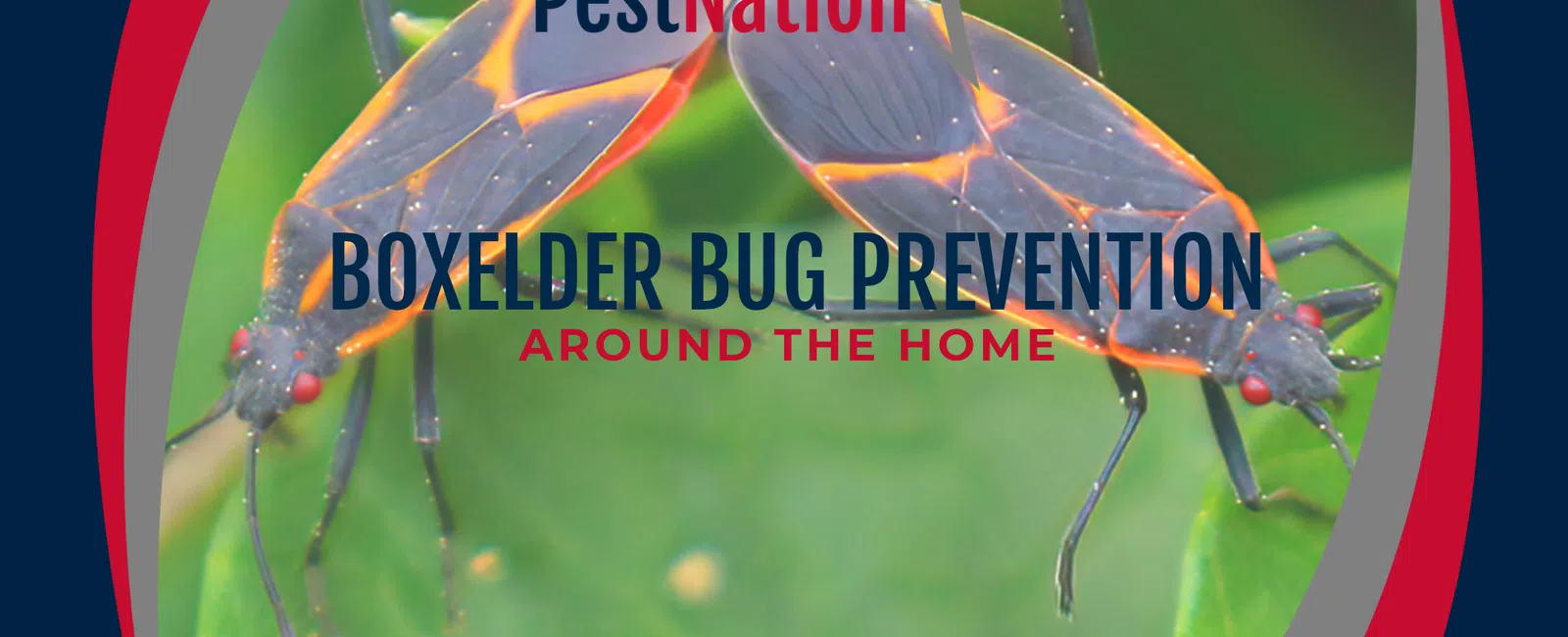
As autumn temperatures begin to change, homeowners may notice groups of red-and-black insects gathering on exterior walls, siding, windows, and door frames. These insects may be boxelder bugs, a species known for collecting on sun-warmed building surfaces before seeking protected locations for winter. Although their appearance can be surprising, their presence is generally associated with seasonal behavior rather than damage to the home.
Understanding why homeowners discover boxelder bugs on house exteriors can help distinguish harmless seasonal gatherings from situations that deserve pest-management attention. Boxelder bugs are primarily nuisance pests that feed on plants outdoors and seek shelter when environmental conditions change. Learning how these overwintering insects behave, where they enter buildings, and how appropriate exclusion can reduce indoor activity allows homeowners to approach fall pest prevention without unnecessary concern.
What Are Boxelder Bugs?
The boxelder bug, scientifically known as Boisea trivittata, is a true bug commonly associated with certain trees, particularly boxelder trees and some other maple species.
Adult boxelder bugs have elongated, somewhat flattened bodies with dark coloration and distinctive reddish-orange markings. Their wings typically create visible red lines against a darker background when folded.
These markings make them recognizable, but several other insects have similar red-and-black appearances.
Homeowners may confuse boxelder bugs with other plant-feeding bugs or unrelated insects found around siding and landscaping.
The University of Minnesota Extension - Boxelder Bugs provides information about boxelder bug identification, host plants, seasonal behavior, and management. Its guidance helps explain why correct identification matters before deciding whether control measures are necessary.
Not every red-and-black insect gathering on a building is a boxelder bug, and identifying the insect helps determine its likely behavior and appropriate response.
Why Boxelder Trees and Maples Matter
Boxelder bugs are closely associated with their host plants, particularly boxelder trees and certain other maples.
During their active outdoor season, these insects feed on plant materials, including seeds and other suitable plant tissues.
Properties near host trees may provide access to resources that support local boxelder bug activity.
However, the presence of a boxelder tree does not automatically mean a nearby home will experience large insect gatherings.
Local insect populations, tree characteristics, weather, and surrounding environmental conditions all influence activity.
Boxelder bugs do not depend on household wood, drywall, insulation, or furniture for food.
Their outdoor feeding behavior is separate from their tendency to seek sheltered locations around buildings during fall.
Removing healthy host trees is not automatically necessary or appropriate for boxelder bug management. Landscaping decisions should consider tree health, shade, property needs, and other environmental benefits rather than pest concerns alone.
Why Boxelder Bugs Gather During Fall
Seasonal changes in temperature and daylight influence boxelder bug movement.
As outdoor conditions become less favorable, some insects begin searching for protected locations where they can survive colder periods.
This behavior is known as overwintering.
For homeowners, overwintering simply means that an insect seeks shelter and remains relatively inactive while conditions outside are unsuitable for normal activity.
Boxelder bugs may use natural sheltered areas or protected spaces within residential structures.
Their movement toward buildings can become especially noticeable during fall periods when temperatures fluctuate between warm afternoons and cooler evenings.
However, the timing and intensity of these gatherings depend on local weather, nearby vegetation, and the number of insects present.
Not every property experiences large boxelder bug gatherings during autumn.
Why Sun-Exposed Exterior Walls Attract Boxelder Bugs
One of the most recognizable characteristics of boxelder bug behavior is their tendency to gather on sun-warmed surfaces.
During cooler fall weather, sunlight can warm siding, masonry, brick, and other exterior building materials.
These surfaces may provide temporarily favorable conditions for insects seeking warmth.
Homeowners may notice clusters on walls, window frames, door frames, or other exposed areas.
Building orientation and sunlight exposure can influence where the insects are observed.
For example, one side of a house may receive more afternoon sunlight than another, making it a more noticeable gathering location under certain conditions.
However, boxelder bugs do not universally prefer one building color or wall direction.
Weather, nearby host trees, exterior materials, and surrounding environmental conditions all contribute to where gatherings occur.
The Penn State Extension - Boxelder Bugs discusses boxelder bug biology and nuisance behavior around buildings. This information supports understanding why seasonal gatherings may occur on exterior surfaces before insects move into protected overwintering locations.
How Boxelder Bugs Enter Residential Buildings
When boxelder bugs gather on exterior surfaces, they may encounter openings that provide access to sheltered portions of the structure.
Potential entry points include cracks around window frames, gaps near exterior doors, siding joints, and openings around utility penetrations.
Soffits, fascia, roofline transitions, and other exterior features may also contain accessible spaces.
Damaged window screens, worn weatherstripping, and poorly fitted door sweeps can create additional entry opportunities.
Because boxelder bugs can exploit relatively small openings, some access points may be difficult for homeowners to identify.
Once inside, the insects may enter wall voids, attic spaces, or other protected areas.
However, finding boxelder bugs near a window does not prove that the window itself is the entry point.
A professional exterior inspection can help identify visible openings and conditions that may contribute to recurring insect activity.
Why Boxelder Bugs May Remain Hidden Inside Homes
After entering protected building spaces, boxelder bugs may remain concealed for extended periods.
Wall voids, attic spaces, and other sheltered locations can provide protection from less favorable outdoor conditions.
During cooler periods, overwintering insects may become relatively inactive.
However, sunlight, indoor heating, and temporary temperature changes can stimulate movement.
This explains why homeowners may discover boxelder bugs indoors during warmer fall or winter days, even when exterior doors and windows have remained closed.
Some insects may move toward illuminated areas and become visible around interior windows or curtains.
These locations make the insects easier to notice but do not necessarily reveal where they originally entered the structure.
Repeated indoor sightings may indicate that insects are emerging from concealed spaces rather than entering through a nearby window each time.
Do Boxelder Bugs Reproduce Inside Homes?
Boxelder bugs generally do not establish reproducing populations inside ordinary residential overwintering locations.
Their movement into buildings is primarily associated with seeking shelter rather than finding food or suitable breeding sites.
They do not typically feed on drywall, framing, insulation, furniture, or other household structural materials.
Consequently, discovering multiple boxelder bugs indoors does not automatically mean they are reproducing behind walls.
Their presence also does not indicate the type of wood-destroying activity associated with termites or certain other structural pests.
Although substantial indoor gatherings may be inconvenient, boxelder bugs are primarily classified as nuisance insects rather than structural pests.
Why Boxelder Bugs Can Cause Odors and Staining
Boxelder bugs may release an unpleasant odor when disturbed or crushed.
Their body fluids or waste can also stain certain surfaces, including curtains, fabrics, and some finished materials.
For this reason, crushing the insects against interior walls or window coverings is generally discouraged.
Large gatherings may become frustrating around entrances, patios, windows, and other frequently used areas.
However, boxelder bugs are not generally considered a serious threat to human health.
They are also not known for routinely causing significant structural or electrical damage.
Individual reactions to insect contact can vary, so homeowners should still avoid unnecessary handling.
The main residential concern is managing nuisance activity and reducing opportunities for insects to enter protected building spaces.
How Boxelder Bugs Differ From Other Fall Insects
Boxelder bugs are sometimes grouped with other insects that gather around homes during autumn.
Stink bugs and multicolored Asian lady beetles may also seek protected overwintering locations, but they are different insects with distinct physical characteristics and outdoor feeding behaviors.
Boxelder bugs have elongated, dark bodies with reddish markings and are closely associated with certain host trees.
Stink bugs typically have broader, shield-shaped bodies, while Asian lady beetles are rounded beetles that feed on soft-bodied insects outdoors.
Accurate identification is important because homeowners should not assume every insect gathering around siding or windows requires the same management approach.
Why Boxelder Bug Activity Varies Across the Southeast
Boxelder bug populations and seasonal activity vary geographically.
Local host trees, insect distribution, climate, and environmental conditions influence whether homeowners encounter these insects.
Some Southeastern locations may experience fewer boxelder bug concerns than regions of the United States where the species is more frequently reported.
Even within the Southeast, conditions differ between inland communities and warmer coastal or Florida locations.
For example, fall weather around Charlotte or Atlanta may differ from conditions around Charleston or Orlando.
These differences can influence insect movement and overwintering behavior.
However, homeowners should not assume boxelder bugs are equally common throughout Georgia, North Carolina, South Carolina, and Florida.
Confirming the insect species is especially important when unfamiliar red-and-black insects appear around a home.
Exterior Inspections and Common Entry Conditions
An exterior inspection can help identify visible conditions that may allow overwintering insects to enter residential buildings.
Areas deserving attention may include window frames, door frames, siding transitions, utility penetrations, soffits, fascia, and roofline features.
The UGA Extension - Management of Pest Insects In and Around the Home provides information about household insect identification and management considerations. This supports evaluating exterior access conditions before selecting preventive measures.
Inspectors should distinguish confirmed insect activity from openings that merely represent possible access routes.
For example, a gap around exterior trim may provide a potential entry opportunity without proving boxelder bugs currently use it.
Identifying these differences helps homeowners prioritize appropriate maintenance.
How Structural Exclusion Helps Prevent Entry
Structural exclusion is an important part of managing boxelder bugs around residential properties.
Maintaining window screens and repairing damaged screening can reduce access through windows and other screened openings.
Properly fitted door sweeps and maintained weatherstripping may help limit entry around exterior doors.
Appropriate sealing of cracks around frames, siding transitions, and other nonessential openings can also support prevention.
However, exclusion work must preserve necessary ventilation, drainage, moisture management, and building safety features.
Homeowners should not seal vents, weep holes, or other essential openings in ways that interfere with their intended functions.
Some exterior repairs may require qualified contractors.
Exclusion is often most useful before large numbers of insects enter protected building spaces.
Although these measures may reduce access opportunities, they cannot guarantee that every boxelder bug will be prevented from entering.
Removing Boxelder Bugs Found Indoors
When only a limited number of boxelder bugs are present indoors, nonchemical removal may be appropriate.
Careful vacuuming or collection can help remove insects without crushing them against finished surfaces.
Homeowners should consider potential odors or staining when handling collected insects or cleaning equipment.
Broad indoor pesticide applications are not automatically necessary for boxelder bug activity.
Spraying visible insects alone may not address concealed overwintering insects or the exterior openings that allowed entry.
When indoor sightings recur, evaluating building access conditions may provide more useful information than repeatedly responding to individual insects.
Integrated Pest Management for Boxelder Bugs
Integrated Pest Management, or IPM, combines pest identification, monitoring, prevention, and appropriate control measures.
The U.S. EPA - Integrated Pest Management Principles explains how these strategies support informed pest-management decisions rather than relying exclusively on pesticide applications.
For boxelder bugs, IPM may involve confirming identification, monitoring exterior gathering areas, evaluating potential entry points, and recommending appropriate exclusion measures.
Targeted treatments may be considered when warranted by inspection findings and applicable product labeling.
However, not every boxelder bug concern requires chemical treatment.
Preventive maintenance and appropriate structural exclusion can address conditions that allow insects to enter buildings, while monitoring helps determine whether activity continues.
No single treatment guarantees permanent elimination of boxelder bugs from surrounding outdoor environments.
When Professional Pest Control May Be Appropriate
Professional evaluation may be useful when boxelder bugs repeatedly appear indoors, substantial seasonal gatherings occur, or potential entry points are difficult to identify.
PestNation Pest Inspections can help assess visible insect activity, likely identification characteristics, and exterior conditions that may contribute to recurring entry.
Depending on the findings, recommendations may include monitoring, preventive maintenance, Pest Exclusion, or appropriate management measures.
Residential Pest Control and Exterior Pest Treatments may also be relevant when supported by the identified pest and property conditions.
However, chemical treatment is not automatically required for every boxelder bug concern.
PestNation does not represent routine pest-management services as tree removal, landscaping construction, or specialized structural repair services.
Fall Pest Prevention Across PestNation's Service Areas
Homeowners seeking Atlanta Pest Control, Charlotte Pest Control, Orlando Pest Control, or Charleston Pest Control may encounter different seasonal insect conditions.
Boxelder bug activity depends on local species distribution, nearby host trees, weather, and building characteristics.
As a result, not every Southeastern homeowner will experience the same overwintering insect pressure.
PestNation's Fall Pest Prevention, PestNation Pest Inspections, and relevant residential pest-management services can help homeowners evaluate seasonal insect concerns according to property-specific conditions.
Exterior maintenance performed during fall may also help reduce entry opportunities for other nuisance insects.
Understanding Boxelder Bugs Around Homes During Fall
Finding boxelder bugs on house exteriors during autumn is often associated with their natural response to seasonal environmental changes. As temperatures fluctuate, these insects may gather on sun-exposed siding, masonry, windows, and other warm surfaces before seeking protected overwintering locations. Their movement toward buildings does not automatically indicate an established indoor infestation or structural damage.
Boxelder bugs primarily feed on plant materials outdoors and generally do not reproduce in ordinary residential overwintering spaces. However, large gatherings can become inconvenient, particularly when insects enter living areas or release odors and staining fluids after being disturbed.
Effective management of these overwintering insects focuses on accurate identification, exterior inspection, appropriate structural exclusion, and monitoring. Maintaining window screens, weatherstripping, door sweeps, and suitable exterior openings can help reduce access while preserving essential building functions.
For homeowners throughout PestNation's Southeastern service areas, professional pest evaluation can provide guidance when recurring indoor sightings or large exterior gatherings become difficult to manage. Understanding boxelder bug behavior and addressing potential entry conditions allows homeowners to approach seasonal nuisance insects with practical prevention rather than unnecessary treatments or expectations of permanent elimination.