
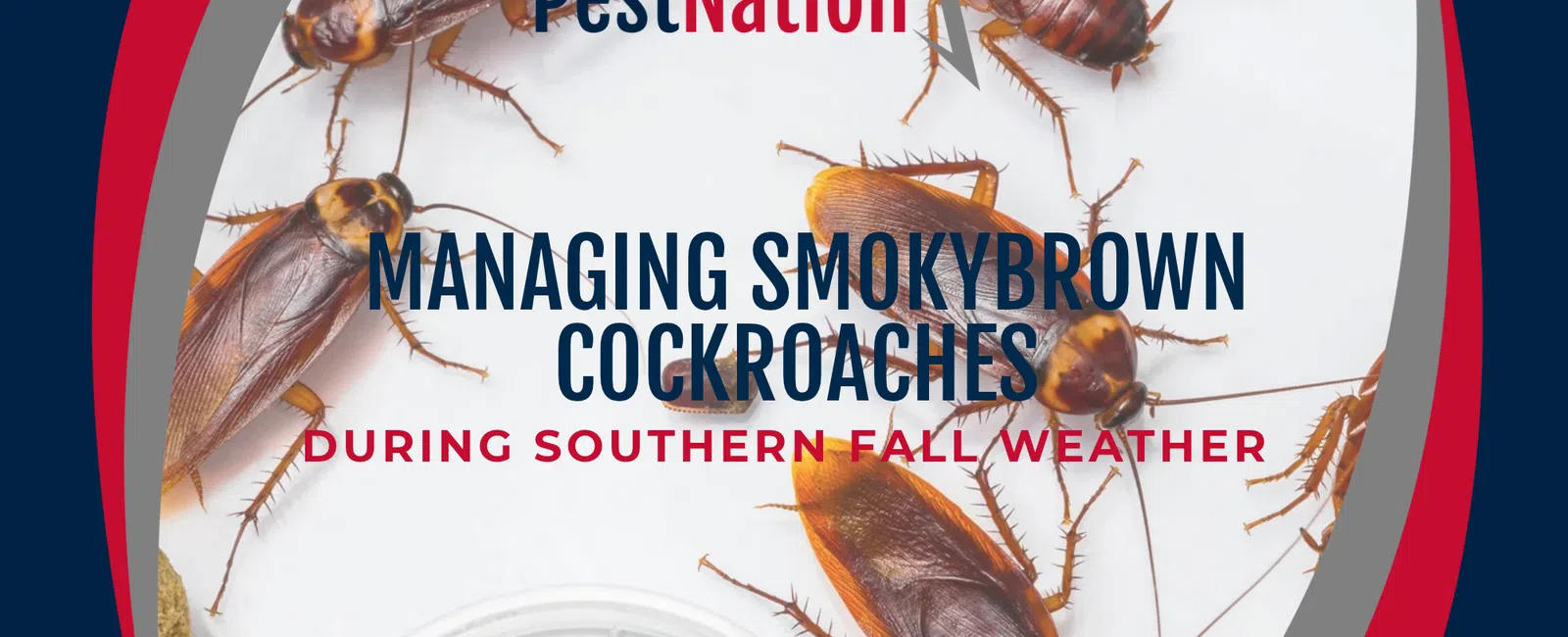
As October and November bring cooler weather to parts of the Southeastern United States, homeowners may expect outdoor insect activity to decline. However, certain cockroach species can remain active when temperatures stay relatively warm and moisture is available. The smokybrown cockroach is one example, frequently associated with humid outdoor environments, protected landscaping, and sheltered areas around residential structures.
Understanding fall cockroach activity is especially important for homeowners in Florida, Georgia, and warmer areas of the Carolinas. Smokybrown cockroaches may be encountered around patios, garages, rooflines, and other exterior spaces, sometimes entering homes through accessible openings. Effective smokybrown cockroach control begins with identifying the species, understanding the outdoor conditions that support its activity, and addressing moisture, shelter, and structural access rather than focusing exclusively on insects found indoors.
What Are Smokybrown Cockroaches?
The smokybrown cockroach, scientifically known as Periplaneta fuliginosa, is a relatively large cockroach species commonly associated with warm, humid environments.
Adults typically have a uniform dark brown to mahogany coloration and fully developed wings extending over the body.
Their appearance can make them easy to confuse with other large cockroach species, including American cockroaches.
However, these insects have different identification characteristics and may favor different environments.
American cockroaches, for example, commonly have a lighter-colored marking behind the head, while adult smokybrown cockroaches generally have a more uniform dark appearance.
Color alone should not be used to confirm identification.
The University of Florida IFAS Extension - Cockroach Management provides educational information about cockroach identification and management considerations. Understanding species differences helps homeowners recognize why an outdoor cockroach problem may require a different approach from activity involving species more commonly established inside kitchens or other interior areas.
Not every large, dark cockroach discovered around a home is a smokybrown cockroach.
Why Smokybrown Cockroaches Remain Active During Fall
Smokybrown cockroaches are strongly associated with warm temperatures and humid conditions.
Unlike insects whose activity becomes noticeably reduced during the first cool evenings of autumn, smokybrown cockroaches may continue moving and foraging when local conditions remain favorable.
Fall weather in the Southeast does not change uniformly across the region.
Warm afternoons, periods of rainfall, and protected outdoor habitats can continue supporting cockroach activity during October and November.
However, seasonal activity depends on local temperatures, moisture availability, species behavior, and environmental conditions.
A cool period may reduce visible movement without necessarily eliminating cockroaches sheltered in protected locations.
Similarly, a warm fall does not guarantee that every property will experience increased cockroach activity.
The most useful approach is to evaluate actual evidence and surrounding conditions rather than relying on the calendar alone.
Why Southern Climate Differences Matter
The Southeastern United States includes a wide range of fall weather conditions.
In Florida, warmer temperatures may continue supporting outdoor cockroach activity later into the year than in some cooler inland locations.
Georgia can experience different conditions between southern communities and northern areas where temperatures may decline earlier.
North Carolina and South Carolina also include coastal, inland, and elevated areas with distinct seasonal patterns.
For example, conditions around Orlando may differ considerably from those in Charlotte, while coastal Charleston may experience different temperature and humidity patterns than inland communities.
These variations influence the availability of suitable outdoor habitats.
Smokybrown cockroaches should not be assumed to occur at identical population levels or remain equally active throughout every Southeastern market.
Why Moisture Is Important to Smokybrown Cockroaches
Moisture availability is one of the most important environmental factors associated with smokybrown cockroach activity.
These insects are commonly found in damp, shaded, and protected locations where environmental conditions help limit drying.
Humid environments can provide more favorable conditions than exposed, dry surfaces.
Potential habitats include areas containing decaying vegetation, damp mulch, organic debris, and sheltered exterior materials.
Persistent moisture around foundations, drainage features, or outdoor storage areas may also contribute to favorable conditions.
However, finding moisture does not automatically mean cockroaches are present.
The relationship becomes more relevant when damp conditions occur alongside shelter, accessible food sources, and confirmed insect activity.
Professional inspections consider these factors together.
How Leaf Litter and Mulch Provide Shelter
Leaf litter and mulch are common features around Southeastern homes.
Both can support healthy landscaping, but accumulated organic materials may also create protected spaces for certain outdoor insects.
When leaves collect beneath shrubs, along foundations, or behind stored materials, they can provide shaded shelter.
Mulch may retain moisture, particularly in areas with limited airflow or frequent rainfall.
Smokybrown cockroaches may use suitable protected locations within or near these materials.
However, homeowners should not assume that every mulch bed contains cockroaches or that landscaping materials must be removed entirely.
Appropriate maintenance involves reducing unnecessary accumulations, avoiding excessive moisture against exterior walls, and keeping accessible areas organized.
These practices can help limit favorable shelter conditions while preserving functional landscaping.
Why Trees and Natural Cavities Matter
Smokybrown cockroaches are often associated with outdoor habitats that provide shelter from drying and environmental exposure.
Tree cavities, hollow trees, loose bark, and protected spaces around decaying vegetation may provide suitable locations.
These habitats can support cockroach activity away from the home's interior.
When trees or dense vegetation are located near exterior walls or rooflines, cockroaches may have additional protected routes around the structure.
However, a tree cavity does not automatically indicate a cockroach population.
Similarly, finding smokybrown cockroaches near a house does not prove they originated from a particular tree.
Professional evaluation may help identify visible activity and likely harborages without assuming that every natural shelter must be eliminated.
How Gutters and Rooflines Influence Cockroach Activity
Gutters and roofline features deserve attention during fall property maintenance.
Leaves, twigs, and other organic debris may accumulate in gutters, particularly during seasonal leaf drop.
When debris interferes with drainage, water may remain trapped or overflow into adjacent areas.
Moisture and organic materials can create conditions favorable to certain outdoor insects, including smokybrown cockroaches.
Protected spaces near eaves, soffits, and rooflines may also provide shelter or access opportunities.
However, clogged gutters do not automatically contain cockroaches.
Homeowners should evaluate gutters for both debris buildup and proper drainage.
Roofline inspections and gutter maintenance should be performed safely, and difficult or elevated work may require qualified professionals.
Pest-control technicians may identify visible pest-related concerns, but gutter replacement and structural roofing repairs fall outside routine pest-management services.
Why Smokybrown Cockroaches Appear Around Patios and Porches
Outdoor living areas can become noticeable locations for smokybrown cockroach activity.
Patios, porches, decks, garages, and nearby landscaping may provide combinations of shelter, moisture, and access to surrounding outdoor habitats.
Adults may also be attracted to artificial lighting under certain conditions.
As a result, homeowners may observe large cockroaches near porch lights, exterior doors, or illuminated windows during warm evenings.
However, finding an insect near a light fixture does not establish where it developed or where its primary harborage is located.
The cockroach may have traveled from surrounding vegetation, outdoor debris, or another protected area.
Repeated sightings can provide useful information about activity patterns, particularly when they occur in the same locations.
How Smokybrown Cockroaches Enter Homes
Although smokybrown cockroaches are strongly associated with outdoor environments, they may enter residential structures when suitable openings are available.
Potential entry points include gaps around exterior doors, windows, siding transitions, utility penetrations, and roofline features.
Damaged screens, deteriorated weatherstripping, and poorly fitted door sweeps can create additional opportunities.
Because smokybrown cockroaches may use elevated exterior habitats, attic spaces, soffits, eaves, and roofline openings can be relevant during an inspection.
However, not all smokybrown cockroach activity occurs in attics.
Garages, storage spaces, and other areas with direct exterior access may also provide suitable entry or shelter conditions.
Finding a cockroach indoors does not automatically prove that an established breeding population is present inside the home.
Can Smokybrown Cockroaches Live Inside Structural Spaces?
Smokybrown cockroaches are primarily outdoor-associated insects, but they can sometimes establish activity in protected structural areas when conditions are favorable.
Attics, wall-adjacent spaces, garages, and other sheltered locations may provide suitable environments depending on moisture, temperature, accessibility, and available resources.
This differs from assuming that every smokybrown cockroach found indoors is merely passing through.
Some properties may experience repeated activity associated with sheltered building spaces.
Professional inspection can help determine whether evidence suggests occasional entry or more persistent activity.
However, concealed areas may not be fully accessible, and routine inspection cannot guarantee identification of every hidden harborage.
Recognizing Signs of Smokybrown Cockroach Activity
Visible cockroaches are often the first sign homeowners notice, but other evidence may help clarify whether activity is recurring.
Potential indicators include:
- Repeated sightings in the same locations
- Shed insect skins
- Cockroach egg cases
- Droppings in sheltered areas
- Insects at different developmental stages
- Activity around damp exterior or structural spaces
Female smokybrown cockroaches produce egg cases that may be deposited in protected locations.
Finding egg cases or multiple developmental stages can provide additional information about local activity.
However, a single cockroach sighting does not automatically indicate an extensive infestation.
The condition, distribution, and recurrence of evidence should be considered before drawing conclusions.
Why Outdoor Harborages Matter During Inspection
When smokybrown cockroaches repeatedly appear indoors, identifying potential outdoor sources is important.
An inspection may include accessible landscaping, mulch beds, leaf litter, outdoor storage areas, gutters, roofline features, and other protected spaces.
Moisture conditions and potential entry points may also be evaluated.
The UGA Extension - Management of Pest Insects In and Around the Home provides information about household pest identification and management considerations. This supports evaluating environmental conditions and possible access routes rather than assuming every indoor cockroach originated from an interior breeding population.
Inspectors should distinguish confirmed cockroach evidence from conditions that may simply support future activity.
For example, a damp mulch bed may represent favorable habitat without proving that cockroaches are currently established there.
How Moisture Management Supports Prevention
Managing unnecessary moisture can reduce some conditions favorable to smokybrown cockroaches.
Homeowners can review accessible areas for plumbing leaks, poor drainage, standing water, and persistent dampness.
Properly maintained gutters and downspouts help direct rainwater away from areas where it may accumulate.
Outdoor storage and landscaping should also be arranged to avoid unnecessary moisture retention near building surfaces.
The U.S. EPA - Moisture Control Guidance for Building Design, Construction and Maintenance explains the importance of controlling moisture within buildings. Although this resource is not specific to cockroaches, its principles support addressing persistent dampness and water intrusion that can contribute to unfavorable building conditions and potential pest habitats.
Significant plumbing, drainage, or structural problems should be evaluated by appropriately qualified professionals.
PestNation's role is pest inspection and management, not plumbing repair or drainage construction.
Landscaping and Exterior Storage Maintenance
Routine exterior maintenance can help reduce sheltered locations where outdoor cockroaches may remain.
Removing unnecessary leaf accumulations, organizing stored materials, and keeping exterior walls accessible can improve visibility during inspections.
Firewood, gardening supplies, and unused equipment should be managed to reduce unnecessary clutter and protected spaces.
Vegetation growing densely against siding or rooflines may also make exterior inspection more difficult.
However, effective prevention does not require removing every tree, shrub, or mulch bed.
The goal is to maintain landscaping in ways that reduce unnecessary moisture and shelter while supporting normal property use.
Why Pest Exclusion Is Important
Structural exclusion helps reduce opportunities for smokybrown cockroaches to enter residential buildings.
Appropriate maintenance may include repairing damaged screens, evaluating weatherstripping, maintaining door sweeps, and addressing suitable exterior gaps.
Openings around windows, doors, siding transitions, and utility penetrations may warrant attention.
However, exclusion work must preserve ventilation, drainage, and other essential building functions.
Soffit vents, weep holes, and drainage features should not be sealed in ways that compromise their intended purpose.
Certain repairs may require qualified contractors.
Pest Exclusion recommendations should be based on actual access conditions rather than indiscriminately sealing every exterior opening.
Integrated Pest Management for Smokybrown Cockroaches
Integrated Pest Management, or IPM, combines identification, inspection, prevention, monitoring, and appropriate control measures.
The U.S. EPA - Integrated Pest Management Principles explains how these strategies work together to support informed pest-management decisions.
For smokybrown cockroaches, this may involve confirming the species, locating visible harborages, addressing moisture, reducing unnecessary debris, evaluating entry points, and monitoring recurring activity.
Targeted treatments may be appropriate when supported by inspection findings and applicable product labeling.
However, not every smokybrown cockroach problem requires the same treatment approach.
Indoor treatments alone may have limited value when outdoor harborages and accessible entry points remain unaddressed.
Homeowners should also avoid indiscriminate pesticide applications around drainage features or environmentally sensitive locations.
When Professional Cockroach Control Can Help
Repeated indoor sightings, recurring activity around attics or rooflines, and difficulty identifying outdoor sources may justify professional evaluation.
A PestNation Pest Inspection can help identify likely cockroach species, evaluate accessible activity, and review conditions that may support continued presence.
Depending on the findings, Cockroach Control, Residential Pest Control, Exterior Pest Treatments, or Interior Pest Treatments may be considered as appropriate.
Recommendations may also include moisture reduction, sanitation, monitoring, and exclusion.
Professional monitoring can help determine whether activity continues after management measures have been implemented.
No treatment can guarantee permanent elimination of cockroaches from the surrounding outdoor environment.
Smokybrown Cockroaches Across the Southeast
Smokybrown cockroach activity varies across PestNation's service areas.
In Orlando Pest Control markets, warmer fall temperatures may continue supporting outdoor activity.
In Atlanta Pest Control and Charlotte Pest Control markets, seasonal cooling may influence when activity becomes less noticeable.
For Charleston Pest Control areas, coastal humidity and local weather conditions may affect outdoor habitats.
These differences make property-specific evaluation important.
PestNation's Pest Inspections, Residential Pest Control, and relevant cockroach-management services can help homeowners assess recurring activity without assuming every Southeastern property experiences the same seasonal conditions.
Understanding Smokybrown Cockroach Activity in Fall
Smokybrown cockroaches may remain active during Southern fall weather because suitable temperatures, humidity, and protected outdoor habitats can continue supporting their movement and survival. Leaf litter, mulch, tree cavities, gutters, and exterior storage areas may provide favorable conditions, while structural openings can allow insects to enter garages, attics, and other sheltered portions of residential buildings.
Understanding these environmental factors is central to effective smokybrown cockroach control. Although these insects are strongly associated with outdoor environments, repeated indoor sightings or evidence of multiple developmental stages may warrant closer evaluation. A single sighting, however, does not automatically indicate an extensive infestation or poor housekeeping.
Professional pest management can help identify the species, evaluate moisture and shelter conditions, inspect potential entry points, and recommend appropriate control measures. Combining environmental improvements, structural exclusion, monitoring, and targeted treatments when warranted provides a more complete approach than focusing exclusively on visible insects.
For homeowners throughout PestNation's Southeastern service areas, fall cockroach activity is a reminder that seasonal pest prevention should account for local weather and property conditions. With practical exterior maintenance and professional guidance when needed, homeowners can reduce favorable cockroach habitats and limit opportunities for recurring indoor activity without expecting every outdoor insect to disappear.