
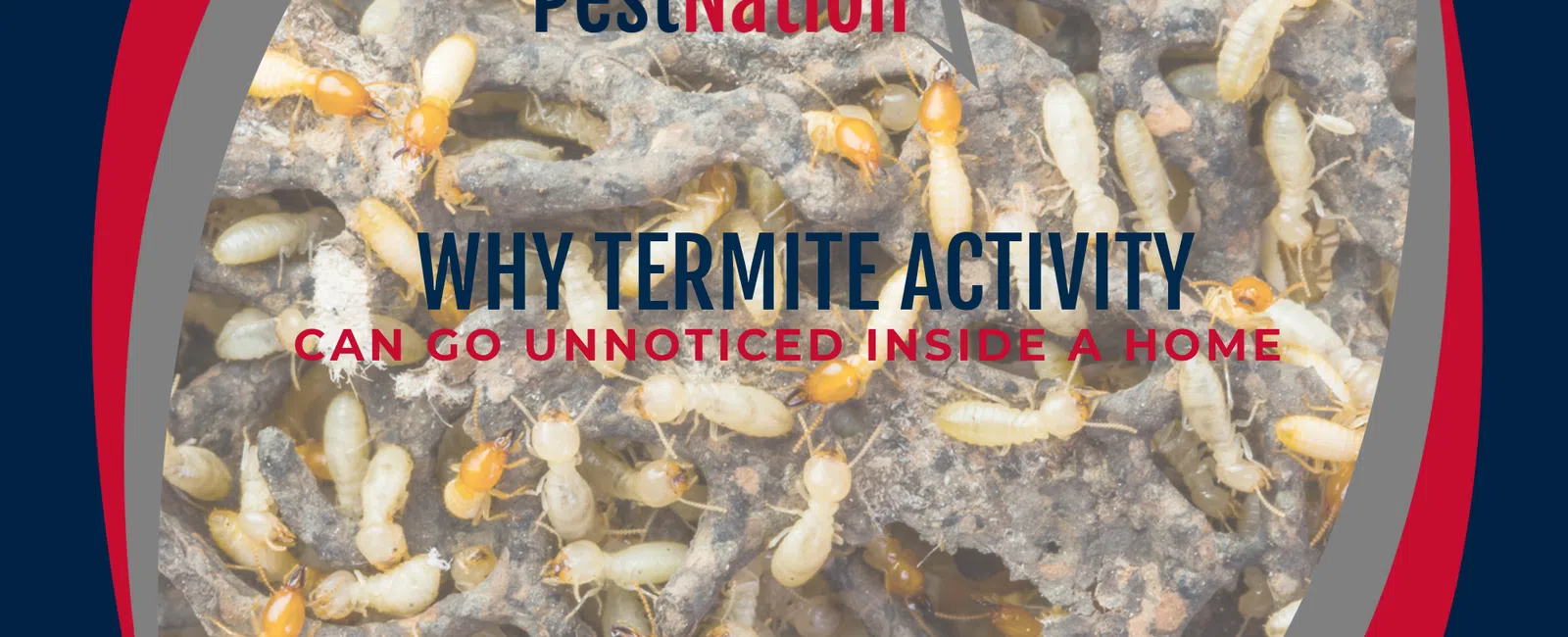
Termites can be active around or within a home without being immediately visible to the people who live there. Unlike pests that regularly cross open rooms, subterranean termites often travel through protected pathways and feed within wood or other concealed areas. This means hidden termite activity may develop in crawlspaces, wall systems, foundations, or structural wood before a homeowner notices an obvious sign.
The absence of visible termites does not necessarily establish that a property is free from termite activity. At the same time, finding damaged wood or a suspicious insect does not automatically confirm termites. A professional termite inspection evaluates visible and accessible areas for multiple forms of evidence while considering moisture, structural conditions, wood-to-soil contact, and other factors that may influence termite activity. Because portions of a building may be concealed or inaccessible, no visual inspection can guarantee detection of every hidden termite or damaged area.
Why Termites Can Remain Hidden
Subterranean termites generally live in colonies associated with the soil and can travel between the soil and suitable food sources in or around structures. Their behavior allows much of their activity to occur away from ordinary living spaces.
The UGA Extension - Subterranean Termites provides information about subterranean termite biology, behavior, damage, and management. Understanding how these termites move between soil and structures helps explain why activity can develop in areas homeowners rarely inspect.
Termite feeding can also occur inside wood. The exterior surface may initially reveal relatively little about what is occurring within the material. Over time, affected wood may develop hollowed or weakened areas, internal galleries, blistering, or other deterioration.
Those conditions require proper evaluation because termites are not the only possible cause of wood damage. Moisture, decay, construction defects, and other factors can sometimes produce similar-looking conditions.
Mud Tubes Can Provide an Important Clue
Mud tubes are among the better-known visible signs associated with subterranean termites.
These protected pathways can help termites travel between soil and structural materials while maintaining environmental conditions favorable to their movement. Depending on the building, mud tubes may be found around foundations, crawlspaces, piers, walls, or other areas connecting the soil with portions of the structure.
The U.S. EPA - Termites: How to Identify and Control Them provides guidance on termite identification, warning signs, prevention, and control. This information helps explain why evidence such as mud tubes, swarmers, or damaged wood deserves further evaluation even when live termites are not immediately visible.
Homeowners should avoid trying to determine the status of termite activity based only on how a mud tube looks. The presence, absence, condition, or appearance of a tube should be considered alongside other evidence during a professional inspection.
Termite Feeding May Occur Inside Wood
One reason hidden termite activity can be difficult to recognize is that termite feeding does not necessarily begin on an exposed wood surface.
Wood may appear relatively normal from the outside while internal portions have been affected. As activity progresses, deterioration may eventually become easier to identify, but there is no dependable rule stating that termites will produce obvious external signs at a particular stage.
This is also why homeowners should not damage structural wood, flooring, walls, or other building materials in an attempt to search for termites.
A professional inspection focuses on accessible evidence and conditions. When concealed construction prevents direct observation, inspectors must recognize those limitations rather than assume they can determine what is occurring behind every finished surface.
Swarmers and Discarded Wings Deserve Attention
Termite swarmers are reproductive termites that leave established colonies under suitable conditions to participate in the formation of new colonies. Homeowners may occasionally encounter winged insects or discarded wings indoors or around a structure.
Swarming can be an important reason to request further evaluation, but not every winged insect is a termite.
Flying ants can sometimes be confused with termite swarmers, especially when someone is unfamiliar with the physical differences between them. Correct identification matters because ant and termite activity require different management approaches.
Finding discarded wings can also warrant investigation. Their location, quantity, nearby structural conditions, and other evidence can help an inspector determine what additional areas should receive attention.
What a Professional Termite Inspection Evaluates
A professional termite inspection is more than a search for visible insects.
Inspectors evaluate accessible portions of the property for evidence of termites, termite-related damage, and conditions that may increase opportunities for activity. Depending on the home's construction and accessibility, areas of interest may include:
- Foundations
- Crawlspaces
- Basements where applicable
- Garages
- Exterior walls
- Accessible structural wood
- Wood-to-soil contact
- Plumbing penetrations
- Other accessible structural areas
The NC State Extension - Termite Control provides information about termite inspection, prevention, and management, including structural and environmental conditions that can influence termite problems. This supports a whole-property inspection approach rather than concentrating only on the location where a homeowner first noticed suspicious evidence.
Inspection scope can vary substantially from one property to another. Finished walls, flooring, insulation, stored belongings, restricted crawlspaces, and other inaccessible areas can limit direct observation.
A Termite Inspection Cannot See Through Walls
A visual termite inspection should not be confused with an ability to see through finished building materials.
Inspectors can evaluate visible and accessible evidence and may identify patterns that warrant additional attention. They cannot guarantee that every termite, gallery, or damaged area concealed behind walls, beneath flooring, inside structural components, or under inaccessible insulation will be discovered.
That limitation is important when discussing hidden termite activity.
The purpose of professional inspection is to identify observable evidence and relevant property conditions as thoroughly as the accessible areas allow. It is not to promise detection of conditions that cannot be directly observed.
Maintaining reasonable access to crawlspaces, garages, utility areas, and other locations that may require future inspection can therefore support ongoing termite monitoring.
Moisture Can Contribute to Favorable Conditions
Moisture is another factor inspectors may evaluate around a home.
Plumbing leaks, drainage problems, persistently damp crawlspaces, and other moisture-management concerns may contribute to conditions favorable to termites or wood deterioration. Moisture does not automatically cause a termite infestation, and its presence does not prove termites are active.
However, persistent moisture can be relevant enough to warrant attention.
Correcting moisture problems can support termite prevention while also helping protect building materials from other forms of deterioration. Depending on the source, appropriate repairs may require plumbing, drainage, crawlspace, roofing, or other qualified building professionals.
Wood-to-Soil Contact Can Increase Opportunities
Subterranean termites are associated with the soil, making wood-to-soil contact an important condition to evaluate.
When structural or stored wood directly contacts soil, termites may have increased opportunities to reach cellulose materials. This can also make certain pathways more difficult to observe.
Wood piles, lumber, cardboard, stumps, landscape timbers, and similar cellulose materials around a property can also be relevant to termite prevention.
These materials do not automatically mean a home has termites. Instead, their location and condition should be considered as part of the surrounding environment.
Reducing unnecessary wood-to-soil contact and managing cellulose materials near the structure can complement professional monitoring and other preventive measures.
Crawlspaces and Foundations Can Hide Evidence
Crawlspaces and foundation areas are especially relevant because they may contain structural wood, plumbing, moisture, soil, and numerous building transitions within a relatively confined area.
They are also spaces many homeowners rarely enter.
Evidence in a crawlspace might include mud tubes, suspicious wood deterioration, moisture conditions, or other signs requiring further evaluation. Foundations, piers, plumbing penetrations, and structural transitions may also provide useful information about possible termite movement.
Homeowners should not enter unsafe, contaminated, or inaccessible crawlspaces simply to look for termites. A professional termite inspection can evaluate accessible areas while accounting for safety and inspection limitations.
Termite Damage Can Resemble Other Problems
Wood deterioration does not have one universal cause.
Moisture damage, fungal decay, physical damage, age-related deterioration, and construction issues may sometimes resemble aspects of termite damage. Similarly, blistered or damaged surfaces should not automatically be attributed to termites.
Professional identification helps separate suspicious conditions from confirmed termite evidence.
An inspector can consider the appearance of damaged material alongside mud tubes, insect evidence, discarded wings, structural location, moisture, and other factors.
When the cause of damage extends beyond pest identification, additional evaluation by an appropriate building professional may also be necessary.
Newer or Previously Treated Homes Still Need Attention
A newer home is not automatically permanently protected from termites, and a previously treated home should not be assumed to remain protected indefinitely under every condition.
Termite protection depends on multiple factors, potentially including the type of treatment or system, product requirements, monitoring, property changes, maintenance, environmental conditions, and whether new conditions have developed around the structure.
Homeowners should understand what type of termite protection their property has and follow any applicable inspection, monitoring, or maintenance requirements associated with it.
Renovations, landscaping changes, additions, moisture problems, and other changes to the property can also alter conditions over time.
Integrated Pest Management Supports Long-Term Prevention
Termite management benefits from looking beyond a single treatment or inspection.
The U.S. EPA - Integrated Pest Management Principles describes an approach that incorporates prevention, monitoring, and appropriate management strategies. Applied to termites, this supports combining inspection with moisture management, structural awareness, monitoring, prevention, and treatment decisions based on actual findings.
Integrated Pest Management does not mean that every termite situation can be solved through nonchemical measures. Rather, inspection and monitoring help guide decisions so that the response fits the evidence and property conditions.
Continued observation can also help identify changes over time instead of assuming one inspection or treatment permanently resolves every future termite concern.
When Termite Evidence Warrants Professional Evaluation
Certain signs deserve professional attention, particularly when homeowners are uncertain about what they are seeing.
These can include mud tubes, termite-like swarmers, discarded wings, suspicious wood damage, or other recurring evidence.
A PestNation Pest Inspection or dedicated Termite Inspection can help determine whether visible evidence is consistent with termite activity and identify accessible conditions that may contribute to the problem.
For homeowners seeking Atlanta Pest Control, Charlotte Pest Control, Orlando Pest Control, or Charleston Pest Control, termite species, environmental conditions, moisture, building construction, and seasonal activity can differ. One pattern should not be assumed to apply equally across every Southeastern property.
PestNation's Termite Control and Residential Pest Control services can be based on the evidence and conditions identified at the individual property rather than assumptions based on a single visible sign.
Hidden termite activity can go unnoticed because termites often operate in protected environments that homeowners do not routinely see. Feeding may occur within wood, while movement can take place through mud tubes, crawlspaces, foundation areas, or other concealed portions of a structure. Visible termites are therefore only one possible indication of activity.
Mud tubes, swarmers, discarded wings, suspicious wood deterioration, moisture conditions, and wood-to-soil contact can all provide useful information, but each sign requires proper interpretation. Termite damage can resemble other building problems, and winged insects may be mistaken for termites. Professional identification helps determine what the evidence actually represents.
A termite inspection provides a systematic way to evaluate visible and accessible areas for termite evidence and conditions that may support activity. It cannot guarantee detection of every termite or damaged area hidden behind walls, flooring, insulation, or inaccessible structural components, which is why continued monitoring and reasonable inspection access remain important.
Through PestNation Pest Inspections, Termite Inspections, and appropriate Termite Control, homeowners can take an evidence-based approach to termite management. Inspection, moisture management, prevention, monitoring, and treatment when appropriate work together to reduce risk without assuming that the absence of visible termites means nothing is happening out of sight.