
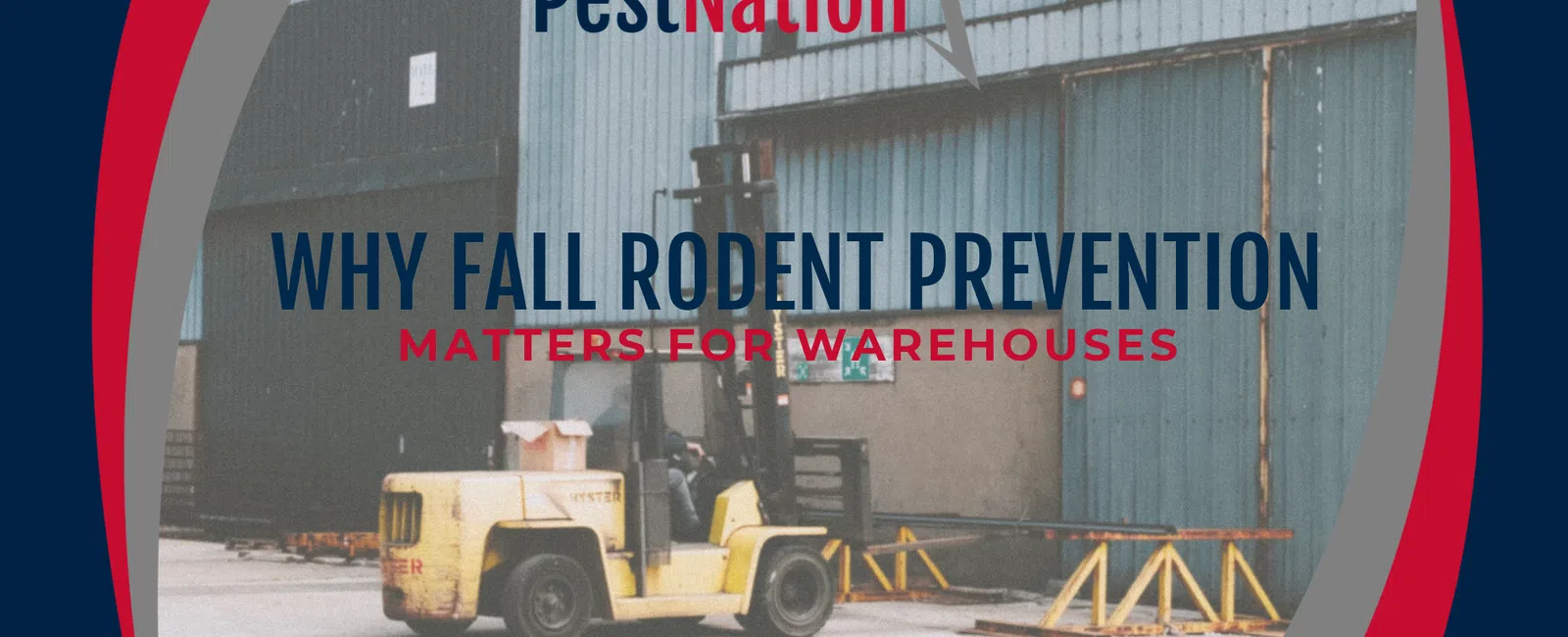
Commercial warehouses play an important role in storing, organizing, and distributing products across the Southeastern United States. However, the same characteristics that make these facilities efficient for logistics—including large storage areas, frequent deliveries, loading docks, and protected interior spaces—can also create opportunities for rodent activity. During October and November, changing weather and surrounding environmental conditions may influence how rats and mice move around commercial properties.
For warehouse owners, facility managers, and logistics operators, fall warehouse pest prevention is an opportunity to evaluate building conditions before seasonal changes create additional challenges. Effective commercial warehouse rodent control involves more than responding to occasional sightings. It combines professional inspections, structural exclusion, sanitation, monitoring, and facility maintenance to help reduce rodent access while supporting inventory protection and daily operations.
Why Commercial Warehouses Attract Rodents
Warehouses can provide several resources that rats and mice need to survive, including shelter, accessible food, water, and protected nesting locations.
Large buildings often contain storage racks, pallets, packaging materials, equipment rooms, and relatively undisturbed spaces. These features may provide concealed areas where rodents can move without being immediately noticed.
Warehouses that store food products or food-related packaging may require particular attention because accessible materials can attract rodents and create contamination concerns.
However, non-food warehouses are not immune to rodent activity.
Facilities storing furniture, electronics, building materials, or general merchandise may still provide shelter, nesting materials, and access to water or nearby outdoor food sources.
The CDC - Rodent Control provides guidance on recognizing rodent activity and reducing conditions that attract rodents. These principles are relevant to commercial properties where stored materials, building openings, and operational activities may create favorable conditions.
Understanding these contributing factors is an important starting point for developing an effective warehouse pest-management program.
Why Fall Is an Important Time for Warehouse Rodent Prevention
Rats and mice remain active throughout the year when suitable resources are available.
However, seasonal changes during October and November may influence rodent movement around commercial buildings.
Changing temperatures, outdoor food availability, rainfall, and surrounding vegetation can affect where rodents search for shelter and resources.
In some locations, rodents may investigate protected warehouse spaces as outdoor conditions become less favorable.
However, this does not mean rodents enter warehouses exclusively during colder months.
Facilities with accessible food, shelter, and structural openings can experience activity during any season.
Fall is therefore a practical time to review existing pest-prevention measures, inspect exterior building conditions, and evaluate whether operational changes have created additional access opportunities.
How Warehouse Size and Operations Influence Rodent Activity
Commercial warehouses vary significantly in size, layout, inventory, and operating schedules.
A small storage facility may have different pest-management needs than a large distribution center with multiple loading docks and continuous shipping activity.
Facilities operating around the clock may experience frequent door openings and ongoing movement of goods.
Other warehouses may contain storage areas that remain undisturbed for extended periods.
Both conditions can influence how rodents move through a property and how easily evidence is detected.
Tightly packed inventory, high shelving, pallet storage, and unused equipment may create concealed areas that are difficult to inspect.
For this reason, commercial rodent inspections should consider the facility's actual layout and daily operations rather than relying on a uniform inspection approach.
Understanding the Differences Between Mice and Rats
Correct rodent identification is important because mice and rats may use different movement routes, nesting locations, and environmental resources.
House mice may exploit relatively small openings and establish activity near stored materials, shelving, wall-adjacent spaces, or protected interior areas.
Norway rats are often associated with ground-level movement, burrows, and sheltered areas near foundations or exterior structures.
Roof rats are capable climbers and may use elevated routes, utility lines, rooflines, or upper building spaces.
These are general behavioral tendencies rather than definitive rules.
The UC IPM - Rats discusses rat behavior, habitat preferences, and management considerations. This information supports the importance of species identification when evaluating rodent movement and selecting appropriate prevention strategies.
A professional inspection can help determine which species may be present and which building areas deserve closer attention.
Loading Docks and Shipping Doors as Rodent Entry Points
Loading docks are essential to warehouse operations, but they can also create opportunities for pest entry.
Overhead doors may remain open during deliveries, loading, unloading, or equipment movement.
Even well-maintained facilities can experience periods when exterior access is necessary for operations.
Damaged dock seals, worn door sweeps, poorly fitted exterior doors, and gaps around thresholds may create additional opportunities for rodents to enter.
Rodents may investigate these openings while moving along exterior walls or sheltered loading areas.
Loading dock pest prevention involves evaluating both structural conditions and operational practices.
Facility managers may need to coordinate with dock personnel and maintenance teams to identify damaged seals, report recurring pest evidence, and address access conditions without interfering with shipping operations.
Structural Openings Around Commercial Buildings
Beyond loading docks, warehouses may contain other exterior openings that deserve inspection.
Potential access conditions include foundation gaps, utility penetrations, deteriorated siding, damaged exterior materials, and openings around roofline features.
Plumbing, electrical, and mechanical penetrations may create gaps where services pass through exterior walls.
Certain rodents can exploit surprisingly small openings, and some may gnaw vulnerable materials or enlarge existing gaps.
The CDC - Seal Up to Prevent Rodents explains why identifying and appropriately addressing structural openings is an important part of rodent prevention.
However, not every visible gap represents confirmed rodent entry.
Professional inspections should distinguish potential access points from openings supported by droppings, gnaw marks, tracks, or other evidence.
Structural exclusion must also preserve necessary ventilation, drainage, fire protection, and equipment access.
How Storage Practices Can Create Concealed Rodent Habitats
Warehouse storage configurations can influence how easily rodent activity is detected.
Pallets, shelving systems, tightly packed inventory, and unused equipment may create protected spaces where rodents can travel or remain concealed.
Cardboard, packaging materials, and other stored supplies may provide potential nesting materials.
Infrequently accessed storage areas can be especially difficult to monitor if inventory blocks inspection routes.
However, the presence of cardboard or pallets does not automatically mean rodents are nesting nearby.
Facility managers can support prevention by maintaining organized storage areas, reducing unnecessary clutter, and preserving reasonable access for inspection and cleaning.
These practices can help employees and pest professionals identify changes in activity before evidence becomes widespread.
Why Exterior Conditions Matter
Rodent activity inside a warehouse may be influenced by conditions outside the building.
Vegetation near foundations, accumulated debris, dumpsters, drainage areas, and outdoor storage materials may provide food sources or protected movement routes.
Dense landscaping can also make exterior walls and structural openings more difficult to inspect.
Maintaining vegetation, managing waste, and reducing unnecessary debris near building entrances can support prevention.
However, removing all landscaping is neither necessary nor practical.
The objective is to manage conditions that provide unnecessary shelter or attractants while maintaining the property's intended use.
Regular exterior maintenance can also help identify damaged building materials and newly developed openings.
Recognizing Rodent Activity in Warehouses
Rodent evidence may appear in several forms, including droppings, gnaw marks, nesting materials, damaged packaging, tracks, and recurring sightings.
Employees may notice evidence around loading docks, storage racks, equipment areas, utility rooms, or other protected spaces.
However, a single rodent sighting does not establish the number of animals present or the full extent of activity.
Similarly, isolated droppings or damaged packaging should be evaluated in context.
Recurring evidence across multiple areas may justify additional investigation.
Rodents can contaminate stored goods, packaging, and work surfaces through droppings, urine, gnawing, or direct contact.
They may also damage vulnerable materials, insulation, or accessible wiring.
Suspected electrical damage should be evaluated by a qualified electrician rather than treated solely as a pest-control concern.
Why Warehouse Sanitation Supports Rodent Prevention
Sanitation is an important component of commercial rodent management.
Accessible food, spilled products, accumulated waste, and unnecessary packaging materials can contribute to favorable conditions.
Food-storage facilities may require additional attention to product protection, cleaning procedures, and applicable sanitation requirements.
However, not every warehouse is subject to identical food-safety regulations.
Even facilities storing non-food merchandise can benefit from organized storage, timely waste removal, and appropriate cleaning practices.
Warehouse sanitation programs should account for actual inventory, operational schedules, and areas where materials may accumulate.
Reducing accessible food and nesting materials can complement structural exclusion and professional monitoring.
The Importance of Commercial Rodent Monitoring
Monitoring helps facility managers understand whether rodent activity is occurring and where additional evaluation may be necessary.
Professional Commercial Pest Monitoring may involve suitable monitoring devices, documented observations, recurring inspections, and review of activity patterns.
Monitoring programs should consider warehouse layout, inventory movement, loading dock operations, and areas where access may be limited.
Documentation can help identify recurring activity and evaluate whether management measures are addressing observed conditions.
It may also support facility oversight, operational consistency, and applicable audit processes.
However, pest-control documentation alone does not guarantee regulatory compliance or certification.
Monitoring is most useful when findings are reviewed and incorporated into ongoing facility-management decisions.
How Employees Support Warehouse Pest Prevention
Warehouse employees can play an important role in identifying rodent activity.
Loading dock personnel may notice damaged seals, recurring sightings, or evidence near shipping areas.
Maintenance teams may identify deteriorated exterior materials, utility gaps, or moisture concerns.
Facility managers can coordinate reporting procedures, service scheduling, and corrective actions.
Clear communication helps ensure that observations reach the appropriate personnel.
For example, employees who discover damaged packaging or droppings should know how to report the concern through established facility procedures.
Training employees to recognize and report visible evidence supports professional pest management without requiring staff to perform specialized pest-control work.
Why Rodent Exclusion Requires Appropriate Materials
Structural exclusion focuses on reducing opportunities for rodents to enter through accessible openings.
However, rodent entry points may require materials selected for the species, opening, and building conditions.
Ordinary caulk alone may not provide an appropriate solution for every rodent access point, particularly where vulnerable materials could be gnawed.
Some openings may require durable, pest-resistant materials or specialized repairs.
Exclusion work should preserve ventilation, drainage, fire protection, and access to essential equipment.
It is also important to coordinate exclusion with management of rodents already inside the facility.
Sealing active entry points without evaluating existing activity may trap animals within enclosed spaces or create additional complications.
Professional assessment can help determine the appropriate sequence of management and exclusion work.
Integrated Pest Management for Commercial Warehouses
Integrated Pest Management, or IPM, combines pest identification, monitoring, prevention, sanitation, exclusion, and appropriate control measures.
The U.S. EPA - Integrated Pest Management Principles explains how these strategies support informed pest-management decisions.
For warehouses, IPM may involve reviewing pest evidence, identifying structural access conditions, addressing sanitation concerns, and monitoring activity over time.
Targeted control methods may be considered when supported by inspection findings and facility requirements.
However, routine pesticide applications alone may not resolve recurring rodent activity when food sources, shelter, and entry points remain available.
The U.S. EPA - Rodenticides provides regulatory and safety information about rodent-control products. When rodenticides are used, applicable regulations, product labeling, and appropriate professional safeguards must be followed.
Commercial pest-management programs should also account for employees, stored products, equipment, and other operational considerations.
Why Customized Commercial Rodent Control Matters
Warehouses differ in building size, inventory type, operational demands, and surrounding environments.
A distribution center with frequent truck deliveries may require different monitoring and prevention priorities than a commercial storage facility with limited daily access.
A customized commercial warehouse rodent control program should consider these differences.
Professional services may include inspections, monitoring, sanitation recommendations, structural exclusion planning, and appropriate control methods.
Recurring rodent evidence, suspected product contamination, or difficult-to-access entry points may warrant professional attention.
However, no commercial pest-management program can guarantee permanent elimination of rodents from surrounding outdoor environments.
The goal is to manage observed activity and reduce conditions that contribute to recurring problems.
Commercial Warehouse Rodent Control Across the Southeast
Commercial warehouses throughout the Southeast experience different environmental and operational conditions.
In Atlanta Commercial Pest Control and Charlotte Commercial Pest Control markets, seasonal temperature changes may influence rodent movement around facilities.
In Orlando Commercial Pest Control and Charleston Commercial Pest Control markets, warmer or coastal conditions may create different seasonal patterns.
However, all commercial facilities can benefit from evaluating exterior openings, loading dock conditions, sanitation, and pest-monitoring procedures.
PestNation Commercial Pest Control services can support warehouse owners and facility managers through relevant Commercial Rodent Control, PestNation Pest Inspections, Pest Exclusion, and Commercial Pest Monitoring.
Service recommendations should reflect the building's conditions and documented pest activity rather than assumptions about regional infestation levels.
Building a Stronger Warehouse Pest-Prevention Strategy
Fall warehouse pest prevention provides an opportunity for facility managers to evaluate rodent access conditions before seasonal changes introduce additional challenges. Loading docks, utility penetrations, foundations, rooflines, storage areas, and exterior landscaping all deserve attention because they can influence how rodents move around commercial buildings.
Effective commercial warehouse rodent control depends on more than responding to visible pests. Professional inspections, monitoring, sanitation, structural exclusion, and coordinated facility maintenance work together to address both existing activity and conditions that may support future rodent problems.
For warehouses and distribution centers throughout the Southeast, proactive fall inspections can help identify developing concerns, improve pest-related documentation, and support consistent property-management practices. The appropriate strategy will depend on the facility's size, inventory, operations, and observed rodent evidence.
PestNation helps commercial property managers approach rodent prevention through professional pest inspections and relevant commercial pest-management services. By integrating prevention into routine warehouse operations, facilities can reduce opportunities for pest entry and respond more effectively when activity is detected—without relying on unsupported guarantees or one-size-fits-all treatment programs.