
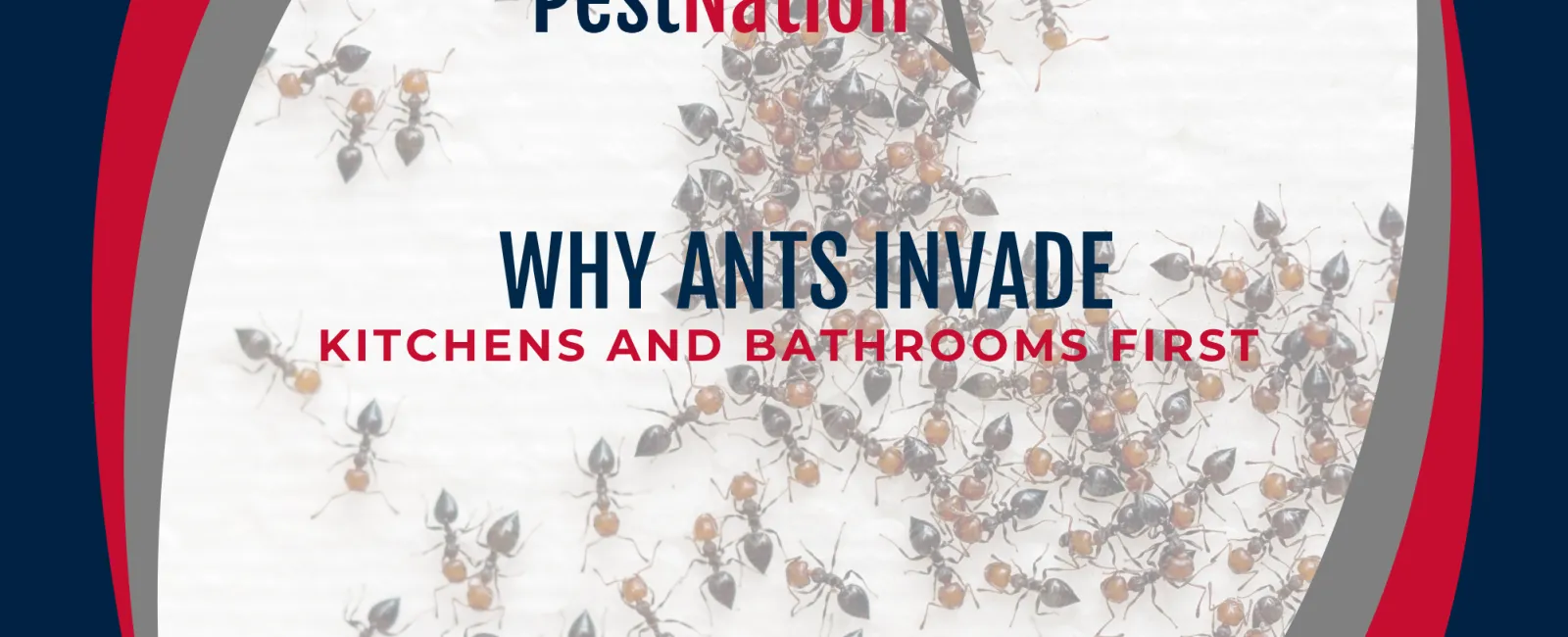
Ant infestations often seem to appear out of nowhere, but there is a pattern to where they show up first. Homeowners frequently notice ants in kitchen areas or ants in bathroom spaces before seeing them anywhere else in the home. Across the Southeastern United States—including cities like Atlanta and Charlotte, as well as in Orlando and coastal regions that rely on Charleston pest control services—these two areas are consistently the most common starting points for infestations. This is not coincidence; it is driven by environmental conditions and ant behavior.
Ants are highly organized and resource-driven insects. They do not randomly explore homes—they follow scent trails, search for food and water, and prioritize environments that support colony survival. Kitchens and bathrooms offer exactly what ants need: consistent moisture, accessible food sources, and relatively stable conditions. Understanding why ants target these areas first is essential for effective Ant Control in the Southeast. Through detailed PestNation pest inspections and comprehensive Atlanta, Charlotte, Orlando, and Charleston interior and exterior pest treatments, PestNation helps homeowners identify the root causes of infestations and implement strategies to prevent them.
Ant activity is not just about what you see—it reflects deeper patterns of movement, environmental conditions, and colony behavior. By understanding these factors, homeowners can take proactive steps to reduce risk and maintain a pest-free environment.
Why Kitchens Attract Ants First
Kitchens are one of the most attractive environments for ants because they provide easy access to food.
Food Availability
Ants are constantly searching for food to bring back to their colony. Kitchens naturally contain:
- Crumbs and food residue
- Sugary substances
- Grease and oils
- Pet food
Even small amounts of food can sustain a colony. Ants in kitchen areas are often the result of a single scout ant discovering a food source and leaving a pheromone trail for others to follow.
In Atlanta and Charlotte homes, busy kitchens often provide multiple food sources throughout the day. Orlando and Charleston pest control environments frequently see similar patterns, especially in homes with open food storage or frequent cooking activity.
Scent Trails and Rapid Recruitment
Once a food source is found, ants quickly communicate with the rest of the colony. This leads to:
- Rapid increases in visible ants
- Established trails along countertops and floors
- Continuous activity as long as food is available
This is why an infestation can seem to appear suddenly.
Why Bathrooms Are a Close Second
While kitchens provide food, bathrooms provide something equally important: water.
Moisture and Hydration
Ants require moisture to survive, and bathrooms are one of the most reliable sources of water in a home.
Common attractants include:
- Leaking pipes
- Condensation
- Damp surfaces
- Standing water
Ants in bathroom areas are often drawn to sinks, tubs, and plumbing fixtures where moisture is present.
In Charleston and Orlando pest control environments, high humidity levels amplify this effect, making bathrooms especially attractive. In Atlanta and Charlotte, plumbing issues are often the primary driver.
Limited Disturbance
Bathrooms are typically used intermittently, which can create periods of low activity. This makes them ideal for ants seeking undisturbed access to water.
The Role of Nocturnal Activity
Ants are often more active at night, especially when searching for resources. This nocturnal activity allows them to explore environments with less disturbance.
At night:
- Human activity decreases
- Lights are reduced
- Food and moisture remain accessible
This behavior makes kitchens and bathrooms even more attractive during nighttime hours.
In Atlanta, Charlotte, Orlando, and Charleston pest control scenarios, homeowners often notice increased ant activity in these areas after dark. This is because ants take advantage of quiet conditions to expand their search.
Understanding this nocturnal behavior helps explain why infestations can grow quickly without being noticed.
How Ants Locate Kitchens and Bathrooms
Ants rely on chemical communication and environmental cues to locate resources.
Pheromone Trails
Scout ants search for food and water. Once they find a source, they leave behind pheromone trails that guide other ants to the location.
Environmental Signals
Ants are attracted to:
- Food odors
- Moisture
- Temperature stability
Kitchens and bathrooms consistently provide these signals, making them prime targets.
PestNation pest inspections often identify these pathways, helping homeowners understand how ants are entering and moving through the home.
Structural Entry Points Near Key Areas
Ants typically enter homes through small openings that lead directly to kitchens and bathrooms.
Common entry points include:
- Cracks in foundations
- Gaps around windows and doors
- Openings around plumbing lines
- Utility penetrations
Because plumbing systems often connect to both kitchens and bathrooms, these areas are especially vulnerable.
In Atlanta, Charlotte, Orlando, and Charleston interior and exterior pest treatments, sealing these entry points is a critical step in preventing infestations.
Hidden Colony Behavior
While ants are visible in kitchens and bathrooms, the colony itself is often located elsewhere.
Common nesting locations include:
- Soil near the foundation
- Inside wall voids
- Under flooring
- In crawl spaces
Ants travel between the nest and resource areas, which is why activity is concentrated in kitchens and bathrooms.
This hidden behavior can make infestations difficult to control without professional intervention.
Seasonal and Environmental Influences
Ant activity is influenced by seasonal conditions, which can increase the likelihood of infestations.
Warm Weather
Higher temperatures increase ant activity and reproduction rates.
Rainfall
Heavy rain can flood outdoor nests, forcing ants indoors in search of dry conditions.
Humidity
Moist environments support ant survival and movement.
In Charleston and Orlando pest control environments, humidity plays a significant role. In Atlanta and Charlotte, seasonal storms often trigger sudden increases in ant activity.
These factors contribute to the consistent pattern of ants appearing first in kitchens and bathrooms.
Why DIY Solutions Often Fall Short
Many homeowners attempt to manage ants using over-the-counter products, but these methods often fail to address the root cause.
Common limitations include:
- Targeting only visible ants
- Failing to eliminate the colony
- Not addressing entry points
- Ignoring environmental attractants
Because ants are driven by food and moisture, simply removing them from kitchens and bathrooms does not stop the infestation.
Professional solutions are needed to address the full scope of the problem.
The Role of Professional Pest Inspections
Effective ant control begins with a thorough inspection. PestNation pest inspections evaluate:
- Entry points
- Colony locations
- Food and moisture sources
- Environmental conditions
In Atlanta, Charlotte, Orlando, and Charleston pest control scenarios, inspections often reveal multiple contributing factors that drive infestations.
This allows pest professionals to develop targeted strategies for Ant Control in the Southeast.
Integrated Ant Control Strategies
Professional pest control uses a comprehensive approach to eliminate ants and prevent recurrence.
Atlanta, Charlotte, Orlando, and Charleston interior and exterior pest treatments may include:
- Targeted baiting systems
- Exterior perimeter treatments
- Sealing entry points
- Moisture management recommendations
- Ongoing monitoring
Baiting systems are particularly effective because they allow ants to carry treatment back to the colony, targeting the source of the infestation.
Preventing Ants in Kitchens and Bathrooms
Homeowners can take proactive steps to reduce the risk of infestations.
In Kitchens
- Clean surfaces regularly
- Store food in sealed containers
- Remove crumbs and spills
- Keep trash sealed
In Bathrooms
- Fix leaks promptly
- Reduce condensation
- Keep surfaces dry
- Improve ventilation
General Prevention
- Seal cracks and gaps
- Maintain proper drainage
- Schedule routine pest inspections
These measures help reduce the conditions that attract ants.
Ant infestations often begin in kitchens and bathrooms because these areas provide the essential resources ants need to survive—food and water. From crumbs on countertops to moisture around sinks and pipes, these environments create ideal conditions for ant activity. Combined with nocturnal behavior and efficient communication systems, ants can quickly establish trails and expand their presence.
For homeowners in Atlanta and Charlotte, as well as in Orlando and coastal areas served by Charleston pest control professionals, understanding why ants target these areas first is essential for effective pest management. Through detailed PestNation pest inspections and comprehensive Atlanta, Charlotte, Orlando, and Charleston interior and exterior pest treatments, PestNation helps homeowners implement effective Ant Control in the Southeast. By addressing entry points, reducing attractants, and targeting colonies at their source, homeowners can prevent infestations, maintain a clean environment, and achieve long-term pest control success.