
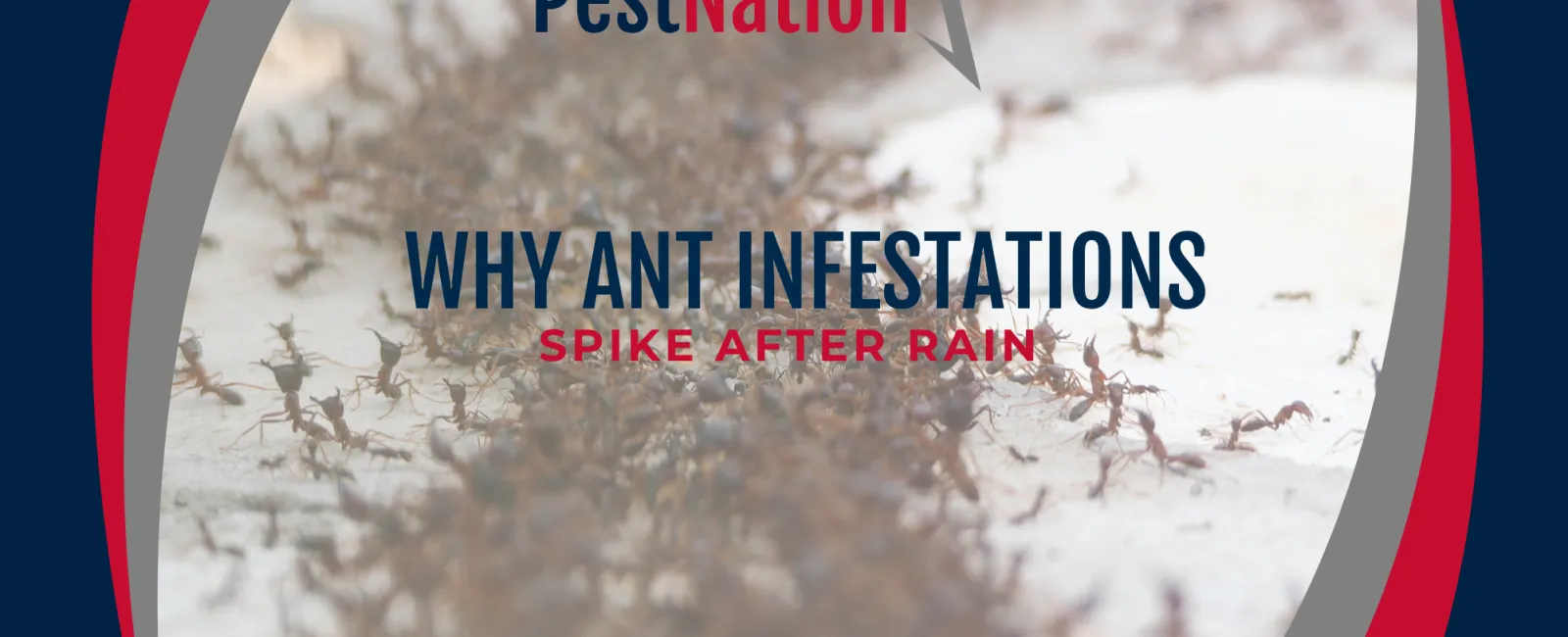
Heavy rainfall often brings relief from heat, but it can also trigger a sudden increase in pest activity—especially ants. Homeowners across the Southeastern United States frequently notice an uptick in ants indoors immediately after storms. In cities like Atlanta and Charlotte, as well as coastal regions that rely on Charleston and Orlando pest control services, this pattern is not coincidental. An ant infestation after rain is a common and predictable response to environmental disruption, and understanding why it happens is key to preventing it.
Rainfall directly impacts ant colonies by flooding nests, displacing populations, and forcing ants to relocate. As a result, ants begin searching for dry, stable environments—often leading them into homes. This surge in seasonal ant activity can seem sudden, but it is driven by survival instincts and environmental pressures. Through detailed PestNation pest inspections and comprehensive Atlanta, Charlotte, Orlando, and Charleston interior and exterior pest treatments, PestNation helps homeowners understand these patterns and implement effective Ant Control in the Southeast.
Ant infestations after storms are not just temporary inconveniences. If conditions remain favorable, ants can establish new colonies indoors or continue returning in search of resources. By understanding the connection between rainfall and ant behavior, homeowners can take proactive steps to reduce risk and maintain long-term pest control.
How Rainfall Disrupts Ant Colonies
Ant colonies are typically built in soil, mulch, or other ground-level environments. While these locations provide shelter under normal conditions, they become vulnerable during heavy rainfall.
When rain saturates the ground:
- Nests can become flooded
- Tunnels collapse
- Food sources are washed away
- Colony structure is disrupted
As a result, ants are forced to evacuate and relocate. Worker ants quickly begin searching for dry, protected spaces where the colony can survive. Homes provide ideal conditions, offering shelter, warmth, and access to food.
In Atlanta and Charlotte, suburban landscapes with dense soil and mulch beds often experience significant nest disruption during storms. Charleston and Orlando pest control environments face even greater challenges due to sandy soil and high water tables, which increase the likelihood of flooding.
This displacement is one of the primary reasons for an ant infestation after rain.
Why Ants Move Indoors After Rain
Once displaced, ants seek out environments that provide stability and resources. Homes offer everything ants need to survive:
- Dry shelter
- Consistent temperatures
- Access to food and water
- Protection from predators
Ants enter through small openings such as cracks, gaps, and structural vulnerabilities. Once inside, they establish trails to food sources and quickly recruit other ants to follow.
In Atlanta, Charlotte, Orlando, and Charleston pest control scenarios, it is common for homeowners to notice ants in kitchens, bathrooms, and along baseboards shortly after rainfall.
This indoor migration is not random—it is a direct response to environmental stress caused by flooding and habitat disruption.
Seasonal Ant Activity and Weather Patterns
Seasonal ant activity is closely tied to weather conditions. Rainfall, temperature, and humidity all influence ant behavior and movement.
During warmer months:
- Ant populations are at their peak
- Colonies are actively foraging and expanding
- Reproductive cycles are accelerated
When heavy rain occurs during this time, the impact is amplified. Large, active colonies are suddenly disrupted, leading to increased movement and relocation.
In Charleston and Orlando pest control environments, frequent rain combined with high humidity creates ongoing cycles of displacement and migration. In Atlanta and Charlotte, summer storms often trigger repeated spikes in ant activity.
Understanding these seasonal patterns is essential for effective ant control after heavy rain.
Common Entry Points for Ants
Ants are capable of entering homes through extremely small openings. After rainfall, these entry points become critical pathways for displaced colonies.
Common entry points include:
- Cracks in foundations
- Gaps around doors and windows
- Openings around plumbing and electrical lines
- Crawl space vents
- Roofline gaps
PestNation pest inspections frequently identify these vulnerabilities, many of which go unnoticed by homeowners.
In Atlanta, Charlotte, Orlando, and Charleston interior and exterior pest treatments, sealing these entry points is a key step in preventing infestations.
Food and Moisture Attractants Indoors
Once inside, ants are drawn to areas where food and moisture are available. Even small amounts of residue can sustain a colony.
Common attractants include:
- Crumbs and spills
- Sugary substances
- Pet food
- Grease buildup
- Leaking pipes or condensation
In Charleston and Orlando pest control environments, moisture is a particularly strong attractant due to the region's humidity. In Atlanta and Charlotte, kitchens and pantries are the most common areas for indoor ant activity.
If these attractants are not addressed, ants may continue to return even after the initial surge caused by rainfall.
Why Ant Infestations Can Persist After Rain
While some ant activity may decrease as conditions stabilize, infestations can persist if ants find suitable conditions inside the home.
This can happen when:
- Indoor food sources are readily available
- Entry points remain unsealed
- Moisture issues are not addressed
- Outdoor colonies continue to send workers indoors
In these cases, what begins as a temporary ant infestation after rain can develop into a long-term problem.
Professional pest management is often necessary to eliminate the colony and prevent recurrence.
The Role of Professional Pest Inspections
Effective ant control after heavy rain begins with a thorough inspection. PestNation pest inspections evaluate both interior and exterior conditions to identify:
- Active ant trails and nesting areas
- Entry points into the home
- Environmental attractants
- Moisture issues
- Colony locations
In Atlanta, Charlotte, Orlando, and Charleston pest control scenarios, inspections often reveal multiple contributing factors that drive infestations.
This information allows pest professionals to develop targeted treatment plans that address both immediate and long-term concerns.
Integrated Ant Control Strategies
Managing an ant infestation after rain requires a comprehensive approach that addresses both the ants and their environment.
Atlanta, Charlotte, Orlando, and Charleston interior and exterior pest treatments often include:
- Targeted baiting systems to eliminate colonies
- Exterior perimeter treatments
- Sealing entry points
- Moisture management recommendations
- Ongoing monitoring and maintenance
Baiting systems are particularly effective because they allow worker ants to carry treatment back to the colony, targeting the queen and disrupting reproduction.
By combining these strategies, pest professionals can provide more effective and lasting Ant Control in the Southeast.
Preventing Ant Infestations After Rain
Homeowners can take proactive steps to reduce the risk of ant infestations following heavy rainfall.
Preventative measures include:
- Sealing cracks and gaps around the home
- Keeping food stored in airtight containers
- Cleaning surfaces regularly
- Fixing leaks and reducing moisture
- Maintaining proper drainage around the foundation
- Trimming vegetation away from the home
In regions like Charleston and Orlando, where rain and humidity are frequent, ongoing maintenance is especially important. In Atlanta and Charlotte, seasonal storms make preparation key to preventing sudden infestations.
By addressing these factors, homeowners can reduce the likelihood of ants entering the home after rain.
Heavy rainfall is a natural trigger for increased ant activity, particularly in the Southeastern United States where environmental conditions support large, active colonies. An ant infestation after rain is often the result of displaced colonies seeking shelter, food, and stability indoors. While this surge in seasonal ant activity can seem sudden, it is a predictable response to flooding and habitat disruption.
For homeowners in Atlanta and Charlotte, as well as coastal areas served by Charleston and Orlando pest control professionals, understanding these patterns is essential for effective pest management. Through detailed PestNation pest inspections and comprehensive Atlanta, Charlotte, Orlando, and Charleston interior and exterior pest treatments, PestNation helps homeowners implement targeted solutions for Ant Control in the Southeast. By focusing on prevention, addressing environmental factors, and responding quickly after storms, homeowners can reduce infestations, protect their homes, and maintain a pest-free environment year-round.