
Stinging insects are a common concern for homeowners throughout the Southeastern United States, especially during the warmer months when nests rapidly expand in size and activity. In cities like Atlanta and Charlotte, as well as in Orlando and coastal areas that rely on Charleston pest control services, homeowners frequently discover nests attached to rooflines, trees, porches, sheds, and even inside wall voids. One of the most common questions people ask is whether they are dealing with a wasp nest or a hornet nest—and understanding the difference is important for both safety and proper pest management.
Although hornets are technically a type of wasp, their nesting behavior, aggression levels, colony sizes, and preferred nesting locations often differ significantly from other wasp species. These differences affect how infestations should be approached and why professional wasp nest removal is often recommended. Through detailed PestNation pest inspections and comprehensive Atlanta, Charlotte, Orlando, and Charleston interior and exterior pest treatments, PestNation helps homeowners identify stinging insect activity early and implement safe, effective control strategies.
Because nests often begin small and hidden, many infestations go unnoticed until populations become large and defensive. Understanding the differences between wasp nests and hornet nests can help homeowners recognize risks early, reduce the likelihood of dangerous encounters, and maintain safer outdoor environments.
Understanding Wasps and Hornets
Before comparing nests, it is important to understand the insects themselves.
Wasps
Wasps are a broad category of stinging insects that include:
- Paper wasps
- Yellowjackets
- Mud daubers
- Hornets
Most wasps are predators that feed on insects and sugary substances. Many species are highly territorial and will aggressively defend their nests.
Hornets
Hornets are a specific subgroup of wasps known for:
- Larger body size
- Larger colonies
- More aggressive nest defense behavior
In the Southeast, the bald-faced hornet is one of the most commonly encountered species around homes and outdoor structures.
In Atlanta, Charlotte, Orlando, and Charleston pest control environments, both wasps and hornets are extremely active during spring, summer, and early fall.
What a Typical Wasp Nest Looks Like
Different wasp species build different styles of nests, but paper wasps are among the most common residential nesting insects in the Southeast.
Paper Wasp Nests
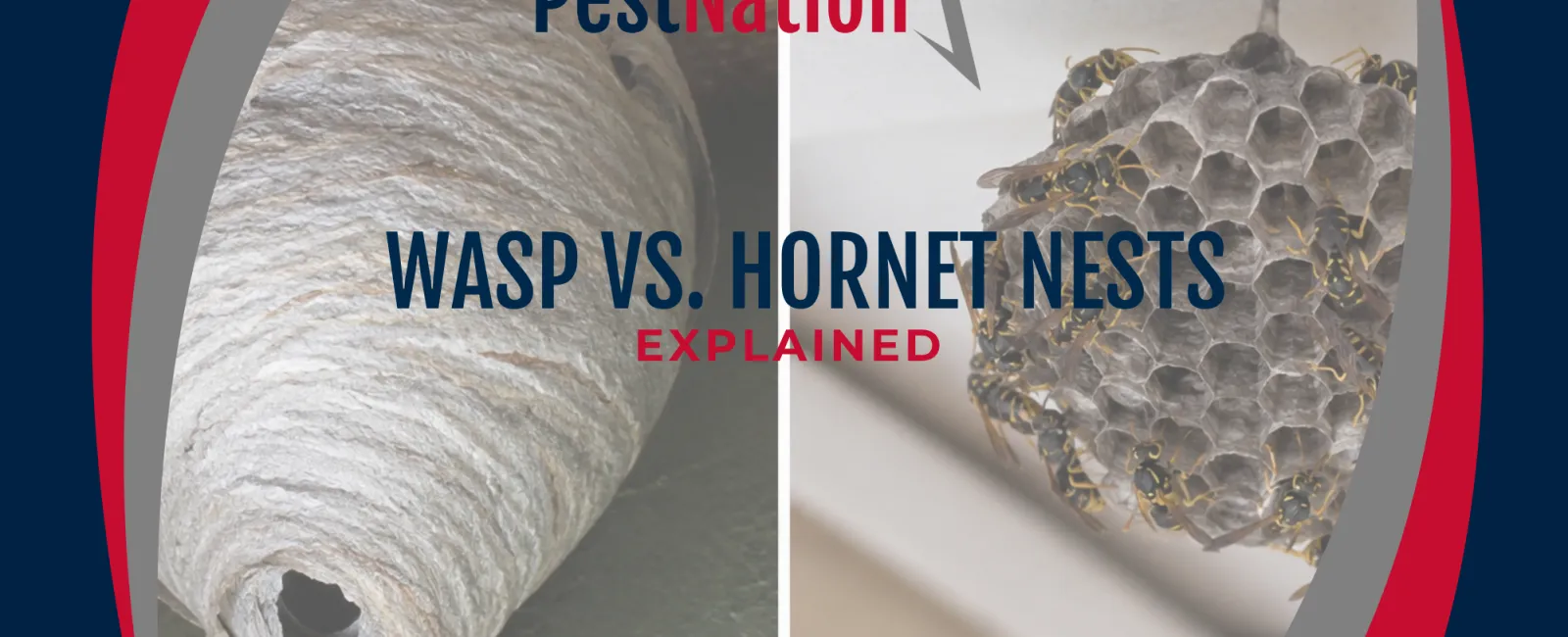
Paper wasp nests are usually:
- Open and umbrella-shaped
- Small to medium in size
- Made from chewed wood fibers
These nests often have visible honeycomb-style cells and no outer covering.
Common nesting locations include:
- Roof eaves
- Porch ceilings
- Deck railings
- Window frames
- Outdoor furniture
In Atlanta and Charlotte homes, paper wasps frequently build nests around entryways and covered patios. Orlando and Charleston pest control professionals often find them attached to pool enclosures and exterior structures.
Because these nests are exposed and relatively small early on, they may go unnoticed until wasp activity increases.
What a Hornet Nest Looks Like
A hornet nest is typically much larger and more enclosed than a standard paper wasp nest.
Bald-Faced Hornet Nests
Hornet nests are usually:
- Football-shaped or rounded
- Covered with a papery outer shell
- Constructed from chewed wood material
Unlike paper wasp nests, hornet nests are enclosed, with only a few small entry openings visible.
Common nesting locations include:
- Trees and shrubs
- Rooflines
- Attics
- Utility poles
- Sheds and garages
In Charleston and Orlando pest control environments, hornet nests often develop in dense landscaping or wooded areas due to humidity and vegetation cover.
Because hornet nests can grow very large, they may contain hundreds of insects by late summer.
Key Differences Between Wasp and Hornet Nests
Although both nests are made from paper-like material, several important differences help distinguish them.
Nest Structure
Paper Wasp Nest
- Open comb design
- No outer shell
- Smaller colonies
Hornet Nest
- Fully enclosed shell
- Larger internal structure
- Larger colonies
Nest Size
Hornet nests are typically much larger than paper wasp nests and continue expanding throughout the season.
Nest Location
Paper wasps often prefer:
- Covered structures
- Porch ceilings
- Eaves
Hornets often prefer:
- Trees
- Higher elevations
- More secluded areas
PestNation pest inspections frequently help homeowners correctly identify the type of nest and associated risks.
Aggression and Defensive Behavior
One of the biggest differences between wasps and hornets is their level of aggression.
Paper Wasps
Paper wasps are generally less aggressive unless their nest is disturbed directly.
However, they will sting if they feel threatened.
Hornets
Hornets are significantly more defensive and territorial.
They may:
- React aggressively to nearby movement
- Defend a larger perimeter around the nest
- Attack in groups if threatened
In Atlanta, Charlotte, Orlando, and Charleston pest control scenarios, hornet infestations are often considered more dangerous because of their aggressive colony defense behavior.
This is one reason professional wasp nest removal is strongly recommended.
Why Nests Grow Rapidly in the Southeast
The Southeast provides ideal conditions for stinging insect activity due to:
- Long warm seasons
- High humidity
- Abundant insect populations
- Mild winters
These environmental conditions allow colonies to:
- Begin earlier in spring
- Grow larger during summer
- Remain active longer into fall
In Orlando and Charleston pest control environments, extended warm seasons often allow nests to become exceptionally large.
Atlanta and Charlotte homes also experience high stinging insect activity due to seasonal heat and urban landscaping conditions.
Structural Vulnerabilities Around Homes
Homes often provide ideal nesting opportunities for wasps and hornets.
Common structural vulnerabilities include:
- Roofline gaps
- Attic vents
- Loose siding
- Covered porches
- Deck overhangs
- Outdoor sheds and garages
These protected spaces provide shelter from weather and predators.
PestNation pest inspections often identify these nesting opportunities before infestations become severe.
Atlanta, Charlotte, Orlando, and Charleston interior and exterior pest treatments frequently include preventative recommendations to reduce nesting risks around structures.
Why Infestations Often Go Unnoticed
Stinging insect nests usually begin with a single queen during spring.
At first:
- Colonies are small
- Activity is limited
- Nests are difficult to spot
As the colony expands:
- Worker populations increase rapidly
- Defensive behavior intensifies
- Nest visibility becomes more obvious
Because nests are often hidden in elevated or secluded areas, homeowners may not notice them until late summer when populations peak.
This delayed detection is especially common in wooded or landscaped properties throughout the Southeast.
The Dangers of DIY Nest Removal
Attempting to remove a wasp nest or hornet nest without proper equipment can be extremely dangerous.
Risks include:
- Multiple stings
- Aggressive swarming behavior
- Falls or ladder accidents
- Incomplete nest removal
Hornets in particular can become highly aggressive when disturbed.
Professional wasp nest removal uses specialized equipment and treatment methods designed to minimize these risks safely.
The Importance of Professional Pest Inspections
Professional inspections are critical for identifying:
- Nest locations
- Species type
- Colony size
- Structural vulnerabilities
- Risk levels around the property
PestNation pest inspections help homeowners understand the severity of the infestation and determine the safest treatment approach.
In Atlanta, Charlotte, Orlando, and Charleston pest control environments, inspections often reveal multiple active nesting areas around the property.
Preventing Future Nesting Activity
Homeowners can reduce the risk of future infestations by addressing environmental and structural conditions.
Important prevention strategies include:
- Sealing roofline and siding gaps
- Maintaining landscaping and trimming shrubs
- Inspecting outdoor structures regularly
- Reducing food sources around patios and trash areas
- Scheduling routine pest inspections
These proactive measures help reduce nesting opportunities and improve long-term pest prevention.
Wasp nests and hornet nests may appear similar at first glance, but important differences in structure, size, behavior, and aggression levels make proper identification essential. From exposed paper wasp nests under porch ceilings to large enclosed hornet nests hidden in trees or rooflines, these infestations can quickly become dangerous when left untreated. The Southeast's warm climate and long active seasons only increase the likelihood of rapid colony growth and recurring stinging insect activity.
For homeowners in Atlanta and Charlotte, as well as in Orlando and coastal areas served by Charleston pest control professionals, understanding these differences is an important part of maintaining a safe home environment. Through detailed PestNation pest inspections and comprehensive Atlanta, Charlotte, Orlando, and Charleston interior and exterior pest treatments, PestNation helps homeowners identify active infestations and implement safe, effective wasp nest removal strategies. By addressing structural vulnerabilities, monitoring seasonal activity, and applying preventative pest management practices, homeowners can reduce stinging insect risks and maintain safer outdoor living spaces year-round.