
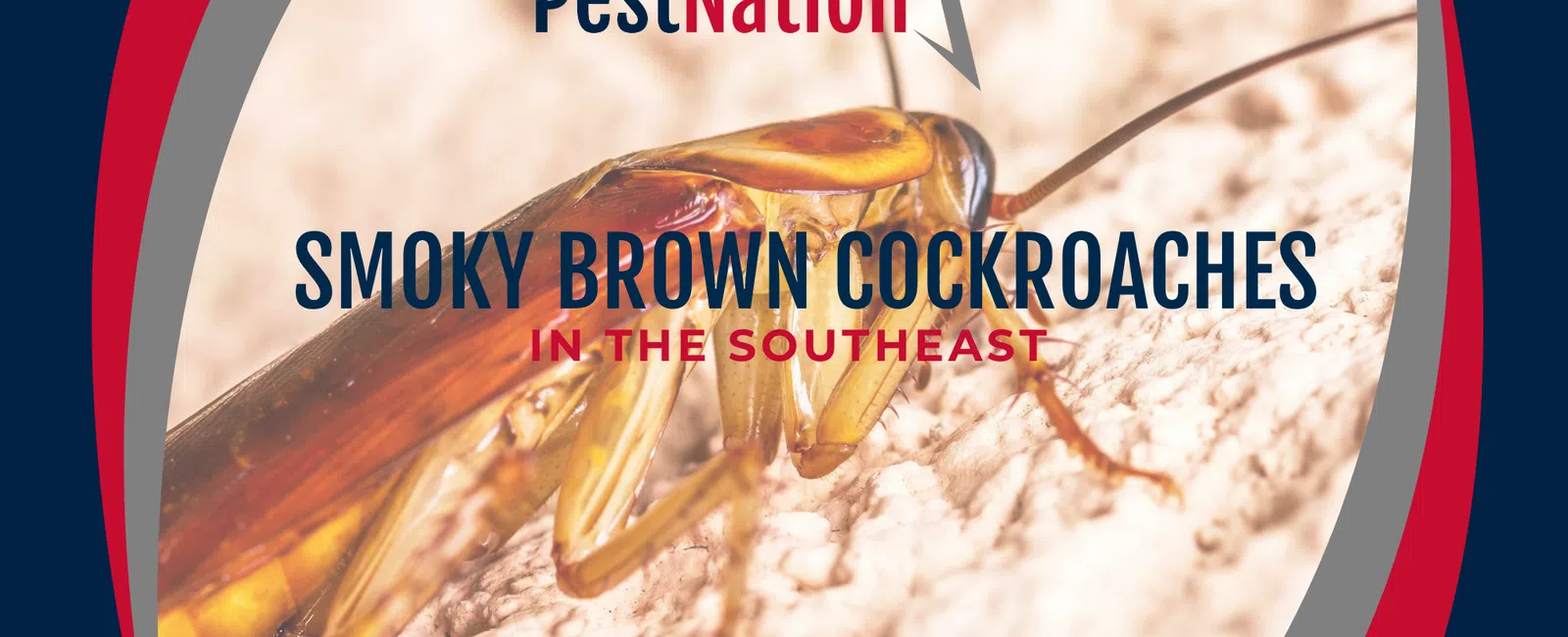
Smoky brown cockroaches are a familiar pest concern in many warm, humid parts of the Southeast. Unlike some cockroach species that are strongly associated with indoor kitchens or food-preparation areas, smoky brown cockroaches are commonly linked with outdoor habitats where moisture, vegetation, decaying organic material, and protected hiding places are available. They may live around trees, mulch, leaf litter, gutters, wood piles, rooflines, and other shaded locations before occasionally moving closer to or inside homes.
For homeowners in Atlanta, Charlotte, Orlando, Charleston, and other Southern markets, understanding the smoky brown cockroach is important because regional heat, humidity, rainfall, vegetation, and relatively mild seasonal conditions can support activity for long portions of the year. Effective roach control therefore often requires attention to both exterior conditions and interior entry points. Killing individual cockroaches found indoors may reduce immediate sightings, but recurring activity can continue if outdoor harborages, moisture sources, or structural access points remain unchanged.
What Is a Smoky Brown Cockroach?
The smoky brown cockroach is a large cockroach species commonly associated with warm climates.
Adults are generally:
- About 1 to 1.5 inches long
- Uniformly dark brown to mahogany in color
- Smooth and glossy in appearance
- Equipped with fully developed wings extending over the abdomen
Their relatively consistent dark coloration is one useful characteristic.
Unlike American cockroaches, which often have a lighter yellowish marking around the area behind the head, smoky brown cockroaches typically appear more uniformly dark.
However, identification should not be based on color alone.
Information from University of Florida IFAS - Cockroaches and Their Management discusses the identification, biology, habitat, and management of cockroach species encountered around homes, helping homeowners understand why correct species identification and attention to environmental conditions are important parts of effective roach control.
Several large brown cockroach species can appear similar to homeowners, so professional identification may be useful when recurring activity develops.
Smoky Brown Cockroaches Are Different From German Cockroaches
German cockroaches are much smaller than smoky brown cockroaches and are strongly associated with indoor environments.
German cockroaches are commonly found around:
- Kitchens
- Food storage areas
- Bathrooms
- Appliances
- Cabinets
They typically reproduce indoors and can establish significant infestations without relying on outdoor harborages.
Smoky brown cockroaches, by contrast, are more strongly associated with outdoor environments and may enter structures from surrounding landscaping, trees, roof areas, or exterior harborage.
This distinction matters because Pest Control strategies should be based on the species involved.
Smoky Brown Cockroaches Are Also Different From American Cockroaches
American cockroaches are another large species frequently encountered in Southern buildings.
They may be associated with:
- Sewers
- Drainage systems
- Basements
- Utility spaces
- Commercial structures
American cockroaches tend to have a distinctive lighter marking around the pronotum behind the head.
Smoky brown cockroaches usually lack this contrasting pattern and appear more uniformly dark brown.
Because the two species can be similar in size, identification should consider several characteristics rather than size alone.
Oriental Cockroaches Have Different Habitat Preferences
Oriental cockroaches are generally dark in color and strongly associated with cool, damp environments.
They may be found around:
- Basements
- Drains
- Crawlspaces
- Moist debris
- Ground-level areas
Smoky brown cockroaches are more strongly associated with warm, humid outdoor environments and may be found higher around trees, roofs, eaves, or attics.
Understanding these habitat preferences can help inspectors determine where to look for activity.
Why Species Identification Matters
Different cockroaches occupy different environments.
Species identification can influence:
- Where inspections are focused
- Which harborages are considered
- Whether outdoor populations are likely involved
- Which moisture sources are relevant
- Which exclusion measures deserve attention
A large cockroach found in a garage does not automatically mean a smoky brown cockroach infestation is present.
Likewise, finding one cockroach indoors does not necessarily indicate an established indoor population.
Guidance from UGA Extension - Insect and Arthropod Pests of Southeastern Neighborhoods provides information about cockroaches and pest-conducive conditions common around Southeastern properties, offering useful context for understanding how moisture, vegetation, structural openings, and exterior harborages can influence cockroach activity around homes.
Accurate identification creates a more reliable foundation for prevention and treatment.
Why Smoky Brown Cockroaches Thrive in the Southeast
The Southeast provides many conditions that favor smoky brown cockroach activity.
These include:
- Warm temperatures
- High humidity
- Frequent rainfall
- Mature vegetation
- Long growing seasons
- Organic debris
- Mild winters in some markets
Smoky brown cockroaches are particularly dependent on moist environments.
They do not tolerate drying conditions as well as some other cockroach species, which helps explain why they are commonly associated with humid outdoor habitats.
Atlanta Conditions Can Support Outdoor Activity
Atlanta's warm summers, seasonal humidity, mature tree canopy, and frequent thunderstorms can create favorable conditions around residential properties.
Homes with:
- Dense landscaping
- Shaded mulch
- Leaf accumulation
- Large trees
- Damp gutters
may offer suitable exterior shelter.
For homeowners seeking Atlanta Pest Control, recurring large cockroach sightings may justify evaluating rooflines, vegetation, gutters, and exterior entry points rather than focusing solely on indoor kitchens.
Charlotte Homes Can Face Similar Pest Pressure
Charlotte experiences warm summers, periods of significant rainfall, humidity, and substantial suburban vegetation.
Tree-lined neighborhoods can provide abundant outdoor harborage around:
- Bark
- Tree cavities
- Leaf litter
- Wood debris
- Shaded landscaping
Homeowners seeking Charlotte Pest Control may notice increased cockroach activity during warm, wet periods or after storms disturb outdoor shelter.
Orlando Provides Long Periods of Favorable Conditions
Orlando's climate creates particularly favorable conditions for moisture-dependent pests.
Warm temperatures, humidity, frequent rainfall, irrigation, and year-round landscaping can support outdoor cockroach populations for extended periods.
Properties with lush vegetation, palm debris, mulch, and standing moisture may experience recurring exterior activity.
For homeowners seeking Orlando Pest Control, managing moisture and vegetation can be especially important components of Roach Control.
Charleston's Coastal Climate Can Support Persistent Activity
Charleston's heat, humidity, rainfall, mature vegetation, and relatively mild winters can also support long pest-active seasons.
Homes surrounded by trees, historic vegetation, shaded yards, and heavy organic debris may provide numerous outdoor harborages.
For homeowners seeking Charleston Pest Control, prevention often involves both exterior habitat management and inspection of structural access points.
Smoky Brown Cockroaches Commonly Live Outdoors
Smoky brown cockroaches are strongly associated with exterior environments.
Potential harborages include:
- Tree holes
- Loose bark
- Mulch
- Leaf litter
- Wood piles
- Landscaping debris
- Dense shrubs
- Logs
- Compost areas
These locations provide shelter from sunlight and help maintain humidity.
Because the species is vulnerable to drying, shaded and damp environments are especially important.
Tree Holes Can Provide Excellent Harborage
Tree cavities naturally collect:
- Moisture
- Decaying organic material
- Insects
- Plant debris
These features can provide highly protected environments for cockroaches.
Large trees near homes may therefore support activity even when the home itself is well maintained.
This is one reason Residential Pest Control should sometimes include evaluation of the surrounding landscape rather than focusing exclusively on the structure.
Loose Bark and Wood Debris Can Provide Shelter
Cockroaches frequently seek narrow spaces where their bodies remain protected.
Loose bark, stacked firewood, fallen limbs, and wood debris can provide these tight harborages.
Firewood stored directly against a house can create a convenient transition between outdoor shelter and structural entry points.
Homeowners should consider storing firewood away from exterior walls and reducing unnecessary wood debris.
Mulch Can Hold Moisture
Mulch provides many landscaping benefits, but thick or constantly wet mulch can create favorable conditions for moisture-associated pests.
Smoky brown cockroaches may shelter within:
- Deep mulch
- Pine straw
- Leaf litter
- Moist groundcover
Mulch should be maintained appropriately rather than piled excessively against siding or foundations.
The goal is not to remove landscaping entirely but to reduce persistent damp shelter immediately beside the home.
Gutters Can Become Important Harborage Areas
Smoky brown cockroaches are unusual among many common household cockroaches because they may be found in elevated exterior areas.
Gutters can provide:
- Standing moisture
- Leaves
- Organic debris
- Shade
- Protected spaces
Clogged gutters may therefore support pest-conducive conditions.
Regular cleaning can reduce both moisture and organic material.
Rooflines and Eaves May Also Be Associated With Activity
Homeowners sometimes focus pest inspections around foundations while overlooking upper portions of the structure.
Smoky brown cockroaches may occur around:
- Rooflines
- Eaves
- Soffits
- Fascia
- Attic vents
- Gutters
These areas are particularly relevant when nearby trees or vines provide easy access.
Persistent sightings on upper floors or around attic spaces may indicate that inspection should include elevated exterior components.
Soffit and Fascia Damage Can Create Entry Points
Moisture-damaged or deteriorated roof components can produce gaps.
Potential concerns include:
- Loose soffit panels
- Rotting fascia
- Damaged vent covers
- Missing screens
- Open joints
Cockroaches using gutters or roof areas may exploit these openings to enter attic spaces.
Repairing damaged components supports both building maintenance and roach control.
Tree Branches Can Create Direct Pathways
Branches touching or overhanging a roof can provide a physical bridge toward the structure.
Cockroaches may move along:
- Tree limbs
- Vines
- Shrubs
- Utility lines
toward eaves, siding, rooflines, or windows.
Trimming vegetation appropriately away from the home can reduce these routes.
Large branches should be handled by qualified tree professionals where necessary.
Vines and Shrubs Can Increase Exterior Harborage
Dense vegetation touching siding can create shaded, humid conditions.
These areas may hold:
- Moisture
- Leaf debris
- Insects
- Organic material
They also make inspection more difficult.
Maintaining separation between vegetation and the structure improves visibility while reducing direct pest pathways.
Heavy Rain Can Change Cockroach Activity
Southern thunderstorms and prolonged rainfall can change where smoky brown cockroaches shelter.
Rain can:
- Saturate mulch
- Flood low harborages
- Increase humidity
- Fill gutters
- Move organic debris
Cockroaches may become more visible as they relocate between protected areas.
A sudden increase in sightings after rain does not necessarily mean the storm created a new infestation.
An existing outdoor population may simply have become more active or displaced.
Moisture Is One of the Most Important Factors
Smoky brown cockroaches depend heavily on moisture.
Potential moisture sources around homes include:
- Leaking outdoor faucets
- Irrigation
- Standing water
- Clogged gutters
- Poor drainage
- Condensation
- Damp mulch
- Water collecting in containers
Reducing unnecessary moisture can make a property less favorable.
Recommendations from the U.S. EPA - Smart Pest Control to Protect Your Health emphasize reducing pest access to food, water, shelter, and entry points, providing useful context for prevention strategies involving sanitation, moisture management, exclusion, and exterior property maintenance.
This integrated approach is especially relevant to smoky brown cockroaches because outdoor habitat often plays a major role in recurring activity.
Poor Drainage Can Keep Landscaping Too Wet
Water that remains near the foundation or in landscape beds can create persistent humidity.
Potential causes include:
- Improper grading
- Clogged drains
- Downspouts discharging too close to the home
- Overwatering
- Irrigation leaks
Homeowners should watch how water moves after rainfall.
Repeated saturation near exterior walls may contribute to broader pest pressure.
Leaking Outdoor Faucets Can Create Small Moisture Hotspots
A dripping hose bib may seem insignificant, but it can keep one area of soil or mulch constantly damp.
Cockroaches and other pests may use these localized wet areas as dependable shelter.
Repairing leaks can reduce moisture while also helping prevent deterioration around siding or foundations.
Standing Water Should Be Removed
Outdoor containers can hold water after rainfall.
Common examples include:
- Buckets
- Flowerpot saucers
- Toys
- Tarps
- Drainage pans
Although standing water is often discussed in relation to mosquitoes, eliminating unnecessary water also reduces general pest-conducive conditions.
Organic Debris Can Provide Food and Shelter
Smoky brown cockroaches are scavengers.
They may feed on:
- Decaying plant material
- Organic debris
- Pet food
- Garbage
- Compost
- Other available organic matter
Leaf piles, overflowing garbage, compost near structures, and neglected debris can therefore support exterior populations.
Regular cleanup is an important part of prevention.
Pet Food Can Attract Cockroaches
Outdoor pet feeding areas can provide dependable food.
Food bowls left outside overnight may attract:
- Cockroaches
- Ants
- Rodents
- Other pests
Homeowners should remove leftover food when practical and keep feeding areas clean.
This is especially important in shaded, damp areas where cockroaches may already have nearby shelter.
Garbage Should Be Properly Managed
Trash provides food and shelter.
Garbage containers should be:
- Properly closed
- Cleaned as needed
- Positioned appropriately
- Free of spilled food
Waste stored immediately beside the home can increase pest activity near exterior openings.
Smoky Brown Cockroaches Are Nocturnal
These cockroaches are primarily active after dark.
During daylight hours, they typically remain in shaded, protected harborages.
Homeowners may therefore notice activity:
- On patios at night
- Around outdoor walls
- Near trees
- Around garbage containers
- Along rooflines
- Near exterior lights
Nighttime sightings may provide valuable information about where exterior populations are concentrated.
Exterior Lighting Can Influence Sightings
Smoky brown cockroaches can sometimes be observed around exterior lighting.
The light itself may attract some insects that cockroaches scavenge, while illuminated areas simply make nocturnal activity easier to notice.
Lighting near:
- Porches
- Garages
- Doors
- Patios
may therefore coincide with more noticeable nighttime pest activity.
Where practical, homeowners can reduce unnecessary overnight lighting or position fixtures away from frequently used entry doors.
How Smoky Brown Cockroaches Enter Homes
Outdoor populations may enter structures when suitable openings are available.
Potential entry points include:
- Door gaps
- Window gaps
- Damaged screens
- Vents
- Utility penetrations
- Siding openings
- Soffit gaps
- Fascia damage
- Foundation cracks
Because smoky brown cockroaches may occupy roof areas, upper-level openings can be just as important as gaps near the foundation.
Damaged Screens Can Allow Entry
Window, door, attic, and vent screening should be maintained.
Check for:
- Tears
- Loose edges
- Missing sections
- Bent frames
- Open corners
A screen can appear mostly intact while still containing a small opening large enough for a cockroach.
Routine inspection helps support Pest Control exclusion strategies.
Doors and Windows Need Good Seals
Weather stripping and door sweeps deteriorate over time.
Homeowners should look for:
- Visible light beneath doors
- Torn weather stripping
- Failed caulk
- Frame gaps
These repairs can reduce pest access while also improving weatherproofing.
Utility Penetrations Should Be Inspected
HVAC lines, pipes, electrical conduit, and communication cables create openings through the building envelope.
Appropriate gaps should be sealed without interfering with mechanical, electrical, ventilation, or drainage functions.
Exterior penetrations near damp landscaping deserve particular attention.
Attics Can Become Important Interior Areas
Because smoky brown cockroaches may travel along rooflines, attics can sometimes be among the first interior areas they reach.
Potential attic entry routes include:
- Damaged soffits
- Unscreened vents
- Fascia openings
- Roofline gaps
Homeowners should avoid unsafe attic or roof access.
Qualified professionals can evaluate elevated areas when necessary.
One Cockroach Indoors Does Not Always Mean an Indoor Infestation
Because smoky brown cockroaches frequently live outside, an individual cockroach may occasionally enter a home without establishing an indoor breeding population.
The significance of a sighting depends on:
- Frequency
- Location
- Life stages present
- Species identification
- Environmental conditions
Repeated adults or immature cockroaches in the same area may justify closer evaluation.
Professional PestNation Pest Inspections can help distinguish occasional entry from more established activity.
Killing Individual Cockroaches Does Not Address the Outdoor Source
Removing a cockroach found indoors solves the immediate sighting.
It does not necessarily affect:
- Tree harborages
- Damp mulch
- Gutters
- Wood piles
- Exterior debris
- Structural entry points
If outdoor populations remain high and access remains easy, additional cockroaches may continue entering.
Effective Roach Control therefore often involves identifying both the source and the route into the home.
Integrated Pest Management Works Well for Exterior Cockroach Problems
The U.S. EPA - Introduction to Integrated Pest Management describes an approach based on prevention, monitoring, identification, and appropriate control rather than depending on a single method.
For smoky brown cockroaches, this framework may include:
- Species identification
- Moisture reduction
- Gutter maintenance
- Landscaping management
- Sanitation
- Exclusion
- Monitoring
- Professional treatment when needed
This approach addresses the conditions supporting activity as well as the pests themselves.
Practical Prevention Strategies for Homeowners
Homeowners can reduce favorable conditions by:
- Cleaning gutters
- Removing leaf litter
- Trimming vegetation away from the home
- Repairing outdoor leaks
- Improving drainage
- Reducing excessive mulch
- Storing firewood away from siding
- Securing garbage
- Managing pet food
- Repairing screens
- Maintaining door sweeps
- Sealing appropriate utility gaps
- Inspecting soffits and fascia
No single step guarantees that smoky brown cockroaches will never appear, but combining these measures reduces shelter, moisture, food, and access.
When Professional Roach Control May Be Appropriate
Professional evaluation can be useful when:
- Cockroaches appear repeatedly indoors.
- Multiple life stages are observed.
- Roofline or attic activity is suspected.
- The species cannot be identified.
- Exterior populations appear extensive.
- Moisture conditions are persistent.
- Home maintenance alone has not reduced activity.
A professional inspection can help determine whether management should focus primarily on outdoor harborages, interior activity, or both.
How PestNation Addresses Smoky Brown Cockroach Activity
At PestNation, effective Residential Pest Control begins with understanding which cockroach species is present and where activity is occurring.
PestNation Pest Inspections can help evaluate likely harborages, moisture conditions, roofline concerns, landscaping, structural openings, and indoor evidence. When appropriate, Roach Control and other Pest Control measures can be coordinated with recommendations involving moisture management, sanitation, exclusion, and exterior maintenance.
Homeowners seeking Atlanta Interior and Exterior Pest Treatments, Charlotte Interior and Exterior Pest Treatments, Orlando Interior and Exterior Pest Treatments, or Charleston Interior and Exterior Pest Treatments may benefit from a strategy that considers both exterior populations and indoor entry routes. Because smoky brown cockroaches are frequently associated with outdoor environments, successful management should not assume that every problem originates inside the living space.
Smoky brown cockroaches are well suited to warm, humid Southern environments where trees, mulch, leaf litter, gutters, vegetation, rainfall, and shaded landscapes provide abundant shelter and moisture. Their tendency to occupy outdoor and sometimes elevated harborages helps distinguish them from several other cockroach species and explains why homeowners may encounter them around rooflines, patios, attics, landscaping, or exterior walls after dark. At the same time, not every large brown cockroach found in a Southern home is a smoky brown cockroach, making accurate identification an important first step.
Effective roach control is most successful when homeowners address the property as a whole. Managing moisture, keeping gutters clear, reducing organic debris, trimming vegetation, maintaining exterior seals, removing food sources, and inspecting potential entry points can all reduce conditions that support recurring activity. When cockroaches continue appearing indoors or exterior populations become difficult to manage, PestNation Pest Inspections and professional Residential Pest Control can help determine whether the issue involves occasional entry, a significant exterior population, indoor activity, or a combination of all three.