
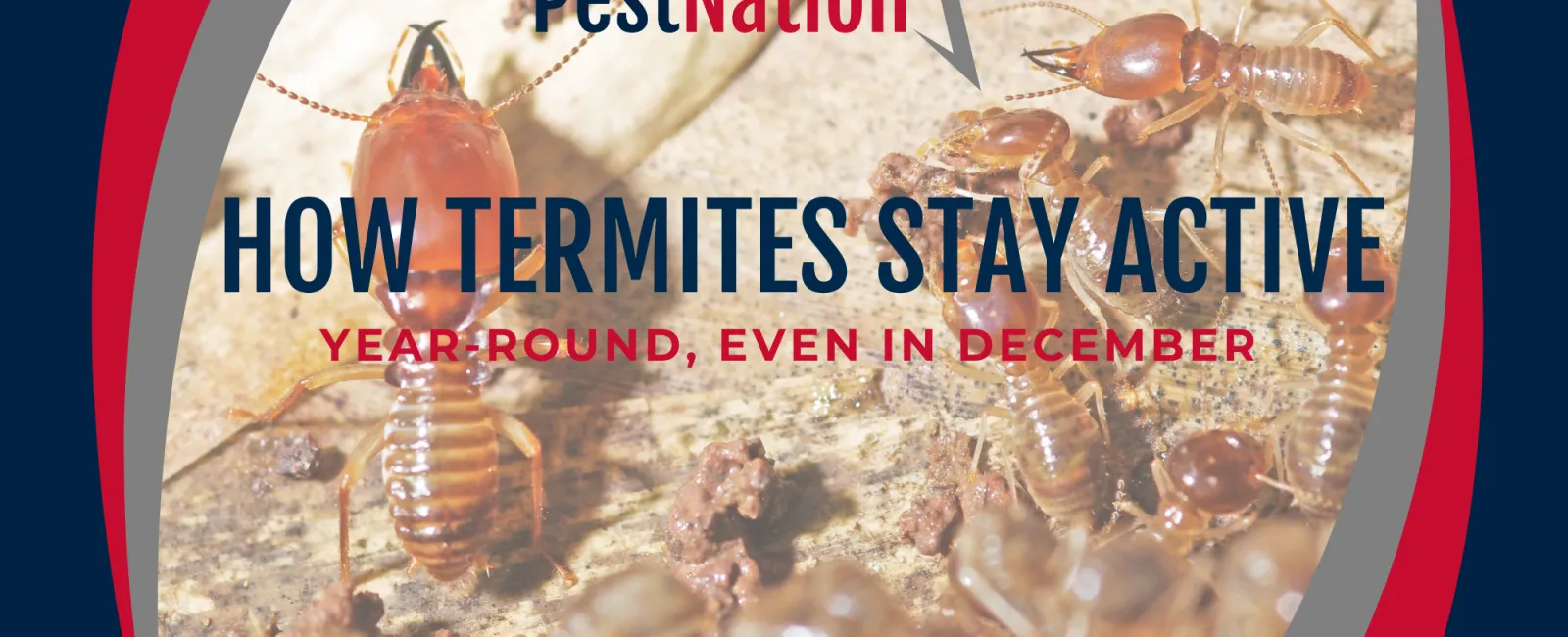
Many homeowners assume that termite problems disappear once colder weather sets in. The common belief is that winter temperatures naturally suppress termite activity, making December and the surrounding months a "safe" period for homes and businesses. Unfortunately, this assumption often leads to delayed inspections and untreated infestations that continue to worsen beneath the surface. In reality, termites are remarkably resilient insects that have evolved strategies allowing them to remain active throughout the year, regardless of the season.
Understanding how termites survive and stay active during winter is especially important for property owners in regions such as Atlanta, Charlotte, and the broader Southeast. Mild winters, dense urban development, and moisture-rich environments create ideal conditions for termite survival. This article explains how termites function year-round, why winter does not eliminate the risk, and what proactive steps homeowners can take through professional pest control services like those offered by PestNation.
The Biology Behind Termite Survival
Termites are cold-blooded insects, meaning their body temperature and activity levels are influenced by their environment. While this might suggest that cold weather would render them inactive, termites compensate through highly adaptive behaviors. Subterranean termites, the most common species affecting homes in the Southeast, live deep underground where temperatures remain relatively stable throughout the year.
Below the frost line, soil temperatures fluctuate far less than surface air temperatures. Even in December, underground termite colonies can remain warm enough to support feeding, reproduction, and expansion. This biological advantage allows termites to continue damaging wood structures while remaining hidden from view.
Additionally, termites operate as social insects. Their colonies function as coordinated systems, with workers, soldiers, and reproductives each playing a specific role. This division of labor ensures that food is continuously gathered, tunnels are maintained, and the colony survives even when external conditions are unfavorable.
Why Winter Does Not Stop Termite Activity
A key misconception is that termites "hibernate" during winter. In reality, termites do not hibernate. Instead, they adjust their behavior. As temperatures drop, termite activity often shifts deeper into the soil or further inside structures where conditions are more stable. Homes provide an especially attractive refuge because they offer warmth, moisture, and an abundant food source in the form of wood and cellulose-based materials.
In cities like Atlanta and Charlotte, winter temperatures are often mild enough that termites never experience a complete slowdown. Even during colder spells, heating systems inside homes create temperature gradients that draw termites closer to foundations, basements, and crawl spaces. This is one reason why winter infestations are often discovered indoors rather than outdoors.
Charleston pest control professionals frequently note that coastal humidity further enhances termite survival. Moist soil and elevated humidity levels prevent colonies from drying out, allowing them to remain active year-round.
Subterranean Tunneling and Structural Access
One of the most effective survival mechanisms termites possess is their ability to build extensive underground tunnel systems. These tunnels allow termites to move between their colony and food sources without exposure to cold air or predators. Mud tubes, often found along foundations or walls, serve as protected highways that maintain consistent humidity and temperature.
During winter months, termites may reduce surface-level foraging, but they do not stop feeding. Instead, they rely more heavily on established tunnels and interior access points. This means that by the time homeowners notice signs of termite damage, the infestation may already be advanced.
Professional PestNation pest inspections are designed to identify these hidden pathways. Early detection is critical, especially in winter when damage can progress unnoticed behind walls, under floors, and within support beams.
Indoor Environments: A Year-Round Haven
Modern buildings unintentionally create ideal environments for termites. Heated interiors, plumbing systems, and insulation all contribute to stable temperatures and moisture levels. Leaking pipes, condensation, and poorly ventilated crawl spaces provide the moisture termites need to survive and thrive.
Atlanta, Charlotte, and Charleston interior and exterior pest treatments are particularly important during winter because termite activity often shifts indoors. While exterior signs may be less visible, interior infestations can accelerate as termites exploit structural warmth. Winter inspections frequently uncover damage in areas homeowners rarely check, such as attics, wall voids, and subflooring.
Termites are also attracted to stored items like cardboard boxes, paper products, and wooden furniture. These materials offer additional food sources that support colony growth even when outdoor conditions are less favorable.
Seasonal Differences in Termite Behavior
Although termites remain active year-round, their behavior does change slightly with the seasons. Spring and summer are typically associated with swarming events, when reproductive termites leave established colonies to form new ones. Winter, however, is a period of consolidation rather than expansion.
During colder months, termites focus on sustaining the existing colony. Workers continue feeding and repairing tunnels, while the queen maintains egg production at a steady pace. This sustained activity ensures that when warmer weather returns, colonies are already strong and capable of rapid expansion.
For homeowners, this means winter is not a low-risk period—it is a critical window for prevention. Addressing infestations during winter can significantly reduce the severity of spring and summer termite activity.
The Role of Climate in the Southeast
The Southeastern United States presents unique challenges when it comes to termite control. Regions such as Atlanta, Charlotte, and Charleston experience relatively mild winters compared to northern climates. Frost penetration is minimal, and soil temperatures often remain within a range that supports termite activity.
Urban heat islands further exacerbate the issue. Dense development, concrete surfaces, and infrastructure retain heat, raising ground temperatures even in December. These conditions make year-round termite activity not just possible, but likely.
Charleston pest control experts often emphasize that coastal climates provide an almost uninterrupted breeding and feeding season for termites. High humidity and consistent moisture create an environment where colonies can grow larger and cause more extensive damage if left untreated.
Why Winter Inspections Matter
Many homeowners postpone pest control services until spring, assuming winter offers a natural reprieve. This delay can be costly. Winter inspections are often more effective because termite activity is concentrated in fewer areas, making infestations easier to locate.
PestNation pest inspections are structured to detect subtle signs of termite presence, including wood damage, moisture issues, and entry points. Identifying these problems in December allows for targeted treatment before colonies expand further.
Additionally, winter treatments can be less disruptive. Without the urgency of swarming season, technicians can implement comprehensive solutions that address both current infestations and long-term prevention.
Preventive Measures for Year-Round Protection
Effective termite prevention requires a proactive approach. Homeowners should focus on reducing moisture, eliminating wood-to-soil contact, and maintaining proper ventilation. Regular maintenance, such as repairing leaks and clearing debris away from foundations, plays a critical role in deterring termites.
Professional services are equally important. Atlanta, Charlotte, and Charleston interior and exterior pest treatments provide a layered defense that addresses both active infestations and potential entry points. These treatments are designed to adapt to seasonal changes, ensuring continuous protection.
Quarterly services are particularly effective because they allow pest control professionals to monitor conditions throughout the year. By adjusting treatments as needed, quarterly services help prevent small issues from developing into major structural problems.
The Long-Term Cost of Ignoring Winter Activity
Termite damage is often cumulative and expensive to repair. Structural repairs, replacement of damaged materials, and remediation of secondary issues like mold can quickly add up. Insurance policies typically do not cover termite damage, making prevention and early intervention essential.
Ignoring termite activity in winter does not stop the damage—it simply delays discovery. By the time visible signs appear, repairs may already be extensive. Investing in regular inspections and treatments through a trusted provider like PestNation can significantly reduce long-term costs and protect property value.
Termites are not seasonal pests that disappear when temperatures drop. Through adaptive biology, underground tunneling, and exploitation of indoor environments, they remain active throughout the year—even in December. In regions such as Atlanta, Charlotte, and Charleston, mild winters and favorable environmental conditions make year-round termite activity the norm rather than the exception.
Understanding how termites survive and behave during winter empowers homeowners to take timely action. Winter is an ideal time for inspections, preventive treatments, and strategic planning. Rather than waiting for spring, addressing termite risks in December can stop infestations before they escalate.
With professional support from PestNation, homeowners can implement comprehensive solutions that include PestNation pest inspections, targeted treatments, and reliable quarterly services. By prioritizing Atlanta, Charlotte, and Charleston interior and exterior pest treatments year-round, property owners can protect their investments, maintain structural integrity, and ensure peace of mind regardless of the season.