
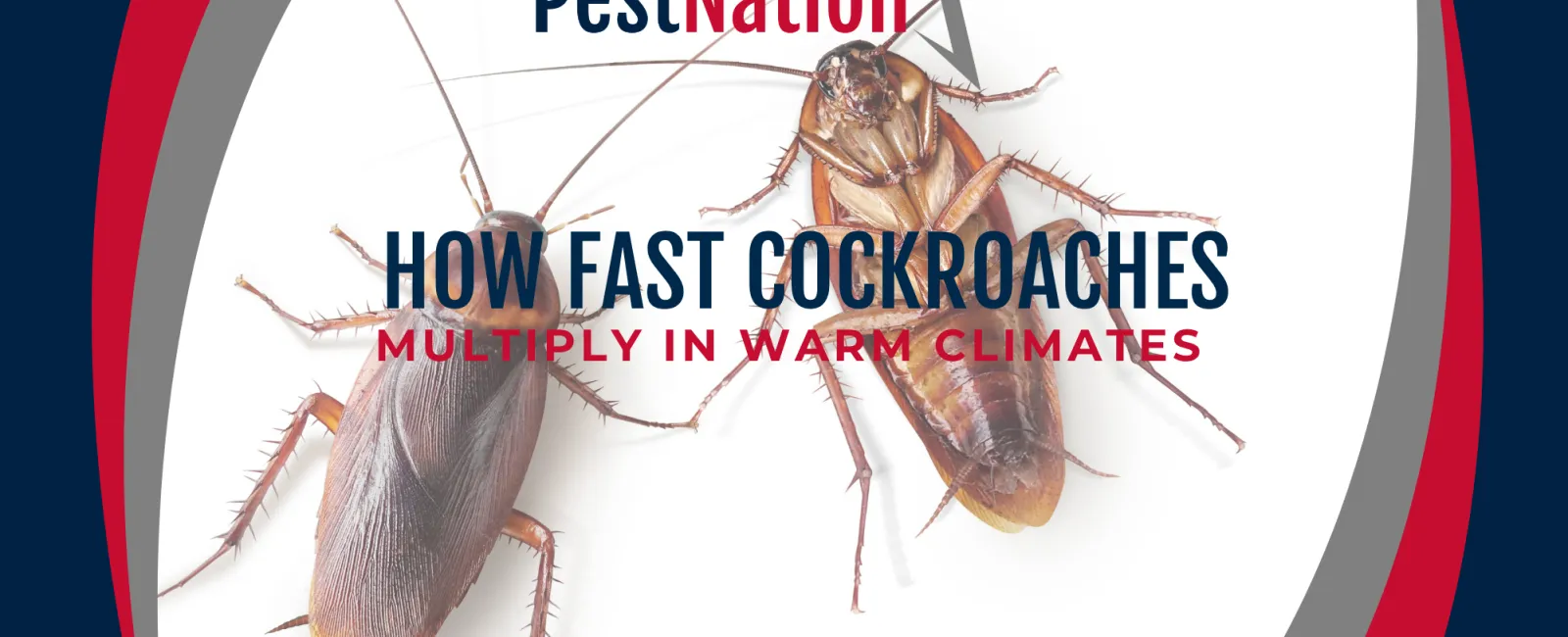
Cockroaches are among the most resilient and fast-reproducing pests found in residential environments, and their population growth is especially aggressive in warm climates. Across the Southeastern United States, homeowners in cities like Atlanta and Charlotte, as well as coastal areas that depend on Charleston pest control services, frequently deal with infestations that seem to appear suddenly and escalate quickly. What often surprises homeowners is not just the presence of cockroaches, but how rapidly a small issue can become a widespread problem.
The reason behind this rapid escalation lies in cockroach reproduction and the environmental conditions that support it. Warm temperatures, high humidity, and consistent food and water sources create the perfect environment for roach infestation growth. Without early intervention, cockroach populations can expand exponentially in a short period. Through detailed PestNation pest inspections and comprehensive Atlanta, Charlotte, and Charleston interior and exterior pest treatments, PestNation helps homeowners identify infestations early and implement effective cockroach control strategies before populations spiral out of control.
Understanding how quickly cockroaches reproduce—and why warm climates accelerate this process—is essential for preventing severe infestations and maintaining a healthy home environment.
Why Warm Climates Accelerate Cockroach Reproduction
Cockroaches are cold-blooded insects, which means their activity levels and reproduction rates are directly influenced by temperature. Warmer environments allow cockroaches to remain active year-round and reproduce at a faster pace.
Key factors that contribute to increased cockroach reproduction in warm climates include:
- Consistently warm temperatures
- High humidity levels
- Abundant food sources
- Availability of shelter
- Reduced seasonal die-off
In cities like Atlanta and Charlotte, mild winters allow cockroach populations to survive and continue breeding without interruption. Charleston pest control environments often experience even higher reproduction rates due to coastal humidity, which supports egg development and survival.
Because these conditions persist for much of the year, cockroach populations can grow continuously rather than in seasonal cycles.
Understanding the Cockroach Life Cycle
To understand roach infestation growth, it is important to look at the cockroach life cycle. Cockroaches go through three main stages:
- Egg (ootheca)
- Nymph
- Adult
Egg Stage
Female cockroaches produce egg cases known as oothecae. Each egg case can contain dozens of eggs, depending on the species.
For example:
- German cockroach egg cases may contain 30-40 eggs
- American cockroach egg cases may contain 10-20 eggs
These egg cases are often hidden in protected areas such as:
- Behind appliances
- Inside cabinets
- Within wall voids
- In crawl spaces
Nymph Stage
Once the eggs hatch, nymphs emerge and begin developing into adult cockroaches. Nymphs resemble smaller versions of adults and go through multiple molts as they grow.
In warm climates, this development process is accelerated, allowing nymphs to reach adulthood more quickly.
Adult Stage
Adult cockroaches are capable of reproducing, and the cycle begins again. Under ideal conditions, the entire life cycle can be completed in a matter of weeks to a few months.
In Atlanta, Charlotte, and Charleston pest control environments, this rapid cycle contributes significantly to the speed of infestation growth.
How Fast Cockroach Populations Grow
Cockroach reproduction is not just fast—it is exponential. A single female cockroach can produce multiple egg cases during her lifetime, leading to rapid population expansion.
Under favorable conditions:
- One cockroach can lead to hundreds within weeks
- Multiple generations can develop simultaneously
- Populations can double or triple quickly
This is why homeowners often report seeing only a few roaches initially, followed by a sudden increase in activity.
In warm environments like those found in Atlanta and Charlotte, as well as humid coastal regions served by Charleston pest control professionals, cockroach populations can grow continuously without seasonal interruption.
Hidden Growth: Why Infestations Go Undetected
One of the most challenging aspects of cockroach infestations is that much of the population remains hidden.
Cockroaches prefer dark, undisturbed areas such as:
- Wall voids
- Under appliances
- Inside cabinets
- Crawl spaces and attics
Because of this, visible roaches represent only a small portion of the total population. By the time homeowners begin noticing frequent activity, the infestation may already be well established.
PestNation pest inspections often uncover hidden populations that homeowners were unaware of. In Atlanta, Charlotte, and Charleston pest control scenarios, early detection is critical for controlling roach infestation growth before it becomes severe.
Environmental Factors That Support Rapid Growth
Cockroach reproduction is heavily influenced by environmental conditions. Homes that provide food, water, and shelter create ideal conditions for population growth.
Food Availability
Cockroaches can survive on a wide range of food sources, including:
- Crumbs and spills
- Grease buildup
- Pet food
- Garbage and organic waste
Moisture
Water is essential for cockroach survival. Common sources include:
- Leaking pipes
- Condensation
- Damp crawl spaces
- Standing water
In Charleston pest control environments, humidity plays a major role in supporting cockroach populations. In Atlanta and Charlotte, kitchens and bathrooms often provide the moisture needed for reproduction.
Shelter
Cockroaches thrive in cluttered or undisturbed areas where they can hide and reproduce safely.
Addressing these environmental factors is essential for effective cockroach control.
Why DIY Methods Often Fail
Many homeowners attempt to manage infestations using DIY products, but these methods rarely address the full scope of cockroach reproduction.
Common limitations include:
- Targeting only visible roaches
- Failing to eliminate egg cases
- Inability to reach hidden nesting areas
- Lack of long-term prevention
Because cockroach reproduction continues behind walls and in hidden spaces, surface-level treatments do little to slow population growth.
Professional cockroach control strategies are designed to target all stages of the life cycle, including eggs and nymphs.
The Role of Professional Pest Inspections
Effective cockroach control begins with a thorough inspection. PestNation pest inspections evaluate both interior and exterior conditions to identify:
- Active infestations
- Nesting locations
- Entry points
- Environmental attractants
- Severity of infestation
In Atlanta, Charlotte, and Charleston pest control scenarios, inspections often reveal multiple contributing factors that support cockroach reproduction.
This information allows pest professionals to develop targeted treatment plans that address the root cause of the infestation.
Integrated Cockroach Control Strategies
To manage rapid cockroach reproduction, professional pest management uses a combination of strategies.
Atlanta, Charlotte, and Charleston interior and exterior pest treatments may include:
- Gel bait applications to target colonies
- Insect growth regulators to disrupt reproduction
- Crack and crevice treatments
- Exterior perimeter protection
- Sanitation and moisture control recommendations
By addressing both the population and the conditions that support it, these strategies provide more effective and long-lasting results.
Preventing Future Infestations
Preventing cockroach infestations requires ongoing attention to environmental conditions.
Homeowners can reduce risk by:
- Keeping food stored in sealed containers
- Cleaning surfaces regularly
- Fixing leaks and reducing moisture
- Reducing clutter
- Scheduling routine pest inspections
In warm climates, where cockroach reproduction remains high year-round, preventative measures are essential for maintaining control.
Cockroach infestations can grow rapidly, especially in warm climates where environmental conditions support continuous reproduction. From accelerated life cycles to hidden nesting areas, cockroach reproduction allows populations to expand quickly if left untreated. In cities like Atlanta and Charlotte, as well as coastal areas served by Charleston pest control professionals, these conditions make proactive pest management essential.
Through detailed PestNation pest inspections and comprehensive Atlanta, Charlotte, and Charleston interior and exterior pest treatments, homeowners can identify infestations early and implement effective cockroach control strategies. By understanding the factors that drive roach infestation growth and taking proactive steps to address them, homeowners can protect their homes, reduce health risks, and maintain a cleaner, safer living environment year-round.