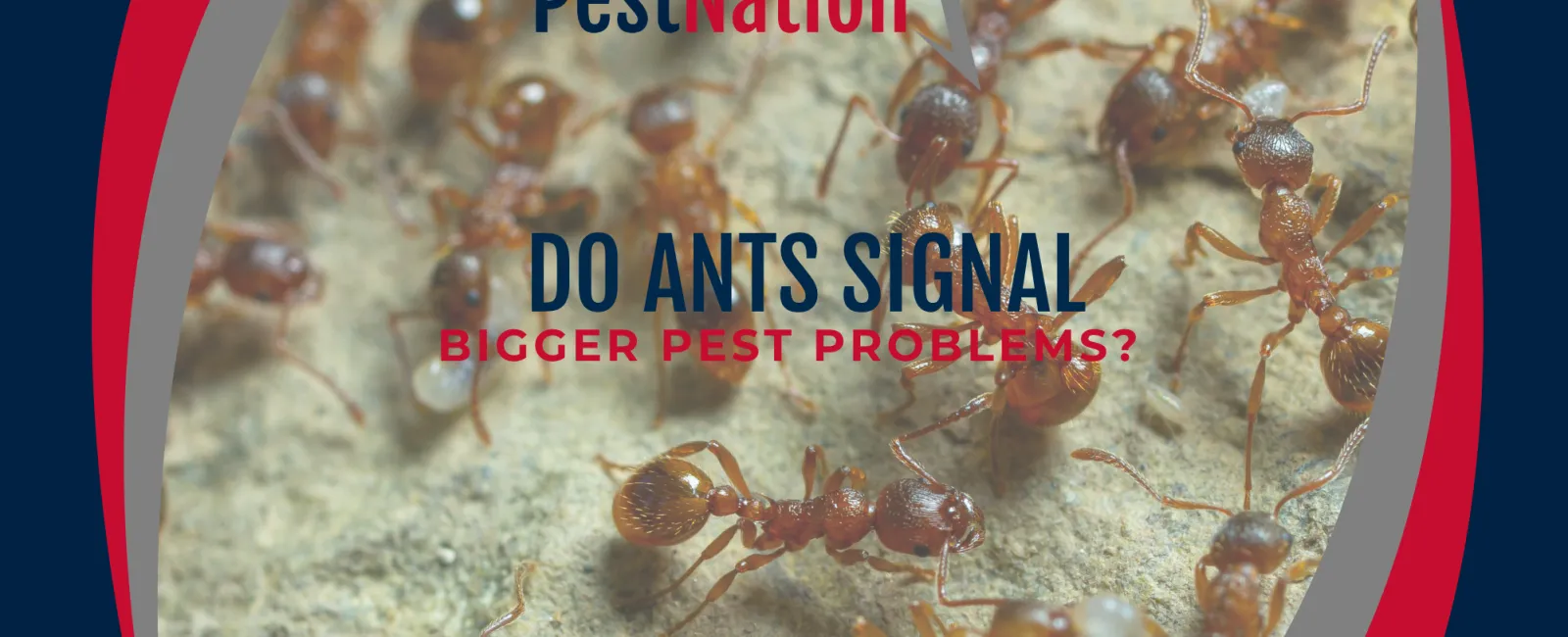
Ants are one of the most commonly encountered pests in homes across the Southeastern United States. From growing suburban neighborhoods in Atlanta and Charlotte to humid coastal areas that rely on Charleston pest control services, homeowners frequently notice ants appearing in kitchens, bathrooms, and outdoor spaces. While a few ants may seem like a minor inconvenience, their presence can sometimes indicate a deeper issue within the home.
An ant infestation is rarely random. Ants are highly organized insects that follow food sources, moisture, and environmental conditions that support their colonies. When they appear indoors, it is often because something is attracting them—and that same factor may also attract other pests. Because of this, ants can act as important pest warning signs, signaling underlying problems that should not be ignored. Through detailed PestNation pest inspections and comprehensive Atlanta, Charlotte, and Charleston interior and exterior pest treatments, PestNation helps homeowners determine whether ant activity is an isolated issue or part of a larger pest concern.
In the Southeast, environmental conditions allow pest activity to remain high for much of the year. Warm temperatures and humidity create ideal conditions not only for ants but also for insects and rodents that may coexist in the same environment. Understanding what ants are telling you about your home can help prevent larger infestations and protect your property over the long term.
Why Ants Enter Homes
Ants enter homes for two primary reasons: food and water. Worker ants leave the colony in search of resources, and once they find a reliable source, they create scent trails that guide other ants to the same location.
Common attractants include:
- Food crumbs or spills
- Sugary substances
- Pet food
- Grease buildup in kitchens
- Moisture from leaks or condensation
In cities like Atlanta and Charlotte, busy households often provide consistent food sources that attract ants indoors. Charleston pest control environments frequently experience additional pressure due to humidity, which creates moisture conditions that ants seek out.
Because ants are efficient foragers, even a small amount of food or water can sustain a colony. This is why an ant infestation often grows quickly once ants establish a trail inside the home.
Ants as Pest Warning Signs
One of the most important things to understand about ants is that they rarely exist in isolation. Their presence often indicates environmental conditions that may also attract other pests.
Ants can serve as pest warning signs for several underlying issues, including:
- Excess moisture
- Food accessibility
- Structural entry points
- Increased insect activity
Because many pests share similar environmental preferences, the factors attracting ants may also attract roaches, rodents, or other insects.
For example, a kitchen with accessible food sources may attract both ants and cockroaches. A damp crawl space may support carpenter ants as well as termites or other moisture-loving pests.
In Atlanta, Charlotte, and Charleston pest control scenarios, technicians often identify multiple pest types coexisting in the same environment due to shared attractants.
Moisture Issues and Hidden Problems
Moisture is one of the most significant factors contributing to pest activity. Many ant species, particularly carpenter ants, are drawn to damp or decaying wood.
Common moisture-related issues include:
- Leaking pipes
- Poor drainage around the foundation
- Damp crawl spaces
- Condensation from HVAC systems
In humid regions like Charleston, moisture levels are naturally higher, increasing the likelihood of pest activity. Homes in Atlanta and Charlotte may also experience moisture problems in basements, kitchens, and bathrooms.
Moisture not only attracts ants but also creates favorable conditions for other pests such as termites and cockroaches. As a result, ants can be an early indicator of a larger moisture-related issue within the home.
Structural Entry Points
Ants often enter homes through small openings that may go unnoticed by homeowners. These entry points can also serve as access routes for other pests.
Common entry points include:
- Cracks in foundations
- Gaps around doors and windows
- Openings around plumbing and electrical lines
- Crawl space vents
- Roofline gaps
Once ants establish a path into the home, other pests may use the same access points.
PestNation pest inspections frequently uncover these vulnerabilities, allowing homeowners to address structural issues before they lead to larger infestations. In Atlanta, Charlotte, and Charleston interior and exterior pest treatments, sealing entry points is a critical component of long-term pest management.
Food Sources and Pest Attraction
Ants are often the first pests to discover accessible food sources inside a home. However, they are rarely the only pests attracted to these conditions.
Food sources that attract ants may also attract:
- Cockroaches
- Rodents
- Flies
- Pantry pests
In urban areas like Atlanta and Charlotte, shared living spaces and high population density can increase the likelihood of multiple pests being drawn to the same environment.
Charleston pest control professionals frequently observe similar patterns in homes with outdoor kitchens or poorly managed trash areas.
If ants are consistently appearing in areas where food is present, it may indicate that additional pests could follow if the issue is not addressed.
Outdoor Colonies and Indoor Impact
Many ant infestations originate outdoors. Colonies in lawns, landscaping, or beneath foundations can send worker ants into homes in search of food.
Common outdoor nesting locations include:
- Mulch beds
- Soil near foundations
- Under patio stones
- Around tree roots
If these colonies are not treated, they can continue sending ants indoors, creating recurring infestations.
In Charleston pest control environments, sandy soil and moisture-rich landscapes often support large outdoor colonies. In Atlanta and Charlotte, suburban landscaping can create similar conditions.
Effective Ant Control in the Southeast requires addressing both indoor and outdoor activity to prevent ongoing problems.
When Ants Indicate Larger Pest Problems
While not every ant infestation signals a major issue, certain situations suggest that additional pest problems may be present.
Signs that ants may indicate a larger problem include:
- Persistent or recurring ant activity
- Presence of multiple pest types
- Visible moisture damage or wood decay
- Increased insect activity in general
- Ants appearing in multiple areas of the home
In these cases, a professional evaluation is essential to determine the full scope of the problem.
PestNation pest inspections provide a comprehensive assessment of pest activity and environmental conditions, helping homeowners identify potential risks early.
The Role of Professional Pest Inspections
Professional inspections are critical for determining whether ants are part of a larger pest issue. PestNation pest inspections evaluate the entire property to identify:
- Active pest populations
- Structural vulnerabilities
- Moisture issues
- Food sources and attractants
- Entry points used by pests
In Atlanta, Charlotte, and Charleston pest control scenarios, these inspections often reveal hidden pest activity that homeowners may not have noticed.
By identifying these factors, pest professionals can develop targeted treatment plans that address both current infestations and future risks.
Integrated Ant Control Strategies
Effective Ant Control in the Southeast requires a comprehensive approach that addresses both the ants and the conditions attracting them.
Atlanta, Charlotte, and Charleston interior and exterior pest treatments often include:
- Targeted baiting systems to eliminate colonies
- Exterior perimeter treatments
- Sealing entry points
- Moisture management recommendations
- Ongoing monitoring and maintenance
These strategies ensure that ants are controlled at their source while also reducing the likelihood of other pests entering the home.
Because ants are highly adaptable, ongoing maintenance is often necessary to maintain long-term results.
Ants are one of the most common pests encountered in Southern homes, but their presence often carries more meaning than homeowners realize. An ant infestation can serve as an early indicator of underlying issues such as moisture problems, accessible food sources, or structural vulnerabilities. In many cases, ants act as pest warning signs that other pests may also be present or could soon follow.
For homeowners in Atlanta and Charlotte, as well as coastal areas served by Charleston pest control professionals, understanding these signals is essential for preventing larger infestations. Through detailed PestNation pest inspections and comprehensive Atlanta, Charlotte, and Charleston interior and exterior pest treatments, homeowners can identify the root causes of pest activity and implement effective solutions. By focusing on proactive Ant Control in the Southeast, PestNation helps homeowners address current infestations, reduce future risks, and maintain a healthier, pest-free living environment.